Quantifying Solvent Residues in Coated Textiles
Quantifying residual solvents demands lot-level liquid extraction testing to verify REACH Annex XVII compliance before clearing customs.


Desorption
Wet-coagulation polyurethane processing relies on polar organic liquids to solubilize polymer resins before phase inversion. Dimethylformamide, dimethylacetamide, and N-methyl-2-pyrrolidone serve as primary carriers during resin synthesis and blade coating. Solvent retention depends on thermal drying.
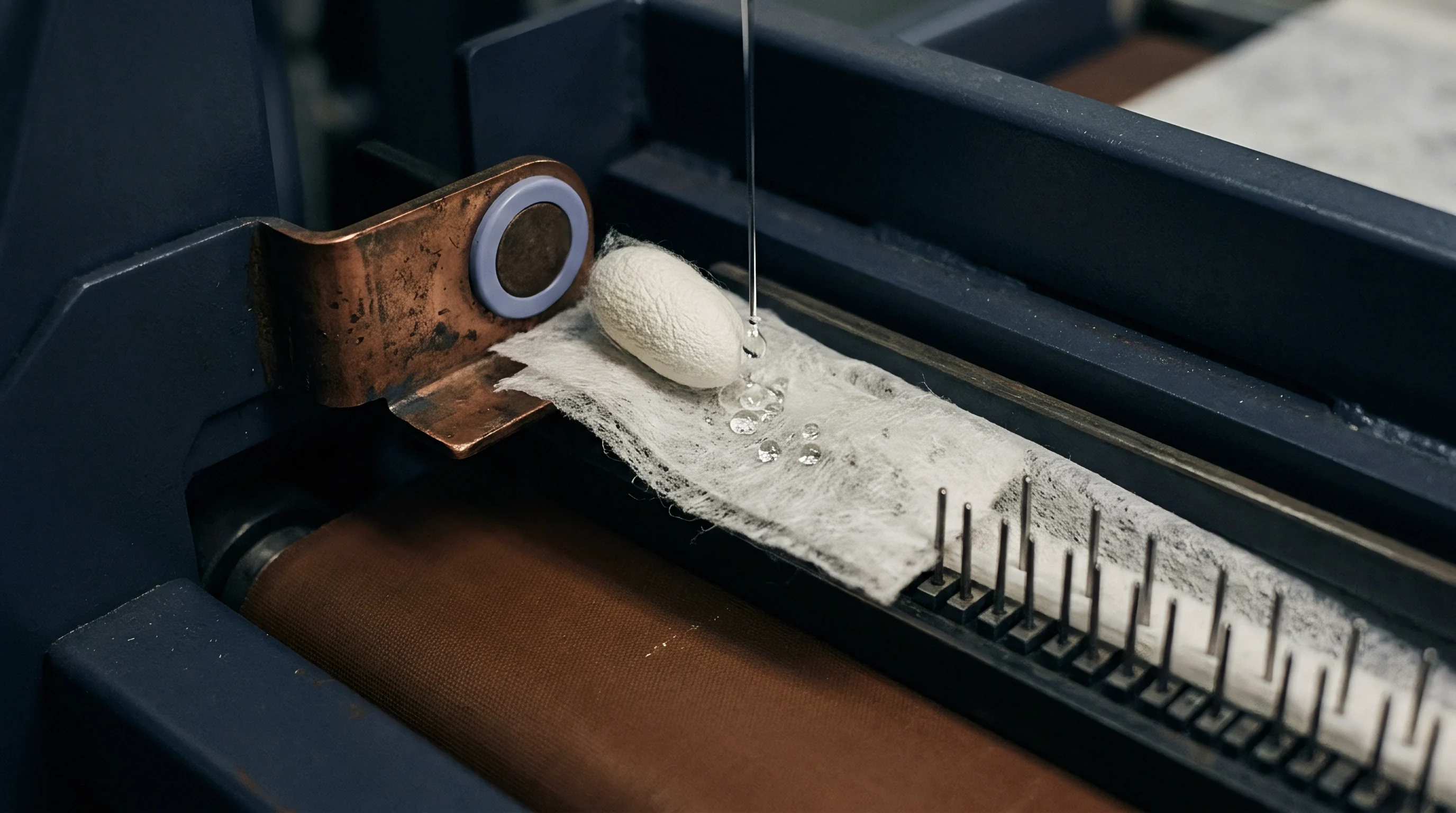
When coated substrates pass through coagulation baths, water displaces the solvent carrier to form a porous membrane structure. Residual solvent molecules become entrapped inside closed cell structures, bound to carbamate linkages through strong dipole-dipole interactions.

Polymer Matrix Trapping Mechanics
Solvent molecules remain bound within polyurethane membranes due to strong hydrogen bonding with carbamate linkages. Microporous synthetic leathers produced by wet coagulation exhibit higher residual solvent retention than solid skin layers applied by dry transfer coating. Phase inversion traps polar compounds.
As water enters the polymer solution, rapid polymer precipitation seals surface pores before internal solvent diffuses into the liquid bath. High-boiling solvents like N-methyl-2-pyrrolidone, with a boiling point of 202 degrees Celsius, require substantial thermal energy to migrate through dense film surfaces.
Drying kinetics slow dramatically once surface solvent evaporates. Internal diffusion becomes the rate-limiting step for solvent removal. Thicker polyurethane coatings retain significantly higher solvent fractions per unit mass, as diffusion distance scales quadratically with membrane thickness.

Stenter Frame Evaporation Parameters
Thermal profile management controls the volatile release rate across multi-zone drying ovens. Insufficient dwell times or suppressed airflow velocities prevent deep solvent extraction from thick synthetic leather backings. Oven temperatures dictate evaporation kinetics.
Coaters operating at elevated line speeds often truncate thermal residence times, leaving unevaporated dimethylformamide within the internal membrane lattice.
| Solvent Name | CAS Number | Boiling Point (C) | Primary Coating Application | Typical Residual Range (mg/kg) |
|---|---|---|---|---|
| Dimethylformamide (DMFa) | 68-12-2 | 153 | Polyurethane wet coagulation | 50 – 4500 |
| Dimethylacetamide (DMAc) | 127-19-5 | 165 | Elastomeric and elastane coating | 20 – 1200 |
| N-Methyl-2-pyrrolidone (NMP) | 872-50-4 | 202 | High-performance polyurethane topcoats | 10 – 800 |
| Toluene | 108-88-3 | 110 | Polyvinyl chloride plastisol thinning | 5 – 300 |
| Methyl Ethyl Ketone (MEK) | 78-93-3 | 80 | Surface lacquer formulation | 2 – 150 |
| Data reflects unwashed post-stenter industrial production samples analyzed via methanol extraction. | ||||
Polar matrices retain dimethylformamide tightly. Post-coating water washing operations extract residual surface solvents, but fail to purge deeply embedded molecules without extended residence times and elevated water temperatures. Mills balancing production output against energy expenditure frequently lower wash tank temperatures, transferring chemical compliance risk downstream to fabric converters.
Drying oven dwell times under ninety seconds leave high-boiling polar solvents trapped within the core of wet-coagulated polyurethane membranes.
Coaters frequently claim that residual solvent odor dissipates during ocean transit, treating the shipping container as an unheated post-curing chamber.


Clamp
Analytical precision depends on preserving volatile chemical species from the exact instant a roll leaves the inspection table. Improper specimen collection allows volatile organic compounds to evaporate into ambient air, yielding falsely low laboratory test values. Sealed vials prevent volatile escape.
Technicians cutting swatches from wide-format rolls must seal samples immediately into aluminum-laminated barrier bags to prevent loss of light aromatic solvents.

Specimen Handling and Sealing Rules
Cutting swatches from fabric rolls introduces immediate ambient evaporation risk. Ambient temperatures and open airflow accelerate volatile depletion in freshly coated substrates. Sample preparation determines analytical accuracy.
Laboratories receive specimens in various states of degradation when outer roll layers remain exposed to warehouse atmospheres for days before cutting.
Sampling location across the textile width alters measured values. Edge cutouts generally exhibit lower residual solvent concentrations than center cuts due to preferential air circulation during stenter drying. Representative sampling demands cutting swatches across the full usable width, excluding the outer five centimeters of selvage.

Solvent Extraction System Selection
Methanol extractions dissolve polar target compounds while leaving polymer backbones intact. Technicians select extraction media based on the specific solubility parameters of both coating resin and target solvent. Substrate integrity dictates extraction duration.
Aggressive solvent media like tetrahydrofuran swell polyurethane resins excessively, leaching low-molecular-weight oligomers that contaminate gas chromatography injection ports.
- Unsealed Swatch Transit specimen loses volatile organic compounds to shipping packaging, causing artificial test underreporting at destination laboratories.
- Matrix Over-Extraction aggressive solvent mixtures dissolve the underlying coating resin, creating baseline chromatographic noise and column contamination.
- Edge-Only Sampling collecting swatches solely from roll margins misses high residual concentrations locked inside the central coating zone.
- Septum Contamination unsuitable vial cap liners adsorb lipophilic target volatile compounds during thermal equilibration cycles.
Standardized extraction protocols mandate cutting test swatches into squares measuring two millimeters by two millimeters. This surface area expansion allows complete solvent leaching without requiring total polymer dissolution.
Swatches exposed to open ambient air on a cutting bench lose their lightest volatile residues long before an analytical instrument records a single peak.


Bench
Quantitative gas chromatography separates extracted organic compounds along a capillary column before ionization and mass filtering. Static headspace gas chromatography isolates volatile organic compounds by heating sealed vials until liquid-vapor equilibrium establishes. Liquid extraction recovers internal residues.
Direct solvent extraction with methanol under ultrasonic agitation extracts total residual solvent mass from internal pore walls.

Where Do Residual Solvents Escape Detection?
Static headspace methods measure volatile organic compounds that vaporize into closed air volumes at moderate temperatures. Compounds with high boiling points remain partially bound inside polar coating matrices at standard headspace temperatures of seventy degrees Celsius. Direct liquid extraction followed by mass spectrometry quantifies total solvent concentration regardless of matrix binding strength.
| Test Method Standard | Analytical Technique | Target Residues | Limit of Quantitation (mg/kg) | Primary Operational Scope |
|---|---|---|---|---|
| ISO 16189:2021 | Methanol Extraction / GC-MS | DMFa, DMAc | 5.0 | Polymeric coatings and footwear components |
| EN 17131:2019 | Methanol Extraction / GC-MS or LC-MS | Dimethylformamide | 10.0 | Textile products and coated fabrics |
| DIN EN ISO 22197 | Static Headspace / GC-MS | Volatile organic compounds | 1.0 | Screening volatile coating additives |
| VDA 278 | Thermal Desorption / GC-MS | VOC and FOG emissions | 0.5 | Automotive coated fabric specifications |
Mass spectrometry confirms molecular weight. Gas chromatography paired with mass spectrometry operated in selected ion monitoring mode isolates characteristic mass-to-charge ratios for dimethylformamide (mass fragments 73 and 44) and N-methyl-2-pyrrolidone (mass fragment 99). This selectivity prevents co-eluting coating plasticizers from inflating reported residual solvent concentrations.

Instrumental Quantitation via Mass Spectrometry
Ion trap and single quadrupole detectors convert eluting chromatographic peaks into structural mass spectra. Internal standards like deuterated dimethylformamide correct for extraction recovery losses and injection volume variations. Matrix effects introduce quantitation shifts when analyzing complex flame-retardant or water-repellent coating formulations.
Consider a 100-gram sample of polyurethane-coated nylon analyzed for dimethylformamide. Methanol extraction yields a raw chromatographic peak area corresponding to 45 milligrams of target solvent per kilogram of fabric. Static headspace analysis of the identical batch yields a value of 12 milligrams per kilogram due to incomplete matrix desorption at eighty degrees Celsius.
The choice of analytical method alters whether this batch satisfies a brand restriction limit of 20 milligrams per kilogram.
Solvent extraction with methanol under EN 17131 yields up to four times higher dimethylformamide concentrations than static headspace GC-MS at seventy degrees Celsius on dense polyurethane skins.
Laboratories continue to debate whether analytical protocols ought to quantify total entrapped solvent mass or solely the volatile portion capable of migrating to human skin during garment wear.

Verification
Legal compliance demands proof that every production lot meets statutory concentration thresholds prior to customs release. European Union REACH Annex XVII Entry 72 specifies a maximum concentration limit of 3000 milligrams per kilogram for dimethylformamide, dimethylacetamide, and N-methyl-2-pyrrolidone in clothing and textile accessories. EU REACH restriction Entry 76 enforces a lower threshold of 500 milligrams per kilogram for dimethylformamide in industrial applications.
Scope certificates lack transaction evidence.

Regulatory Limits and Brand Restricted Lists
European environmental legislation sets strict concentration ceilings for polar aprotic industrial solvents. Voluntary certification schemes establish significantly tighter thresholds. OEKO-TEX Standard 100 sets residual dimethylformamide limits at 500 milligrams per kilogram across general product classes, while restricting concentrations to 10 milligrams per kilogram under specific Annex 6 criteria for infant items.
| Standard or Regulation | Solvent Chemical Name | Applicable Product Class | Maximum Concentration (mg/kg) | Enforcement Mechanism |
|---|---|---|---|---|
| REACH Annex XVII Entry 72 | DMFa / DMAc / NMP | Clothing and apparel textiles | 3000 | EU Border detention and market withdrawal |
| REACH Entry 76 Restriction | Dimethylformamide | Substance and mixture sales | 500 | Chemical supplier distribution audit |
| OEKO-TEX Standard 100 (Annex 4) | DMFa / DMAc / NMP | Class I through Class IV | 500 | Annual facility certificate renewal |
| OEKO-TEX Standard 100 (Annex 6) | Dimethylformamide | Class I (Infant Article) | 10 | Enhanced market surveillance testing |
| Brand RSL Specifications | Total Polar Solvents | All coated apparel lines | 20 – 50 | Commercial purchase order compliance |
| Limits represent mass of solvent per mass of total coated fabric matrix. | ||||
Customs officers enforce concentration ceilings. Border inspections utilize destruction testing on imported shipments suspected of non-compliance. Brands maintaining proprietary restricted substance lists routinely mandate maximum solvent residues below 20 milligrams per kilogram, rendering statutory limits irrelevant for commercial qualification.

Lot Conformity versus Type Approval
Testing single swatches during development proves chemical feasibility across small runs. Commercial shipments demand lot-by-lot verification. Mill master certificates covering base fabric constructions do not automatically validate polyurethane-coated derivatives processed months later on different finishing lines.
- Verify scope certificate validity dates against laboratory accreditation schedules.
- Request batch-specific transaction certificates matching invoice yardage.
- Retain split swatches in sealed glass containers for third-party verification.
- Match coating polymer lot numbers on chemical safety data sheets to mill production logs.
Pre-shipment testing mitigates financial risk. Importers accepting scope certificates without lot-level test reports accept full legal liability for non-compliant chemical residues found during import surveillance.
An OEKO-TEX Standard 100 certificate issued for uncoated woven polyester fails to protect a buyer when applied to a polyurethane-coated rainwear fabric.
Incorporating mandatory pre-shipment lot testing under ISO 16189 into purchase order terms shifts financial liability for customs detentions back to the chemical coater.

Arithmetic
Commercial exposure calculations compare the upfront fee of laboratory testing against the total landed value of detained cargo. Retest costs compound quarantine delays. Testing a single coated fabric lot for a full target solvent panel costs between 400 and 800 US dollars at accredited third-party facilities.
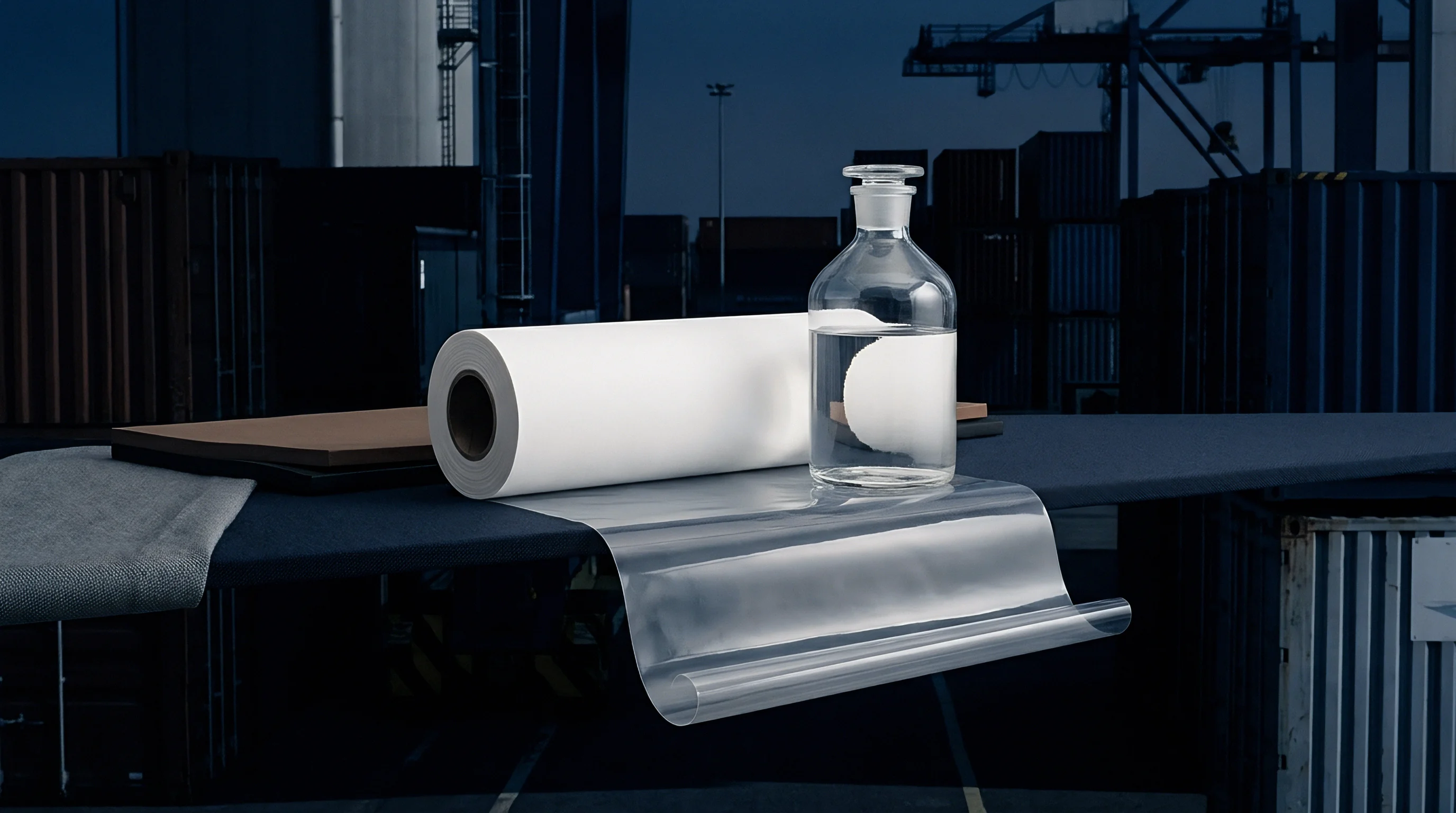
A single detained container carrying 20,000 meters of technical outerwear represents a landed asset value exceeding 150,000 US dollars.

Financial Exposure in Customs Quarantine
Detained containers incur daily demurrage fees alongside specialized port storage surcharges. Inventory destruction permanently closes margins. When border surveillance identifies dimethylformamide concentrations exceeding REACH Annex XVII limits, customs authorities mandate either container re-exportation or complete inventory incineration at importer expense.
Consider a 30,000-meter batch of coated polyester tent fabric valued at 4.50 US dollars per meter. Pre-shipment laboratory verification costs 600 US dollars per production lot. Skipping pre-shipment verification saves 0.02 US dollars per meter.
An enforcement border scan detecting 3400 milligrams per kilogram of residual dimethylformamide results in batch rejection, customs demurrage fees of 12,000 US dollars, and incinerator disposal charges of 8,000 US dollars. The total financial loss reaches 155,000 US dollars, eliminating profit margins across five subsequent compliant shipments.

Contractual Risk Transfer Provisions
Purchase orders incorporate specific indemnification language binding chemical coaters to lot compliance. Warranty clauses without clear analytical reference standards fail in commercial arbitration. Buyers defining specific extraction methods and concentration limits directly within purchase order terms secure clear legal recourse following batch rejection.
- Method-Specific Thresholds specifying ISO 16189 methanol extraction eliminates supplier disputes regarding headspace temperature variances during testing.
- Split-Lot Retention Protocols holding sealed backup samples at origin allows definitive third-party retesting when destination customs challenge compliance.
- Automated Debit Backs contractually deducting detention and disposal costs from open mill accounts secures immediate financial recovery.
- Chemical Batch Traceability linking resin lot numbers directly to fabric roll tags prevents mills from substituting uncertified coating runs.
Defending compliance files against regulatory inquiry demands unbroken chains of analytical custody from roll cutting to laboratory output.
The financial loss from a single detained container at destination customs exceeds the cost of decade-long batch compliance testing.
Failing to audit mill solvent recovery systems leaves importers vulnerable to unscheduled product recalls, mandatory inventory destruction, and severe financial penalties from market surveillance authorities.