Disperse Dye Selection Criteria for Polyester Sublimation Fastness
High-energy disperse dyes prevent thermal sublimation and migration on polyester knits when paired with rigorous dual-stage reduction clearing.


Energy
Disperse dyestuffs migrate into polyethylene terephthalate filaments during exhaust dyeing through thermal activation of the polymer chains. Heat shifts dye placement. Dyestuffs belong to distinct chemical classes based on molecular weight, spatial geometry, and vapor pressure.
Small non-polar molecules diffuse rapidly into amorphous polymer zones at lower temperatures, whereas bulky polycyclic structures require higher thermal energy to force chain relaxation and permit entry.
The coloration industry categorizes disperse dyes into energy groups that directly dictate thermal behavior during post-dyeing heat processing. Class E dyes possess low molecular mass (typically between 250 and 350 grams per mole) and high vapor pressure. These colorants exhaust rapidly at 100 to 120 degrees Celsius but exhibit poor thermal stability during subsequent stenter operations.
Class SE dyes occupy an intermediate band with molecular masses between 350 and 420 grams per mole, offering balanced exhaustion kinetics and moderate fastness. Class S and Class H-E dyestuffs feature heavy, complex structures exceeding 400 to 500 grams per mole, including anthraquinone, azo with complex aromatic substitutions, or benzodifuranone chromophores. Vapor pressure governs migration.
Molecular Mass and Diffusion Rates
Small chromophores possessing low steric hindrance penetrate the amorphous regions of synthetic yarns rapidly at 100 to 120 degrees Celsius. These low-energy dyes reach exhaustion equilibrium quickly, making them suitable for rapid-dyeing cycles or low-temperature carrier dyeing. Their compact physical volume allows them to desorb from the polymer matrix with equal ease when exposed to heat during downstream finishing.
Sublimation occurs readily as thermal agitation breaks the weak intermolecular forces holding the chromophore within the polyester matrix.
High-energy dyes contain electron-withdrawing groups such as cyano, nitro, sulfone, or ester linkages that increase dipole moments and planar area. These structural features raise the activation energy required for the dye to enter the crystalline-adjacent amorphous zones of polyethylene terephthalate. High-temperature aqueous exhaust processes at 130 to 135 degrees Celsius loosen the polyester sub-microscopic structure sufficiently to allow these bulky molecules to entrap themselves inside the fiber.
Once locked inside upon cooling, the molecules resist thermal desorption during heat setting, pleating, and garment molding.
| Dye Energy Class | Molecular Mass Range (g/mol) | Vapor Pressure at 200°C (Pa) | ISO 105-P01 Rating at 200°C | Exhaust Dyeing Temperature (°C) |
|---|---|---|---|---|
| Class E (Low Energy) | 250 to 350 | 1.0 x 10⁻² to 1.0 x 10⁻¹ | 2 to 3 | 100 to 120 |
| Class SE (Medium Energy) | 350 to 420 | 1.0 x 10⁻³ to 1.0 x 10⁻² | 3-4 to 4 | 125 to 130 |
| Class S (High Energy) | 400 to 480 | 1.0 x 10⁻⁴ to 1.0 x 10⁻³ | 4-5 | 130 to 135 |
| Class H-E (Ultra-High Energy) | 450 to 550+ | Less than 1.0 x 10⁻⁴ | 5 | 135 |
Trichromatic Energy Matching
Formulating a balanced color recipe demands strict structural alignment among all three primary dyestuffs in the bath. Mixing a low-energy yellow with a high-energy blue creates severe shade flaring across the width of a stenter frame. The low-energy component volatilizes out of the fiber sheath under heat-setting temperatures, while the high-energy component remains fully fixed inside the core.
This spatial separation alters the optical reflectance ratio, shifting the visual shade of the bulk roll away from the approved lab dip.
High molecular weight disperse dyes require elevated exhaustion temperatures to achieve planar alignment within the amorphous polyester matrix.
Dyehouse laboratories verify energy compatibility by plotting exhaustion isotherms alongside thermal sublimation curves. A homogeneous trichromatic recipe ensures that all three dyes absorb at uniform rates during dyeing and desorb at identical rates during high-temperature finishing. Selecting dyes from disparate energy classes introduces uncontrolled shade drift across lot edges where air velocity and temperature profiles fluctuate within heat-setting chambers.
Formulating trichromatic recipes strictly within a single classification group prevents spatial separation of dyestuffs across fabric zones during high-temperature thermal finishing.

Heat
Thermosol baking and stenter drying expose dyed synthetic webs to elevated processing temperatures ranging from 170 to 215 degrees Celsius. Molecules desorb under heat. Heat setting stabilizes knitted and woven constructions against dimensional relaxation, but it simultaneously subjects internal colorant molecules to intense thermal stress.
When the ambient temperature inside the stenter chamber exceeds the glass transition temperature of polyester (typically 70 to 80 degrees Celsius) and approaches its thermal setting band, the polymer chains gain high segmental mobility.
High heat drives sublimation. Thermal energy overcomes the van der Waals forces and hydrogen bonds binding disperse dyes to adjacent polyester polymer chains. Colorant molecules transition directly from a solid state within the fiber matrix into a gaseous vapor state within the free volume of the stenter housing.
Dyes with high vapor pressure escape into the air stream, reducing overall shade depth and contaminating adjacent fabric zones.
Vapor Pressure and Stenter Fixation
Sublimation occurs when solid dyestuff particles within the fiber matrix transform directly into a gas during high-temperature exposure. The rate of dye loss correlates with the equilibrium vapor pressure of the specific chromophore at the target finishing temperature. Dyes engineered with polar functional groups exhibit low vapor pressure, holding the chromophore within the hydrophobic core of the synthetic polymer even under extended exposure at 210 degrees Celsius.
Thermosol application routes for continuous polyester processing rely on rapid thermal fixation within a 45 to 60 second window. In this brief period, un-dissolved dye padded onto the yarn surface must vaporize, diffuse across the micro-gap between dyestuff aggregate and fiber surface, and dissolve into the liquefied polymer amorphous zone. Dyes failing to achieve rapid fixation at 200 degrees Celsius remain on the fiber surface as un-fixed particulates, lowering wet-fastness ratings after finishing.
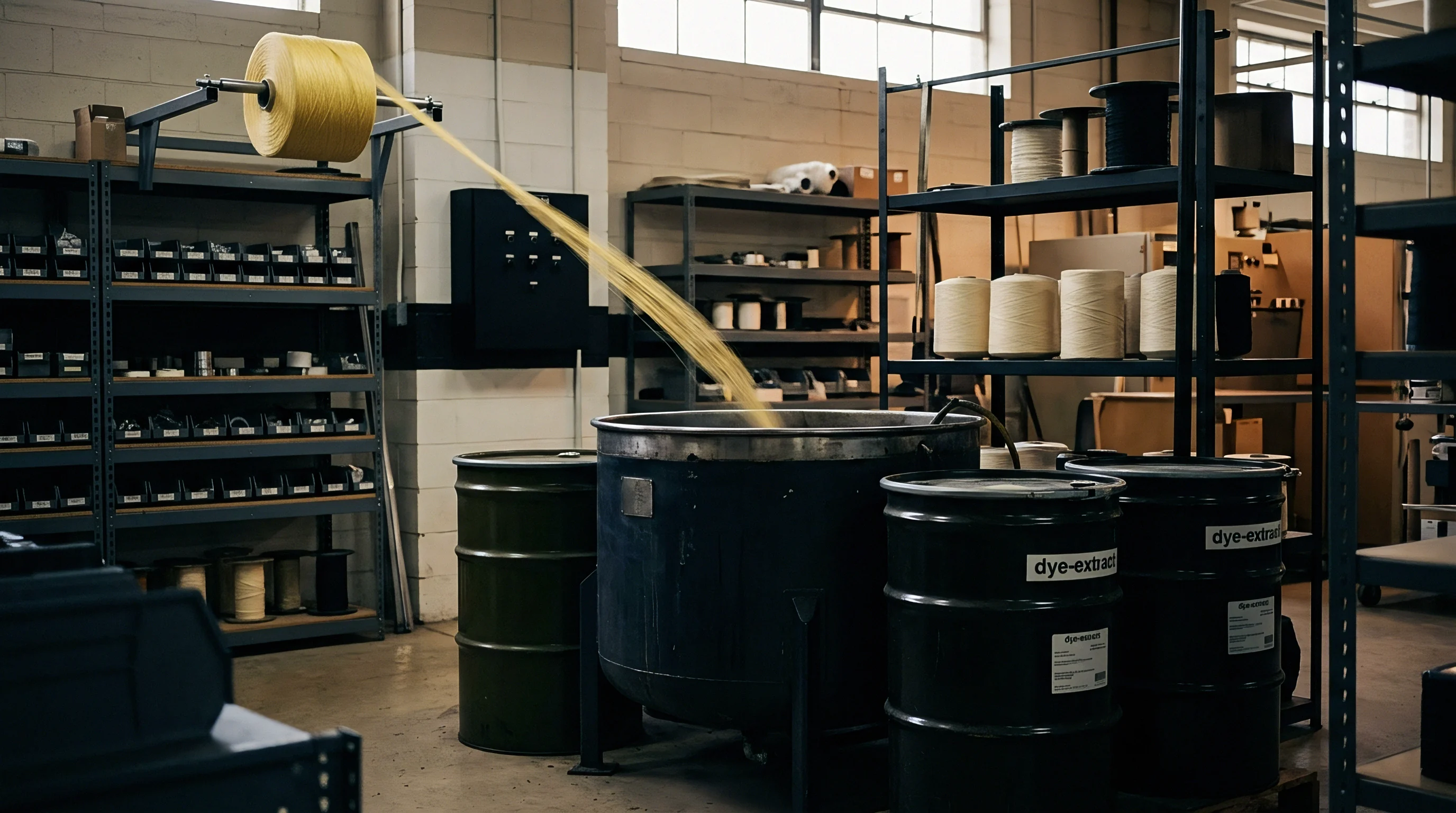
- Sublimation shade flare ~ Volatilized low-energy dye desorbs during stenter drying, changing the finished hue across the web.
- Cross-fiber staining ~ Gasified dyestuff transfers from polyester filaments onto adjacent cotton or nylon components in blended yarns.
- Stenter duct condensation ~ Volatilized dye molecules condense on cooler exhaust piping, dropping back down onto running cloth.
- Edge-to-center shade variation ~ Thermal gradients across stenter air nozzles cause uneven dye evaporation along the fabric width.
Dry Heat Fastness Testing Protocols
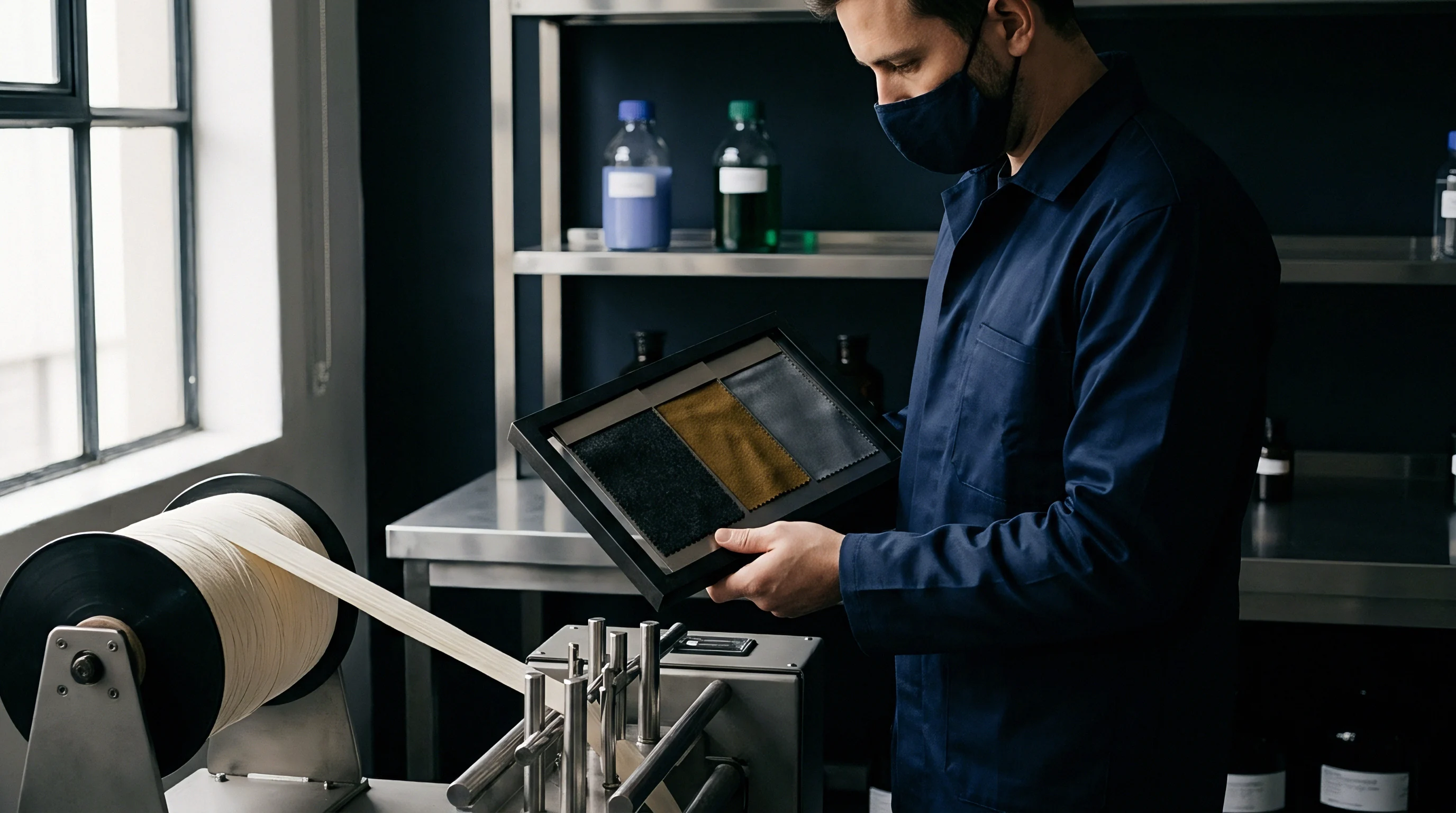
Evaluating thermal stability under ISO 105-P01 places the specimen between heated metallic plates under a calibrated pressure of 4 kilopascals. Testing occurs at standardized temperature steps: 150 degrees Celsius, 180 degrees Celsius, and 210 degrees Celsius for a fixed dwell time of 30 seconds. Color change of the test sample and staining on adjacent single-fiber or multifibre strips determine the fastness grade on ISO grey scales.
ISO 105-P01 dry heat sublimation testing at 210 degrees Celsius for 30 seconds yields a standard grey scale rating of 4-5 for Class S anthraquinone dyes, resting on standardized grey scale evaluation under ISO 105-A02 and A03; conditioning the specimen under ambient humidity rather than strict 65 percent relative humidity shifts the observed staining rating by up to half a grade. AATCC Method 117 provides a parallel procedure excluding pressing force, focusing purely on dry heat exposure in air. Evaluating both methods reveals whether dye loss stems from direct conductive contact or radiant gasification.
ISO 105-P01 testing at 210 degrees Celsius for 30 seconds requires a minimum grey scale rating of 4-5 to prevent shade change during thermosol processing.
Selecting dyes with inadequate thermal resistance produces irreversible shade cast shifts across whole production batches, forcing the rejection of entire cutting lots at the garment assembly plant.
Migration
Post-dyeing thermal processing frequently causes hydrophobic dyestuffs to transport outward from the core of polyester filaments toward the outer perimeter. Surfactants pull dye outward. This phenomenon, known as thermal migration, occurs when heat-setting treatments or storage conditions drive fixed dye molecules to leave the amorphous core of the synthetic polymer and accumulate on the fiber surface.
Fastness drops during storage. Dry heat drives migration.
Thermal migration differs from thermal sublimation because the dyestuff does not vaporize into the surrounding air. The colorant dissolves into surface-applied auxiliaries, including spin finishes, knitting lubricants, and chemical softeners. Dye molecules trapped on the outer sheath of the filament compromise fastness to laundering, water, perspiration, and rubbing, turning a qualified batch into substandard fabric upon final inspection.

Do Surfactant Residues Accelerate Thermal Dye Extraction?
Residual spin finishes, knitting oils, and non-ionic wetting agents act as solvent vehicles that dissolve crystalline colorant molecules. Non-ionic surfactants possessing low cloud points penetrate the outer amorphous zones of polyester during stenter drying. As heat drives the liquid auxiliary toward the fiber exterior, the surfactant carries dissolved disperse dye along with it, creating a concentrated layer of unfixed pigment on the surface.
The chemical structure of the surface auxiliary determines the rate of thermal extraction. Ethoxylated fatty alcohols and non-ionic emulsifiers exhibit high affinity for disperse dyes, pulling colorants out of the polymer matrix at temperatures as low as 140 degrees Celsius. Anionic finishing agents and specialized high-molecular-weight lubricants minimize dye extraction by maintaining poor solvency for hydrophobic chromophores.

Softener Chemistry and Solvation Rates
Finishing agents applied during stenter drying significantly alter the equilibrium partition coefficient of disperse dyes on polyester. Amino-functional silicone emulsions provide softness but frequently act as solvents for low and medium energy dyes. During heat setting at 170 to 180 degrees Celsius, the amino-silicone fluid forms a liquid phase on the filament surface that continuously extracts dye from the interior polymer bulk.
The threshold of residual spin finish mass, often cited as 0.3 percent to 0.5 percent weight on fabric, that triggers severe dye movement during stenter drying rests on varying auxiliary formulations across regional spinning mills, forcing a buyer to specify solvent extraction checks on incoming greige lots before establishing thermal finishing schedules. Organic synthesis of high-energy benzodifuranone chromophores mirrors high-vacuum thin-film deposition techniques used in organic photovoltaic cell fabrication, where rigid planar molecular structures suppress volatility under thermal stress. Formulating softeners with polyether-modified silicones or high-density polyethylene waxes reduces solvent extraction power, preserving internal dye placement.
Adherence to AATCC Method 117 Option B prevents heat-setting color transfer claims by establishing thermal stability thresholds prior to garment molding.
Chemical suppliers frequently assert that elevated wash-fastness degradation stems entirely from improper post-dyeing scouring rather than from the solvent action of their proprietary softening agents.


Clearing
Rinsing away surface-adsorbed dyestuff represents a mandatory wet-processing stage after high-temperature exhaust dyeing reaches completion. Surface dye ruins fastness. High-energy disperse dyes exhibit lower exhaustion percentages in deep shades, leaving significant quantities of unfixed colorant loosely attached to the outer sheath of polyester filaments.
Failing to strip this surface layer results in immediate failure during rubbing fastness and wet-bleeding tests.
Alkali breaks surface dye. Reduction clearing chemically destroys surface-adsorbed dye without affecting the dyestuff encapsulated within the crystalline polymer core. High-energy dyes resist chemical reduction inside the fiber due to their low solubility in water and tight spatial entrapment within the polyester chain network.
Surface dye, accessible to aqueous chemicals, undergoes chemical cleavage and washes away cleanly.

Reductive Hydrolysis Mechanics
Sodium hydrosulfite operating in a strongly alkaline medium destroys loose azo dyestuff molecules by cleaving their double nitrogen bonds. The reduction reaction converts hydrophobic azo structures into water-soluble amine fragments that wash out of the bath during subsequent rinsing steps. Anthraquinone disperse dyes undergo reversible reduction to alkali-soluble leuco compounds, requiring thorough oxidation rinsing to prevent redeposition onto the fabric web.
Temperature control during reduction clearing dictates cleaning efficiency and prevents core dye stripping. Operating the reduction bath at 70 to 80 degrees Celsius maintains high kinetic reaction rates while remaining safely below the glass transition temperature of wet polyester (approximately 85 to 90 degrees Celsius). Exceeding 85 degrees Celsius opens the polymer structure, allowing hydrosulfite ions to penetrate the fiber interior and strip internal shade depth.

Alkaline Cleansing Sequences
Executing a standardized bath procedure removes residual surface deposits without causing chromophore stripping inside the polyester crystalline matrix. Clear the bath completely. The following sequence details standard dyehouse practice for high-energy dyed polyester knitted goods:
- Cool the exhausted dye liquor down to 70 degrees Celsius before discharging the dyebath.
- Douse the bath with 3 grams per liter sodium hydroxide and 2 grams per liter sodium hydrosulfite.
- Maintain bath temperature at 80 degrees Celsius for twenty minutes under continuous liquor circulation.
- Discharge the reduction liquor and rinse the fabric with warm water at 50 degrees Celsius.
- Neutralize the running fabric with 1 gram per liter acetic acid to attain pH 5.5.
Including a mandatory dual-stage reduction clearance clause in the purchase contract shifts financial liability for wet-rubbing failures directly back to the wet-processing mill.

Stain
Synthetic fiber blends present severe fastness challenges when disperse dye molecules transfer onto non-target component fibers during thermal processing. Elastane absorbs disperse dye. Test the finished roll.
In composite textiles incorporating polyurethane elastane, cotton, wool, or polyamide, disperse dyes partition between polyester and adjacent fibers based on affinity and amorphous volume.
Polyurethane elastane segments absorb disperse dye rapidly during high-temperature dyeing due to their highly open structural physical layout. Disperse dye trapped inside elastane exhibits exceptionally poor wash fastness and severe thermal migration. Heat setting elastane-containing knits drives dye out of the polyurethane core and onto adjacent fibers, resulting in severe staining under ISO 105-C06 wash protocols.
Elastane Soft Segment Affinity
Polyurethane filaments possess open amorphous regions that absorb hydrophobic colorants rapidly at temperatures above 120 degrees Celsius. Disperse dyes partition heavily into the soft polyether or polyester segments of elastane during exhaust cycles. Because elastane lacks the tight crystalline structure of polyester, it fails to lock dye molecules within its polymer matrix upon cooling.
Thermal finishing operations extract dye from elastane soft segments with ease. Dyes dissolved in elastane migrate to the surface at temperatures as low as 150 degrees Celsius, contaminating surrounding polyester or polyamide filaments. Selecting Class S or specialized high-clearing disperse dyes limits initial elastane absorption, while targeted reduction clearing scours dye from polyurethane surfaces without degrading elastic recovery force.
Composite Wash Fastness Evaluation
Laundering tests conducted under ISO 105-C06 C2S reveal significant color leaching when dyed elastane blends undergo thermal migration. ISO 105-C06 C2S wash fastness testing at 60 degrees Celsius with perborate yields a staining rating of 4-5 on polyester, resting on standardized DW multifibre adjacent fabric; staining ratings on elastane drop to 2-3 if the polyurethane content of the composite knit increases from 8 percent to 15 percent by weight. Specifying high-energy dyes with low affinity for polyurethane preserves fastness ratings across complex fiber blends.
| Dye Energy Group | Blend Construction | ISO 105-P01 Staining on Nylon (180°C) | ISO 105-C06 C2S Staining on Elastane | ISO 105-X12 Wet Rubbing Rating |
|---|---|---|---|---|
| Class E (Low Energy) | 100% Polyester Woven | Grade 2-3 | Grade 2 | Grade 3-4 |
| Class SE (Medium Energy) | 85/15 PET / Elastane Knit | Grade 3-4 | Grade 3 | Grade 4 |
| Class S (High Energy) | 85/15 PET / Elastane Knit | Grade 4-5 | Grade 4 | Grade 4-5 |
| Class H-E (Benzodifuranone) | 80/20 PET / Elastane Technical Knit | Grade 5 | Grade 4-5 | Grade 4-5 |
Evaluating multi-fiber staining requires reviewing both secondary fiber pick-up and washing fastness scores. The decision checklist below outlines essential qualification parameters for technical sportswear fabrics:
- High-temperature exhaustion control ~ Select Class S dyes with high partition coefficients for polyester over polyurethane to restrict elastane uptake.
- Dual-stage reduction clearing ~ Execute a secondary reduction bath at 80 degrees Celsius to strip loose surface dye from polyurethane filaments.
- Hydrophilic softener substitution ~ Replace hydrophobic amino-silicones with polyether-modified silicones to prevent dye migration during heat setting.
- Sublimation fastness thresholding ~ Require a minimum grey scale rating of 4 for staining under ISO 105-P01 dry heat testing at 190 degrees Celsius.
Non-ionic fatty alcohol ethoxylate softeners extract hydrophobic dye molecules to the polyester fiber surface during stenter drying.
Whether novel non-reductive enzymatic clearing agents can achieve identical fastness levels on high-elastane technical knits without degrading fiber tensile strength remains an open debate among dyehouse chemists.

Yield
Selecting high-energy disperse dyes directly influences dyebath exhaustion percentages, dyeing cycle duration, and total landed fabric costs. Shade depth alters fastness. High-energy chromophores feature complex synthesis routes, making raw dye powder up to 40 percent more expensive per kilogram than standard low-energy alternatives.
Yield drops in deep shades. Anthraquinone structures cost more.
Commercial dyehouses must weigh higher colorant purchase costs against the operational expenses incurred by failed lots, customer returns, and extended finishing times. High-energy dyes require longer exhaust hold times at 135 degrees Celsius to achieve level leveling, increasing steam and electricity consumption per kilo of dyed yarn. Supplying light-to-medium apparel shades with Class SE dyes remains common, but high-performance activewear, automotive upholstery, and black shades compel the use of Class S or H-E dyestuffs.

Build-Up Limits and Bath Exhaustion
Heavy depth shades require high dye concentrations that approach the saturation threshold of polyethylene terephthalate fibers. Standard polyester saturates at approximately 3 percent to 5 percent pure dyestuff weight on fabric, depending on fiber drawing ratio and crystallinity. Attempting to dye deep navy or trichromatic black shades with low-energy dyes results in poor bath exhaustion, leaving excessive unfixed colorant in the liquor.
High-energy dyes offer superior build-up properties in deep shades, maintaining linear color yield up to 6 percent weight on fabric without precipitating in the dyebath. High exhaustion rates minimize chemical load in mill effluent, reducing wastewater treatment expenses. Dyes exhibiting high bath exhaustion yield deeper visual depths per unit mass of chromophore added, offsetting initial chemical purchase premiums.
Recipe Arithmetic and Commercial Trade-Offs
Calculating the landed price per finished metre involves balancing higher raw dyestuff unit costs against lower re-dyeing rates and reduced customer claims. A medium-energy SE recipe for heavy black jersey fabric costs less in raw chemicals but risks stenter sublimation contamination and thermal migration failure during softener application. A high-energy Class S triad raises initial dye cost while securing fastness compliance across all finishing stages.
| Processing Metric | Medium Energy SE Recipe | High Energy Class S Recipe | Commercial Variance / Impact |
|---|---|---|---|
| Dyestuff Recipe Cost per Kg Fabric | € 0.42 | € 0.65 | + € 0.23 / kg initial chemical cost |
| Exhaust Hold Time at 130°C/135°C | 30 minutes at 130°C | 45 minutes at 135°C | + 15 minutes hold time (+ 8% energy load) |
| Reduction Clearing Pass Requirements | Single Reduction Pass | Dual Stage Reduction Pass | + € 0.08 / kg extra wet processing cost |
| Sublimation Pass Rate (ISO 105-P01) | 78% Lot Compliance | 99.5% Lot Compliance | – 21.5% reduction in re-work / strip costs |
| Landed Finished Fabric Cost per Metre | € 2.85 | € 2.71 (net after re-work drops) | Net saving of € 0.14 / metre on bulk runs |
Evaluating total production economics across 50,000-metre dye runs reveals that paying a 25 percent premium for Class S dyestuff yields a net landed saving of 0.14 Euros per metre by eliminating heat-setting shade rejections and secondary scouring re-runs. The final landed cost per metre reflects both raw dyestuff pricing and the energetic burden of extended thermal cycles.