Raw Greige Fabric Moisture Regain and Warehouse Conditions
Greige fabric moisture regain dictates invoice billing weight, desizing efficiency, and mold risk, requiring storage at 55 to 65 percent relative humidity.

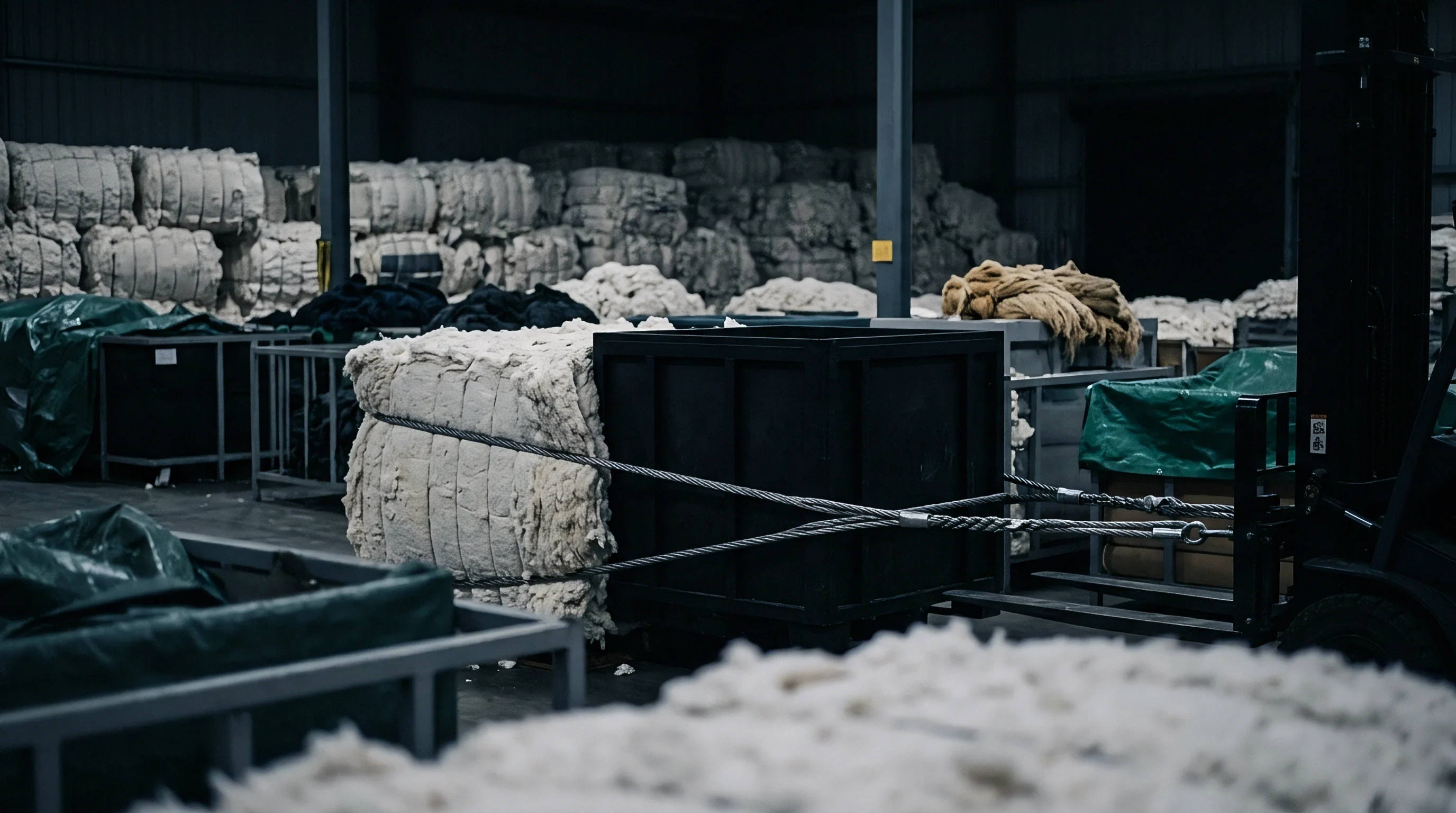
Isotherm
Cellulose fibers absorb ambient vapor until equilibrium vapor pressure matches the surrounding atmosphere. Standard testing conditions specified in ISO 139 govern laboratory verification at 20.0 degrees Celsius and 65.0 percent relative humidity, with allowable tolerances of 2.0 degrees and 4.0 percent relative humidity. Mill storage yards rarely operate inside these boundaries.
When woven or knitted cotton moves from the loom into unconditioned holding sheds, dry weight diverges from measured scale weight according to the sorption curve of the yarn blend. Moisture regain expresses water mass as a percentage of oven-dry fiber mass, differing from moisture content which calculates water mass against total wet mass. A mill shipping unprocessed cloth calculates weight on raw scale readouts unless the purchase contract anchors mass to standardized commercial regain.
Sorption behaviors follow distinct curves during hydration and dehydration. Cotton fibers arriving at 65 percent relative humidity from a drier ambient state hold approximately 7.5 percent moisture regain. The same cotton descending to 65 percent relative humidity from an atmospheric saturation point retains roughly 9.0 percent moisture regain.
This hysteresis gap accounts for 1.5 percent unaccounted mass in lot shipments between coastal export terminals and inland cut-and-sew units. Sizing chemicals compound this equilibrium shift. Ring-spun warp yarns dressed with native potato or corn starch adsorb vapor faster than open-end yarns sized with synthetic polyvinyl alcohol.
Official billing weight defaults to standard regain allowances under ISO 6741 when invoices cite commercial mass.
Synthetic filaments display negligible sorption across identical humidity ranges. Polyester registers a commercial regain of 0.4 percent, nylon 6,6 reaches 4.0 percent to 4.5 percent, and regenerated cellulose lyocell holds 11.5 percent. When designing poly-cotton or cotton-viscose blends, moisture adsorption curves do not scale linearly.
Sized warp yarns retain moisture differently from greige weft picks due to mechanical tension applied on the loom beam. Internal stress locks amorphous fiber zones, restricting water docking sites along hydrogen bonding networks until finishing relaxes the yarn architecture.
| Fiber Classification | Commercial Regain Percentage | Moisture Content Equivalent | Sorption Mechanism |
|---|---|---|---|
| Upland Cotton Greige | 8.50 | 7.83 | Hydroxyl group hydrogen bonding in amorphous cellulose |
| Viscose Rayon | 11.00 to 13.00 | 9.91 to 11.50 | Direct docking along accessible amorphous regenerated cellulose |
| Polyester Polyethylene Terephthalate | 0.40 | 0.40 | Superficial void adsorption without chemical sorption |
| Polyamide 6,6 | 4.50 | 4.31 | Amide group polar attraction in inter-crystalline spaces |
| Flax Bast Fiber | 12.00 | 10.71 | Lignocellulosic capillary uptake within lumen walls |
Shed managers observe significant mass variations during monsoon transits. Air circulation moves through woven selvages slower than through open circular knits. A dense twill rolls off the loom bone-dry under weaving heat, gradually accumulating atmospheric humidity over seven to twelve days in unconditioned racking.
Fabricators measuring roll weight upon delivery encounter variable yield numbers because atmospheric absorption swells the cross-sectional yarn diameter, altering picks per inch and fabric thickness before wet processing begins.


Stack
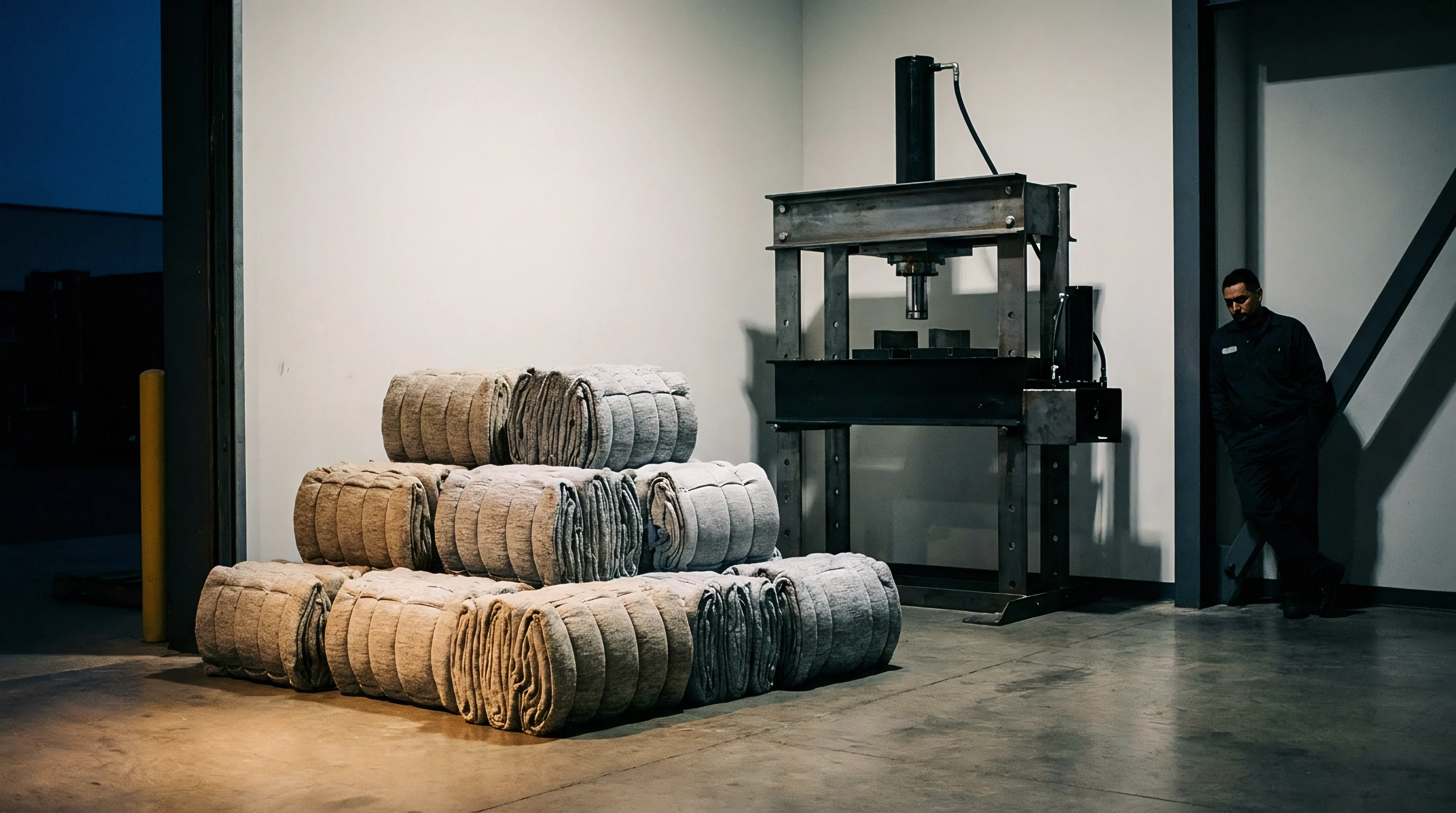
Storage geometry directly determines vapor penetration rates inside warehouse depots. Greige rolls stacked horizontally on palletized metal racking create dense cylindrical packages that block ambient air movement. Core plies remain insulated against external atmosphere while surface layers exchange moisture with the immediate room environment.
In a 300-kilogram roll of heavy canvas, the outermost five layers adjust to fluctuating warehouse humidity within twelve hours. Inner wraps adjacent to the paper tube require up to thirty days to reach identical moisture equilibrium.
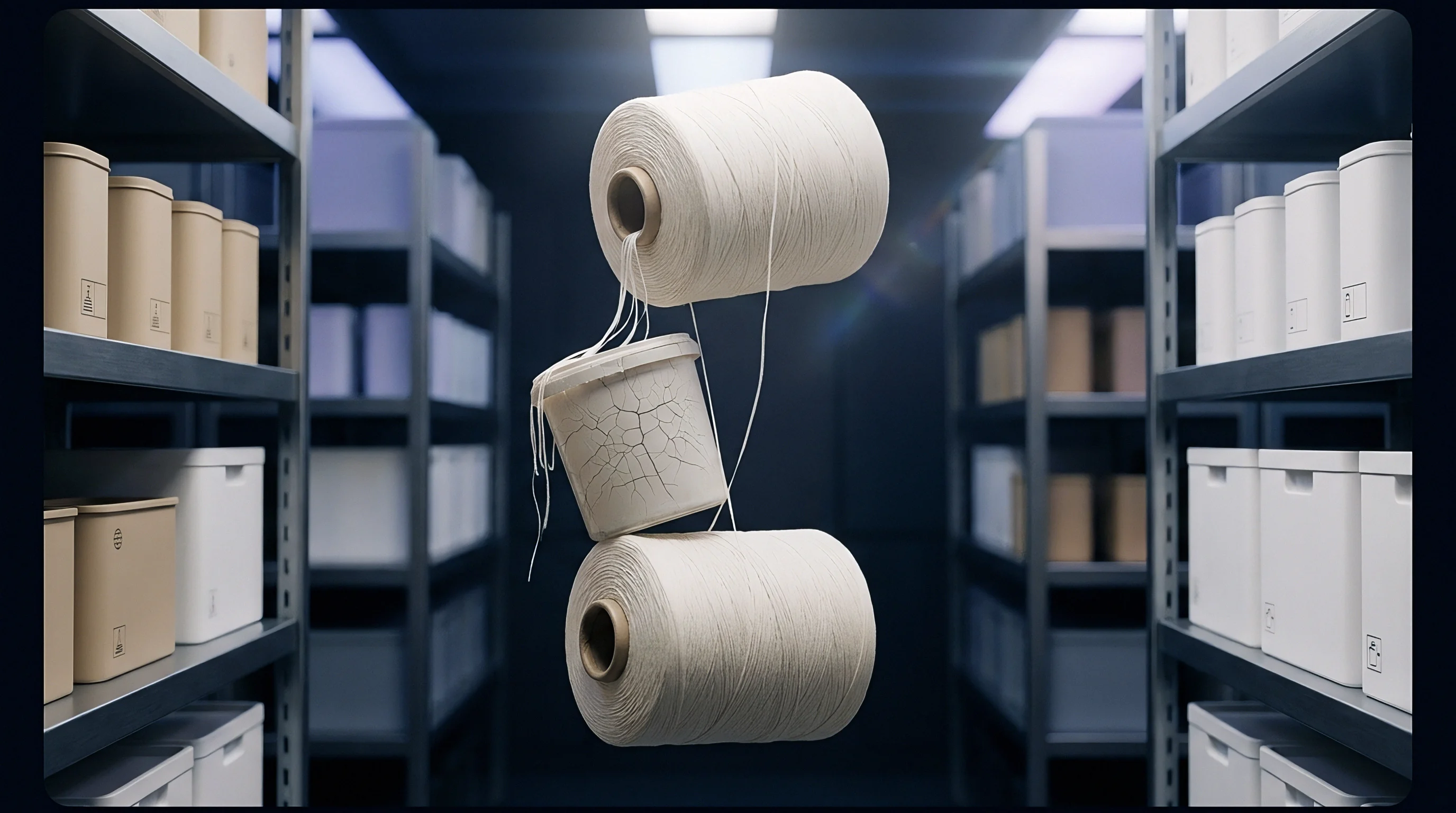
Are Dense Greige Rolls Susceptible to Internal Rot?
Microbial degradation starts when local relative humidity within rolled yardage exceeds 75 percent at temperatures above 25 degrees Celsius. Fungal spores naturally present on raw cotton consume natural pectin, residual waxes, and starch size formulations. This enzymatic feeding produces localized tensile loss, biological heat generation, and irreversible yellow discoloration.
Mold growth damages grey goods silently because surface inspections reveal clean outer plies while tightly wrapped cores develop dark mildew spotting and acidic odors.
- Bacterial Cellulase Digestion cleaves beta-1,4-glucan bonds in cotton polymers, reducing tensile capacity across warp directions.
- Starch Liquefaction breaks amylose chains down into volatile sugars that feed secondary mold colonies inside yarn bundles.
- Capillary Water Condensation collects along metallic roll cradles when surface temperatures plunge below dew point thresholds.
- Crease Setting Distortion fixes mechanical folding lines into the yarn structure under sustained radial compressive load.
Roll compaction accelerates structural deformation under high ambient humidity. Moist cellulose plasticizes under pressure, causing heavy rolls to develop flat spots along contact lines with storage pallets. Yarn crimp shifts unevenly between compressed sides and free curvatures.
When mills pull affected rolls onto stenter frames or desizing lines, tension differentials generate persistent skewing and wavy selvages across finished yardage.
Unwrapped greige bolts left on damp concrete slabs absorb floor water through wicking within two days.
High moisture levels in roll cores alter scouring liquor uptake during preparation phases. Dry core fibers pull caustic baths through vigorous capillary action, whereas moist outer zones absorb chemistries at altered dilution ratios. This variation produces differential dye exhaustion across roll length, yielding uncorrectable head-to-tail shade bands in continuous pad-steam operations.
Invoice
Disputes over delivered yardage frequently originate from mass shifts driven by ambient warehouse vapor. Fabric sold on weight bases rather than strict linear yardage presents serious commercial exposure. When an unconditioned storage unit sits at 85 percent relative humidity, a 50,000-kilogram purchase order of raw cotton duck gains approximately 1,250 kilograms of atmospheric water above standard regain limits.
The buyer pays freight and invoice costs on pure water. A comprehensive laboratory audit verifies dry weight by oven drying representative cut swatches at 105 degrees Celsius until reaching constant mass per ASTM D1576 or ISO 6741 protocols.
What Commercial Regain Adjusts Fabric Billing Weight?
Legal adjustments apply mathematical corrections to convert gross scale weight into contractually sound invoiced mass. The arithmetic separates the dry polymer from volatile water molecules before calculating acceptable allowances.
| Lot Parameter | Dry Winter Scenario | Standard ISO 139 Target | Humid Monsoon Scenario |
|---|---|---|---|
| Gross Scale Weight Recorded | 19,300 kg | 20,000 kg | 20,800 kg |
| Tested Moisture Regain | 4.75 percent | 8.50 percent | 12.80 percent |
| Calculated Oven Dry Mass | 18,425 kg | 18,433 kg | 18,440 kg |
| Commercial Allowance (8.5 percent) | 1,566 kg | 1,567 kg | 18,440 kg |
| Adjusted Invoiced Mass | 19,991 kg | 20,000 kg | 20,007 kg |
| Billing Discrepancy Against Scale | +691 kg shortfall | 0 kg baseline | -793 kg excess water |
| Values computed using ISO 6741 commercial regain formula: Commercial Weight = Oven Dry Weight multiplied by 1.085. | |||
Containerized ocean shipments amplify moisture variances. Sealed maritime boxes exposed to equatorial sun experience thermal cycles where daylight heating evaporates water from fabric plies into container headspace. Night cooling causes this airborne water to condense against the cold steel ceiling, raining liquid back onto top roll cartons.
Cargo surveyors describe this container rain as sweat damage. It rots cardboard cores and leaves concentric rust rings across greige goods.
Purchase contracts manage these environmental liabilities by specifying clear verification terms. A well-constructed purchase order incorporates standard arbitration clauses referencing BISFA rules or ASTM D1909 commercial regain tables, binding both parties to settle final settlement weight on oven-dry mass plus statutory regain rather than dockside weighbridge tickets.

Starch
Sizing chemistries coat warp yarns to survive violent shedding actions inside air-jet and rapier looms. Formulations rely on native maize starches, modified tapioca starches, carboxymethyl cellulose, and polyvinyl alcohol. Natural starches are intensely hygroscopic.
When unconditioned warehouses exceed 70 percent relative humidity, dried starch films absorb atmospheric water and soften. Weavers call this phenomenon gumming. Softened size coats stick to adjacent yarn loops in the wound roll package, causing yarn breakage during subsequent beam unwinding operations.
Polyvinyl alcohol films lose mechanical cohesion when relative humidity climbs above sixty-eight percent.
Storage duration alters the crystalline morphology of applied starches. In dry environments below 45 percent relative humidity, starch films lose plasticizing moisture, turning brittle and flaking off during yarn handling. In damp environments, retrogradation occurs.
Amylose molecules re-align into tightly packed crystalline structures that resist enzymatic hydrolysis during desizing. When mills store greige goods under fluctuating warehouse conditions for more than six months, standard alpha-amylase desizing wash cycles fail to clear the yarn sheath, creating resist spots that block dyestuff penetration.
- Enzymatic Desize Resistance develops when retrograded starch crystallizes during prolonged humid warehouse storage cycles.
- Tackiness and Blocking occur when plasticized polyvinyl alcohol films fuse together under high roll winding tension.
- Hydrophobic Wax Migration takes place when storage temperatures exceed 40 degrees Celsius, forcing natural fats onto yarn surfaces.
Mill technical directors defend shade blotchiness by claiming the greige yarn arrived with uneven paraffin wax concentrations from the spinning frame. Such explanations ignore storage-induced size degradation. Uneven ambient humidity across high racking creates differential size solubilization, guaranteeing that scouring baths clean the cloth unevenly from piece to piece.
Climate
Maintaining raw greige integrity demands active psychrometric management inside storage areas. Warehouses storing cellulose fabrics function best between 55 percent and 65 percent relative humidity at temperatures between 18 and 24 degrees Celsius. These set points prevent mold spores from germinating while keeping yarn regain close to standard billing equilibrium.
Good storage facilities deploy continuous industrial dehumidification coupled with forced air circulation fans positioned along dead corners.
Vapor barriers isolate storage zones from exterior weather swings. Polyethylene vapor barriers beneath concrete floor slabs stop ground moisture transmission. Exterior loading docks create large infiltration risks when doors open during rainstorms.
Air curtains, rapid-roll insulated doors, and positive pressure ventilation prevent moist outside drafts from sweeping over pallet racks. Continuous data loggers mounted at three distinct vertical elevations track temperature and humidity stratification within high-bay storage facilities.
Yardage stored against outdoor walls encounters steep thermal gradients. Cold outer walls drop the air temperature of adjacent racking below the local dew point, causing water to condense onto protective plastic sleeves. If sleeves carry perforations, water migrates directly into selvages.
Pallets must rest at least fifteen centimeters off the floor on clean racks placed fifty centimeters away from external building perimeters. Dry warehouse floors keep cotton sound.