Controlling Surface Oligomer Migration during False Twist Texturing Operations
Controlling PET texturing oligomers requires low trimer chips, thermal zone optimization below 210C, and high stability spin finish surfactants.

Kinetics
Direct esterification of purified terephthalic acid with monoethylene glycol leaves an equilibrium concentration of low molecular weight cyclic compounds in the resulting polyethylene terephthalate. Primarily cyclotrisethylene terephthalate (the cyclic trimer), along with smaller fractions of cyclic tetramer and dimer, these rings stay locked in the matrix when the polymer is melt-spun into partially oriented yarn. Standard melt-spun polyester chips carry 1.3% to 1.8% total oligomers by weight, and the cyclic trimer makes up roughly 85% of that load.
In high-speed false twist texturing, the yarn runs through primary heaters at 180°C to 230°C under continuous tension. The heat frees polymer chain segments in amorphous regions, driving non-crystalline, low-molecular-weight species outward to the filament surface.
Thermal Drivers of Cyclic Trimer Transport
Inside the primary texturing heater, yarn core temperatures climb past the glass transition point ~ around 75°C dry, though plasticizing finishes can pull it down near 60°C. As filament temperatures near the melting range of the amorphous domains, cyclic trimer molecules diffuse along thermal and concentration gradients toward the less dense outer perimeter of each monofilament. The diffusion coefficient follows an Arrhenius relationship, doubling for every 12°C increase in heater temperature above 190°C. Because the cyclic trimer has a relatively compact cross-section, it slips readily through microvoids in the oriented structure before significant crystallization sets in.
Once at the filament boundary, exposure to cooler ambient air along the track produces immediate supersaturation. Liquid and volatilized oligomers nucleate, freezing into hard, opaque crystals. Some cling loosely to the running yarn bundle; the rest shed directly onto adjacent machine components.
Amorphous Matrix Mobility under High Tension
Drawing zones alter free volume throughout the monofilaments. While high draw ratios align chains along the fiber axis ~ initially tightening amorphous pathways and restricting transport ~ continuous twist insertion applies mechanical shear that disrupts intermolecular hydrogen bonds and van der Waals forces. That interplay of draw tension and rotational shear opens transient, high-mobility micro-domains through which low-molecular-weight rings slip around oriented crystallites.
Spin finish applied during primary yarn extrusion acts as a secondary driver. Specific emulsifiers penetrate the outer 50 to 100 nanometers of the filament skin, relaxing local chain resistance and lowering the activation energy required for oligomers to diffuse. This outward flux persists until the yarn clears the primary heater and reaches the cooling plate, where falling temperatures freeze chain mobility in place.
Whether targeted polymer modifications can anchor cyclic trimers in the amorphous core without compromising the yarn’s mechanical draw capacity remains an open question.
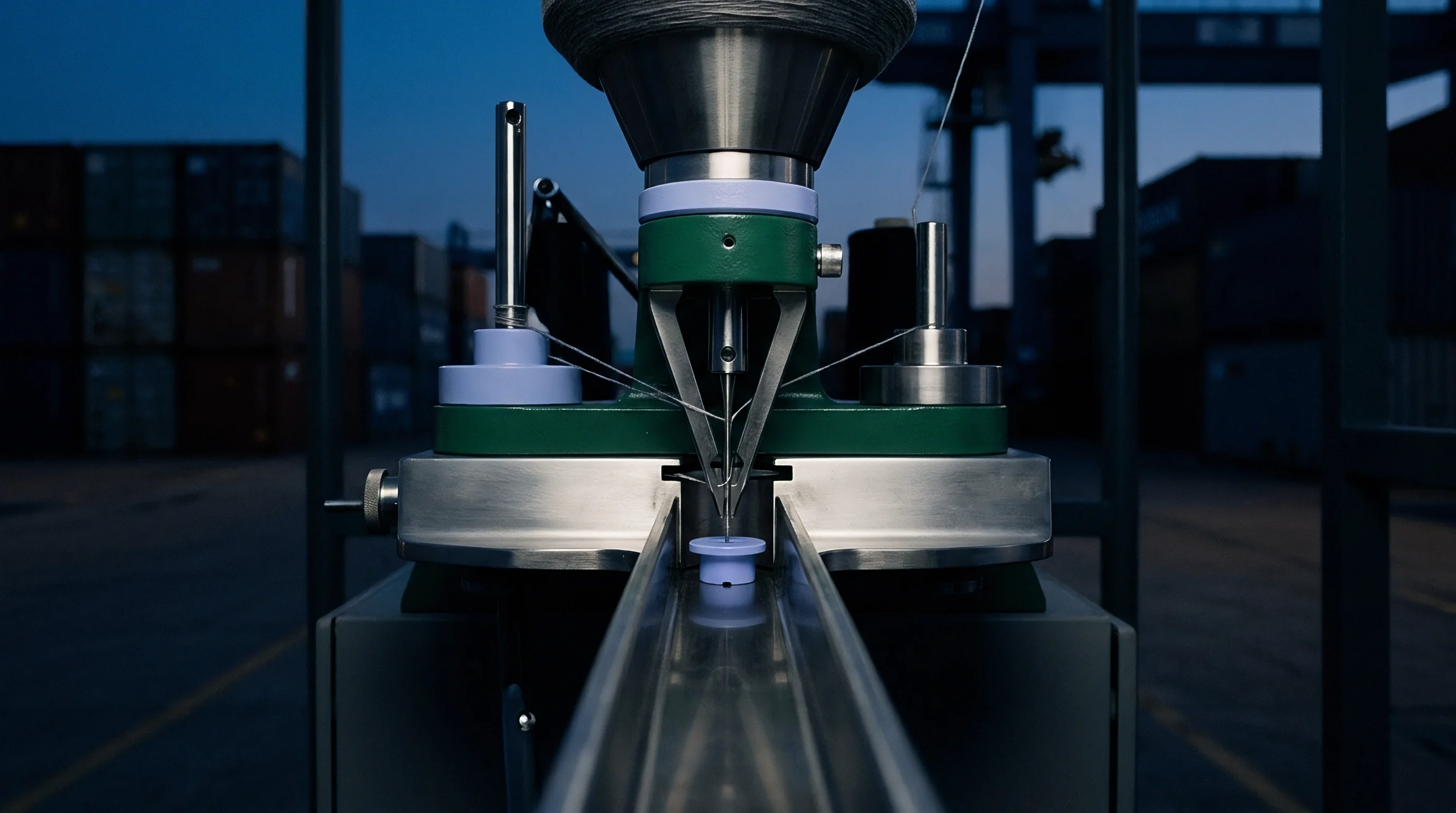
Flake
Crystallized surface deposits create direct mechanical issues across the texturing line. A fine white powder settles inside heater tracks, along cooling plates, around friction disc aggregates, and inside interlacing jet orifices. Running at speeds exceeding 900 meters per minute, the yarn throws off airborne particles that condense against cold metal, forming crusts that distort contact geometry and trigger sharp, localized tension spikes.
The accumulation of cyclic trimer deposits exceeding 0.05 milligrams per meter of yarn length increases tension variation across friction aggregates by up to 28 percent during continuous 24-hour operation.
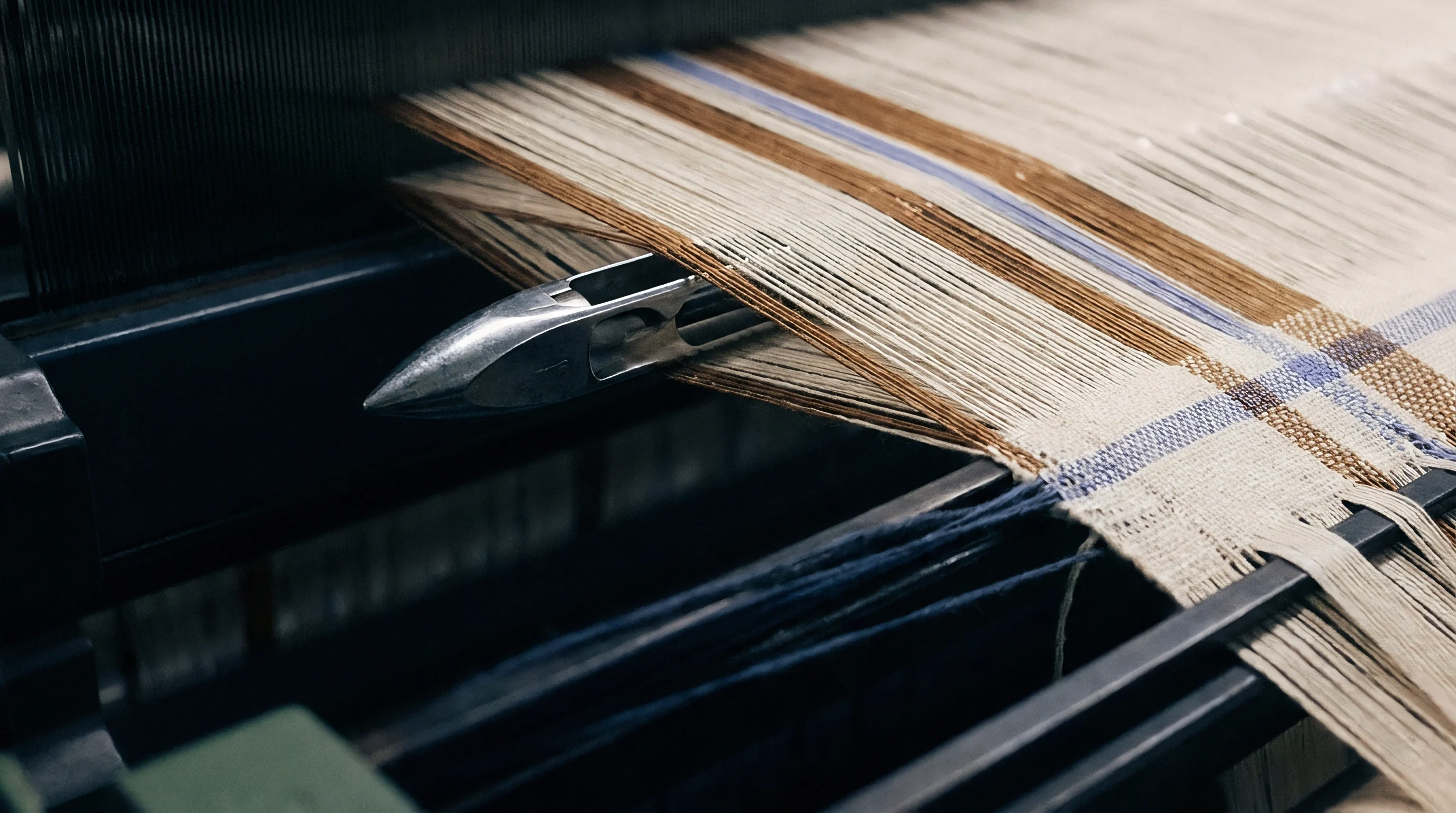
Deposition Patterns across Disc Aggregates
Friction discs take the brunt of this fouling. As the yarn bundle works over revolving disc edges, weakly adhered trimer crystals shear away and blend with thermally degraded finish residues, forming an abrasive paste. This paste chemically attacks polyurethane discs and accelerates surface pitting; solid ceramic and diamond-coated surfaces develop a smooth glaze that steadily reduces their working coefficient of friction.
A lower friction coefficient destabilizes twist transfer, lowering crimp contraction and compromising yarn bulk, though diamond coatings curb powder adherence better than ceramic or polyurethane. The resulting tension fluctuations produce visible faults in the textured package, including tight spots, filament slubs, and uneven dye uptake.
| Disc Surface Material | Deposit Adhesion Rate (mg/cm²/hr) | Friction Coefficient Loss after 48 Hours (%) | Cleaning Interval (Hours) | Surface Abrasion Failure Mode |
|---|---|---|---|---|
| Standard Polyurethane | 0.42 | 22.5 | 24 | Chemical swelling and pitting |
| High-Density Plasma Ceramic | 0.18 | 11.2 | 72 | Smooth glaze accumulation |
| Micro-Textured Diamond Film | 0.04 | 2.1 | 168 | Negligible mechanical wear |
| Nickel-Chrome Alloy Coating | 0.31 | 16.8 | 48 | Localized flaking and scouring |
Ceramic Guide Abrasion and Filament Snagging
Ceramic yarn guides of aluminum oxide or titanium oxide collect trimer crystals in their micro-grooves. Under continuous tension, the running yarn grinds these sharp particles against the ceramic, turning guide surfaces abrasive. Monofilaments passing over them suffer longitudinal scratching, skin peeling, and filament shearing.
The resulting broken filaments either wrap around nearby shafts or generate loose fly that drifts into downstream interlacing nozzles.
Interlacing nozzles clog when dry trimer dust meets finish mist inside the air mixing chamber. This buildup distorts the vortex, leading to erratic knot counts and weak knot retention in both single- and parallel-end yarns. The fallout carries straight into warping and knitting, where irregular interlacing causes end-breaks, needle damage, and loom stops.
- Friction Disc Glazing reduces twist insertion capability, yielding under-twisted yarn segments with weak crimp rigidity and uneven bulk.
- Interlacing Orifice Blockage pulls knot frequency below specification, leaving un-interlaced lengths that split during high-speed warping.
- Heater Vapor Track Fouling builds an insulating crust that lowers heat transfer efficiency, forcing operators to raise heater setpoints.
- Cooling Rail Crust Formation changes yarn vibration dynamics, setting up high-frequency tension ripples that trigger filament breaks.
Elevated surface deposit levels are traced both to heater temperature drift during texturing and to residual oligomer content within the raw partially oriented yarn lots.

Finish
The spin finish applied during extrusion acts as the first chemical barrier against oligomer migration. Where standard formulations rely on baseline lubricants, antistats, and emulsifiers, finishes designed for high-speed texturing incorporate high-molecular-weight synthetic esters, polyoxyethylene block copolymers, and thermally stable surfactants capable of withstanding temperatures above 200°C without oxidizing or fuming off.
Emulsifier Thermal Stability and Solubilization Capacity
When finish components degrade thermally inside the heater, the surfactant boundary breaks down and releases low-molecular-weight oligomers onto machine surfaces. Synthetic ester lubricants for draw texturing are chosen with flash points above 250°C and volatility below 5% after 2 hours at 200°C. These stable matrices hold migrating cyclic trimers in solution or amorphous suspension, keeping hard crystal facets from forming along the filament skin.
Ethoxylated fatty alcohols and narrow-distribution polyalkylene glycol emulsifiers provide high solubilization capacity for cyclic compounds. Keeping an intact emulsifier film across the monofilament surface prevents trimer molecules from coalescing into macro-crystals during their brief transit through the heater track.
Spin finish volatile loss exceeding 8 percent at 200°C correlates directly with accelerated oligomer precipitation across primary heater plates.
Oligomer Binder Formulations in Spin Finishes
Additives based on organosilicon compounds and polar polymeric binders encapsulate trimers as they reach the filament surface. By altering the crystal habit of cyclotrisethylene terephthalate, they shift the structure from sharp, tabular plates into softer, spherical agglomerates with minimal surface adhesion. These rounded particles pass through friction discs and ceramic guides with far less tendency to stick or score contact surfaces.
Non-ionic surfactants with high cloud points help maintain film integrity under the thermal and mechanical stresses of texturing. This balance allows the surface-bound oligomer-binder complexes to wash out readily during subsequent aqueous scouring.
Maintaining spin finish oil pick-up strictly within targeted limits keeps hardware deposition down while preserving consistent yarn friction.
Friction
Machine thermal profiles and mechanical settings dictate how quickly oligomers reach the filament surface. Contact heaters transfer heat through physical contact against a curved metal plate, setting up sharp thermal gradients through the yarn bundle. Enclosed convection heaters use high-velocity hot air within a tube instead, heating radially and avoiding hot spots on outer filaments.
Do Convection Heaters Reduce Surface Oligomer Deposit Rates?
Convection units heat the yarn uniformly without dragging it over hot metal. Removing that contact eliminates the scraping that wipes surface trimers onto track surfaces. Because they operate at air temperatures between 300°C and 450°C over a shorter run, convection heaters bring the yarn up to temperature quickly and curtail how long polymer chains stay mobile above the glass transition point.
Built-in condensation traps collect volatilized fractions, while dropping dwell times from 0.4 seconds in conventional contact plates to under 0.15 seconds in convection tubes limits trimer diffusion through the amorphous matrix. Total surface-extractable oligomer levels on finished packages fall by 30% to 45% under optimized convection heating.
| Heater Configuration | Heater Setpoint (°C) | Draw Ratio | D/Y Ratio | Surface Oligomers (mg/g yarn) | Heater Deposit Rate (g/spindle/week) |
|---|---|---|---|---|---|
| Contact Plate (1.5 m) | 195 | 1.62 | 1.70 | 1.85 | 0.45 |
| Contact Plate (1.5 m) | 215 | 1.62 | 1.70 | 2.90 | 0.92 |
| Convection Tube (1.0 m) | 380 (Air) | 1.62 | 1.70 | 1.10 | 0.18 |
| Convection Tube (1.0 m) | 420 (Air) | 1.65 | 1.75 | 1.35 | 0.24 |

Twist Insertion Dynamics and Temperature Distribution
Inter-filament friction during twist insertion generates internal heat, adding to the yarn’s total thermal exposure and speeding up trimer exudation. Fine-tuning the disc-to-yarn speed ratio (D/Y ratio) tempers surface scuffing across the aggregates, holding twist insertion steady without introducing the friction peaks that strip finish oil and surface polymer.
Draw ratio adjustments directly influence crystalline morphology. Higher ratios tighten orientation in amorphous zones, presenting physical barriers that impede cyclic molecules, though tension must remain balanced against capillary break limits.
- Lower primary contact heater setpoints by 8°C, adjusting secondary heater overfeed ratios as needed to preserve crimp contraction targets.
- Raise the draw ratio by 0.02 units to tighten amorphous chain orientation, tracking tension closely to keep capillary breaks in check.
- Shift the D/Y ratio from 1.60 toward 1.72 to limit disc scuffing and prevent mechanical stripping of the finish film.
- Scour primary heater vapor tracks with high-pressure steam every 14-day cycle to clear condensed oligomers before they bake into hard crusts.
- Calibrate cooling zone sensors so rail air streams hold at 22°C, promoting rapid stabilization of the residual surface finish.
Running false twist texturing lines outside recommended temperature and draw envelopes promotes rapid surface crystallization, bringing on disc glazing, package density faults, and widespread dye barré.

Bath
Quantifying surface-extractable and total oligomer content provides the benchmark for qualifying raw yarn lots and troubleshooting process upsets. Solvent extraction isolates low-molecular-weight fractions from the bulk polyester matrix, using selective solvents, controlled temperatures, and gravimetric or chromatographic analysis to resolve concentrations down to microgram levels.
Solvent Extraction Testing via Dichloromethane
Dichloromethane extraction under DIN 54240 serves as the reference method for measuring total extractables in polyester yarn, running a standard 6-hour cycle. In a Soxhlet apparatus, boiling dichloromethane at 40°C washes over a weighed yarn sample for 4 hours or 30 extraction cycles, dissolving spin finish oils and low-molecular-weight oligomers without swelling or degrading the semi-crystalline core.
After extraction, the solvent is evaporated under vacuum and the dried residue weighed to establish total extractable mass. A secondary wash with petroleum ether or cold methanol separates soluble finish oils from the insoluble trimer fraction, leaving the net surface oligomer weight.
| Test Protocol | Solvent System | Targeted Oligomer Species | Precision Limit (mg/g) | Standard Testing Time |
|---|---|---|---|---|
| DIN 54240 Soxhlet | Dichloromethane | Total surface and core extractables | ± 0.05 | 6 Hours |
| ISO 1833 Solvent Extraction | Dichloromethane / Methanol | Surface-bound cyclic trimer fraction | ± 0.02 | 3 Hours |
| HPLC Reverse-Phase Analysis | Acetonitrile / Water Gradient | Individual cyclic trimers, tetramers, dimers | ± 0.001 | 45 Minutes |
| Gravimetric Surface Wash | Dioxane (Cold Surface Wash) | Unbound exterior surface oligomers | ± 0.03 | 30 Minutes |
High-Performance Liquid Chromatography Quantification
Reverse-phase high-performance liquid chromatography (HPLC) profiles the molecular weight distribution of the extracted species. Dissolved in dimethylformamide or hexafluoroisopropanol, samples run through a C18 silica column on an acetonitrile-water gradient with UV detection at 242 nanometers. The chromatogram separates distinct peaks for cyclic trimer, cyclic tetramer, cyclic pentamer, and linear oligomers.
Chromatographic profiles show the cyclic trimer making up 82% to 88% of total extracted oligomer mass, with cyclic tetramer contributing 8% to 12%. Pinning down these ratios helps determine whether texturing fallout originates from chip polymerization chemistry or excessive heater exposure on the draw frame.
Gravimetric extraction limits for surface-bound oligomers on standard textured polyester yarns are established at a maximum of 0.12 percent by weight.
Quality control teams apply this checklist when clearing incoming yarn lots for production:
- Total Surface Extractable Limit confirmed below 0.10% by mass via 4-hour cold dioxane extraction before approving production trials.
- Cyclic Trimer Ratio verified by HPLC to ensure the trimer fraction remains at or below 85% of total extracted oligomers.
- Spin Finish Residue Yield determined by methanol wash to confirm oil pick-up matches contract specifications within ± 0.15%.
- Thermal Volatilization Loss measured via thermogravimetric analysis at 220°C to confirm finish stability prior to bulk processing.
Procurement contracts routinely reference ISO 1833 extraction thresholds, specifying that yarn lots showing surface-extractable oligomers above 0.15% by weight trigger commercial claims or outright lot rejection.

Yield
Financial fallout from surface oligomers carries well past the texturing floor into dyeing and finishing. Residual trimers on textured yarn wash into liquor baths during high-temperature package dyeing. Above 120°C, these cyclic compounds dissolve freely into the dye bath, only to recrystallize onto fabric surfaces as the bath cools, creating sharp shade disparities and barré banding.
Commercial Loss Calculations for High-Oligomer Lots
Excess oligomers drive up conversion costs through yield loss in alkaline scouring, inflated dyestuff consumption, and frequent boil-out downtime. Lots that demand corrective pre-scouring add chemical, utility, and effluent expenses that erode fabric margins.
A commercial lot of 20,000 kilograms running at 0.25% surface oligomers carries 0.17% more non-fibrous mass than a benchmark 0.08% lot. That difference amounts to 34 kilograms of invoiced material that washes away before dyeing.
Dyeing this parcel without specialized oligomer dispersants risks trimer recrystallization, typically resulting in roughly a 3.5% rejection rate from barré and uneven shade. With grey fabric valued at $3.20 per kilogram and finished goods at $5.80 per kilogram, the losses across the lot break down as follows:
Direct material loss from excess oligomers: 34 kg × $3.20/kg = $108.80.
Fabric rejection cost: 20,000 kg × 3.5% × $5.80/kg = $4,060.00.
Additional scouring chemical and machine downtime charges: $1,250.00.
Total financial penalty: $5,418.80, representing an effective cost increase of $0.27 per kilogram over the contract purchase price.

Downstream Dyeing Barré and Defect Costs
Oligomer crystals on yarn packages act as resist masks, impeding dye diffusion into the monofilaments. The resulting pale flecks read as optical barré across woven and knitted yardage. Correcting the defect requires aggressive reduction clearing with sodium hydrosulfite and caustic soda at 85°C, or solvent scouring with ester-based dispersants ~ both of which drive up processing costs and risk shifting the target shade.
Inside dyeing vessels, trimer buildup coats heat exchanger plates and pump impellers, restricting liquor flow and forcing dyehouses to run frequent boiling-out cycles with alkaline dither solutions.
Alkaline reduction clearing of oligomer-contaminated dyed packages increases total wet processing energy consumption by up to 14 percent.
Writing a 0.10% maximum surface trimer limit directly into purchase contracts protects dyehouse yields and prevents shade variation across downstream production lots.