Standard Laboratory Conditioning Methodologies for Polyethylene Terephthalate Yarn
Polyethylene terephthalate yarn requires preconditioning at 40-50°C followed by 20°C and 65% RH equilibration to stabilize moisture regain at 0.4% for accurate mass and tenacity testing.
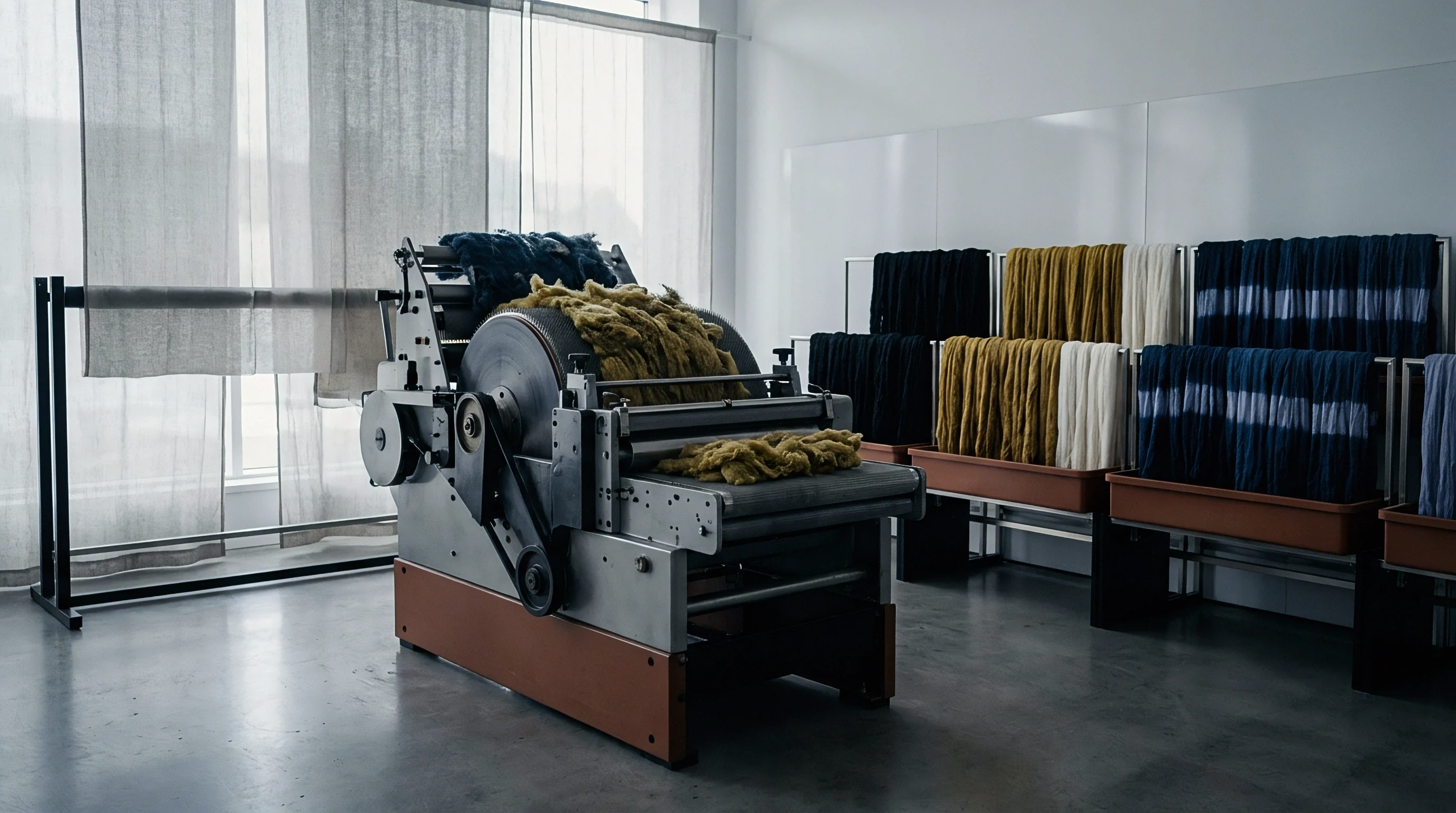

Equilibrium
Polyethylene terephthalate filaments exhibit a dense crystalline structure that restricts moisture uptake. Benzene rings and ester linkages along the polymer chain are inherently hydrophobic, confining water sorption strictly to accessible amorphous regions. In fully drawn yarn, volume crystallinity often exceeds forty-five percent, leaving little internal room for moisture integration.
Standard equilibrium moisture regain for polyethylene terephthalate therefore hovers between 0.40 percent and 0.50 percent by mass under baseline conditions of 20°C and 65 percent relative humidity ~ well below the regain levels observed in cellulosics or polyamides.
Driven by concentration gradients between the ambient laboratory air and the filament core, moisture transport into a polyester yarn bundle follows Fickian kinetics. Because the glass transition temperature of dry polyethylene terephthalate sits near 75°C, polymer chain segments remain immobile at typical room temperatures, forcing moisture to diffuse slowly through micro-voids in the amorphous phase. Atmospheric control within narrow tolerances determines whether a laboratory reaches true thermodynamic mass stability or simply records transient values mid-sorption.

Sorption Kinetics in Semi-Crystalline Polymers
Water absorption in polyester filaments occurs through localized hydrogen bonding at free carbonyl groups in amorphous zones, a process described across humidity ranges by the Guggenheim-Anderson-de Boer sorption isotherm model. At low relative humidity, monolayer deposition dominates internal surface adsorption. Once relative humidity reaches 65 percent, multilayer clustering develops within accessible micro-voids without altering the crystalline matrix.
| Yarn Type and Structure | Filament Count & dtex | Crystallinity (%) | Equilibrium Regain (%) | Time to Mass Stability (Hours) |
|---|---|---|---|---|
| Fully Drawn Yarn (FDY) Semi-Dull | 167 dtex / 48 filaments | 48.5 | 0.42 | 3.5 |
| Partially Oriented Yarn (POY) Bright | 245 dtex / 72 filaments | 12.0 | 0.58 | 2.0 |
| Draw Textured Yarn (DTY) Microfibre | 83 dtex / 144 filaments | 42.0 | 0.47 | 1.5 |
| High Tenacity Industrial Filament | 1100 dtex / 192 filaments | 54.0 | 0.38 | 6.0 |
Desorption retains more moisture than absorption at identical relative humidity levels. This hysteresis occurs because absorbed water molecules prompt subtle local chain realignments that trap residual moisture during drying. A bobbin pulled from a humid warehouse will hold more moisture at 65 percent relative humidity than one conditioned from an oven-dry state.
Pre-conditioning clears this history by bringing all test specimens down to a uniform low-moisture threshold first.
Hydrophobic polyester filaments reach weight stability significantly faster than hydrophilic natural fibres due to limited accessible amorphous regions.
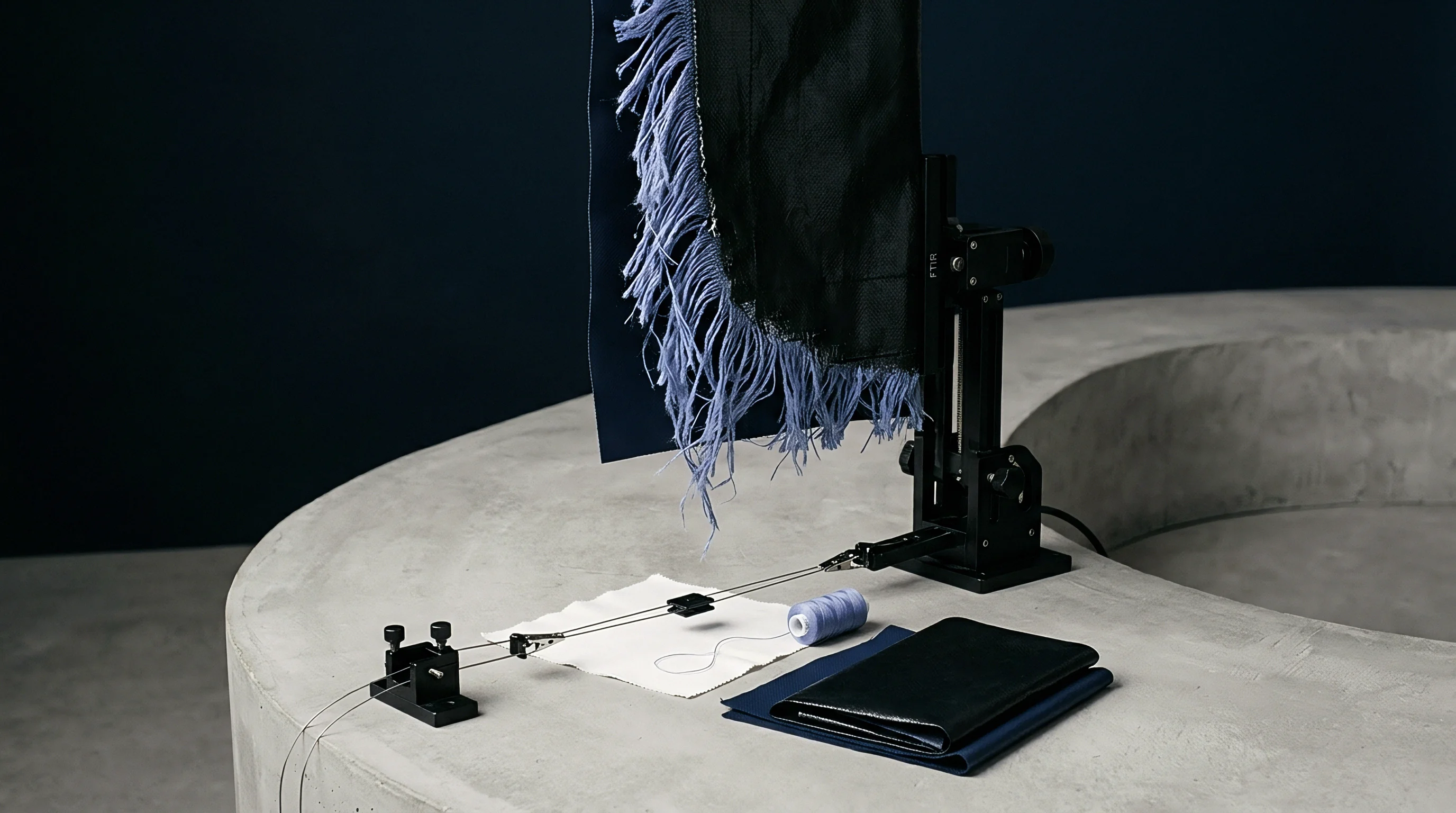
Amorphous Moisture Regain Dynamics
Commercial polyester yarns carry spin finishes ~ blends of emulsifiers, antistatic agents, and lubricants applied during extrusion or texturing ~ that exhibit hygroscopic properties distinct from the base polymer. Heavy finish loads exceeding 1.2 percent by weight inflate apparent moisture uptake rates, masking the actual regain kinetics of the polyester itself. When separating true fiber regain from topical chemistry, technicians extract the spin finish with petroleum ether prior to high-precision moisture determinations.
Mass stability is reached when successive weighings of a suspended skein taken at two-hour intervals show less than 0.1 percent change. High filament counts and micro-denier geometries speed up equilibration thanks to their elevated surface-area-to-mass ratios, whereas industrial yarns with heavy linear densities require extended exposure to settle across the full cross-section.
Conditioning skeins in a single layer with open spacing allows unimpeded ambient airflow to equalize moisture distribution across every filament.
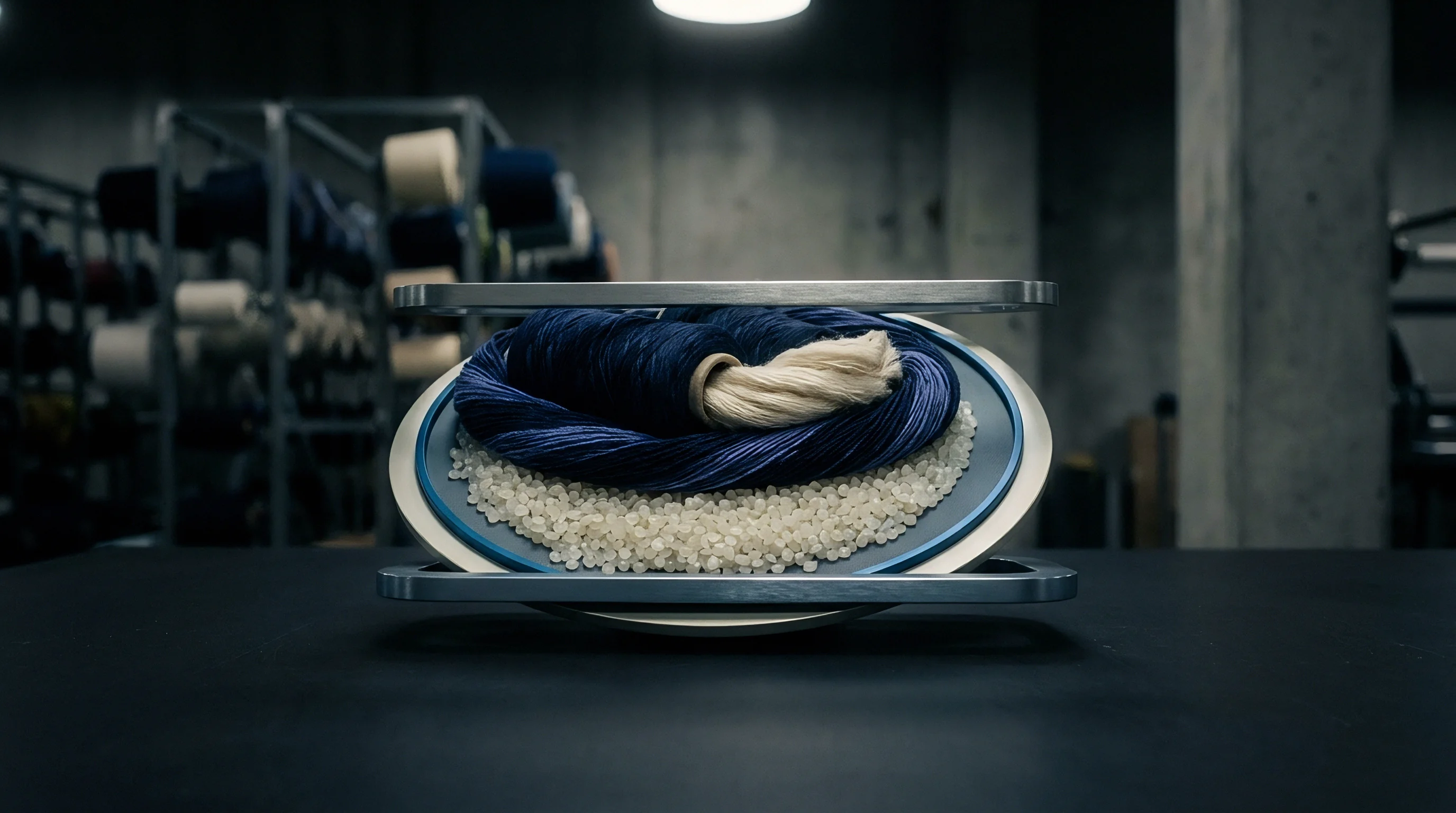

Relaxation
Synthetic yarns retain mechanical stresses imparted during high-speed texturing, drawing, and package winding operations. Internal molecular strain distorts crystalline orientation and modifies filament dimensions over time. Exposure to elevated temperature during laboratory pre-conditioning accelerates the release of trapped internal energy, stabilizing the mechanical baseline of the fiber prior to tensile or shrinkage evaluation.
Standard protocol places polyethylene terephthalate yarn in a pre-conditioning thermal bath between 40°C and 50°C at relative humidity levels below 10 percent for a minimum duration of two hours. Dry heating drives off excess free moisture and frees trapped polymer segments, allowing stress decay without inducing thermal shrinkage or crystalline restructuring. Skipping pre-conditioning leaves residual package strain intact, skewing subsequent elongation and tenacity readings.
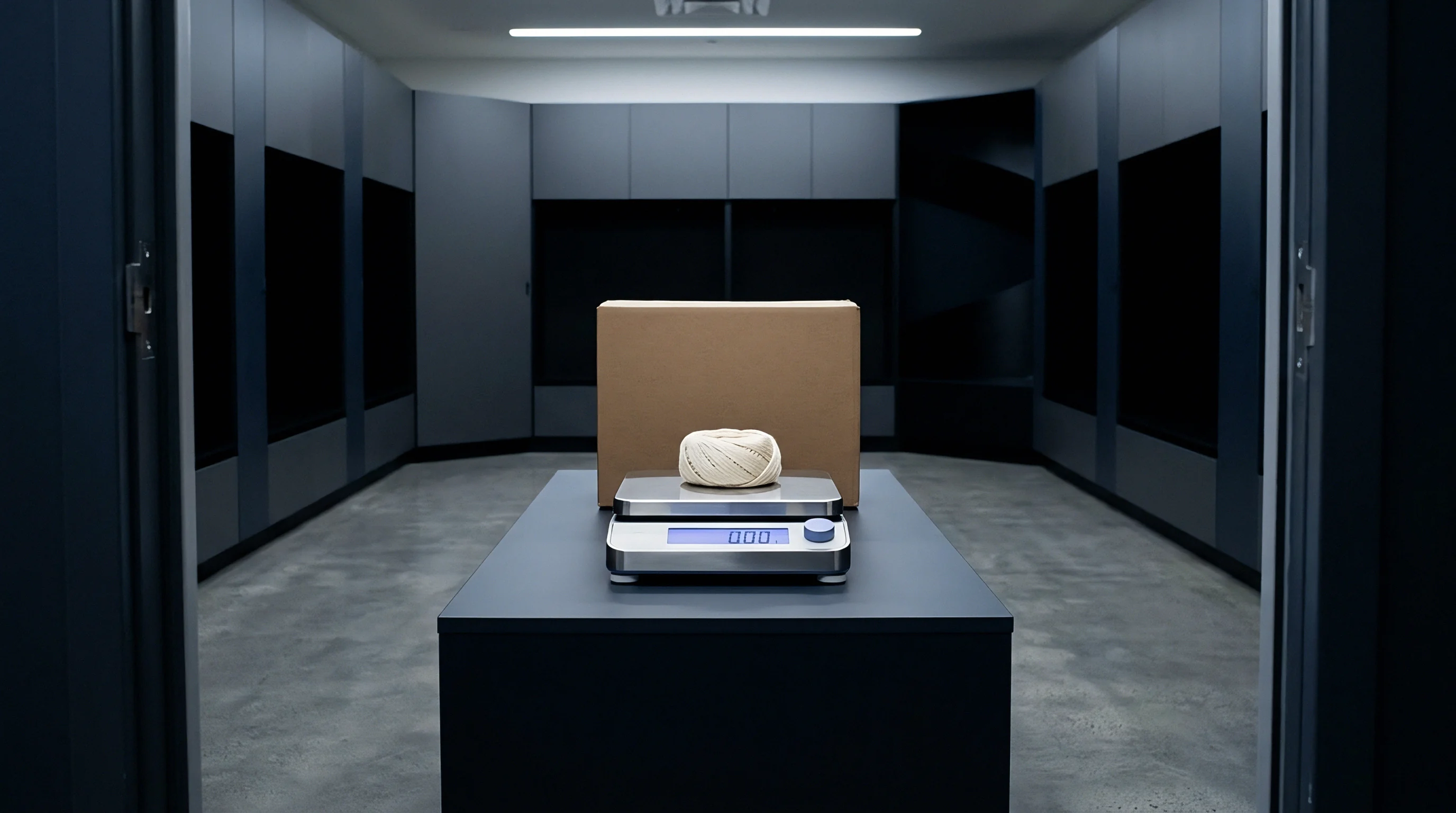
Thermal History Erasure and Pre-Conditioning Protocol
Yarn taken straight from dense commercial packages carries localized structural deformations caused by winding compression. Under warm, low-humidity conditions, those internal stresses decay exponentially as polymer chains settle into lower energy configurations, standardizing the initial physical state across samples collected from disparate production lots.
The outer layers of a yarn package experience lower radial compression than inner layers near the paper core. Drawing test specimens from varying package depths without preliminary thermal stabilization introduces structural variance into tensile test datasets. Pre-conditioning standardizes the viscoelastic response across all test specimens.
Specimen conditioning under ASTM D1776 demands pre-conditioning when yarn samples arrive from high-humidity transit environments to eliminate hysteresis bias.
Package Tension and Dimensional Creep Recovery
When yarn remains under tension on a bobbin, physical creep extends the amorphous polymer regions. Unwinding releases that tension, but elastic recovery occurs in two distinct phases: immediate elastic recoil and delayed viscoelastic recovery. Laboratory technicians wind yarn into loose skeins of controlled perimeter using a standard wrap reel before placing them in the conditioning atmosphere.
Skein winding tension must not exceed 0.05 cN per dtex to prevent fresh mechanical deformation during specimen preparation. Loose skeins suspended inside ventilated conditioning cabinets recover their relaxed dimensional state within twenty-four hours. Testing yarn directly from a constrained bobbin yields artificial modulus values that fail to mirror true material performance under neutral tension.
Inconsistent tensile strength test results often trace to improper laboratory equilibration rather than variations in oil formulation or polymer intrinsic viscosity.
Clamp
Environmental control within testing enclosures governs the precision of physical specimen measurements. Temperature variations alter air viscosity and relative humidity balance, directly influencing mass exchange rates. ISO 139 defines the standard atmosphere for textile testing as 20°C with a tolerance of ±2°C, and 65 percent relative humidity with a tolerance of ±4 percent.
Precision testing protocols narrow these bands to ±1°C and ±2 percent relative humidity to maintain high reproducibility across accredited laboratories.
Conditioning enclosures utilize recirculating fans to maintain continuous air movement around suspended yarn skeins. Air velocity across the specimens ranges between 0.15 and 0.30 metres per second. Excessive air velocity introduces mechanical vibration that distorts sensitive micro-balance readings, while stagnant air creates micro-climates around dense yarn bundles, slowing atmospheric moisture exchange.
Atmospheric Tolerance Bands in Testing Enclosures
Control of relative humidity relies on precise ambient temperature management. A temperature fluctuation of 1°C inside a sealed enclosure causes a relative humidity shift of approximately 4 percent. Conditioning chambers utilize dual-stage platinum resistance thermometers coupled with capacitive humidity sensors to monitor atmospheric drift.
Laboratory loggers record these parameters continuously to validate environmental compliance throughout the conditioning cycle.
Mounting yarn specimens into mechanical testing machines requires specialized pneumatic clamps to avoid stress concentration at the jaw faces. Smooth flat jaws crush synthetic filaments, causing premature breakage inside the grip boundary. Smooth capstan grips or horn-type clamps distribute tensile loads along a curved friction surface, ensuring failure occurs within the free gauge length.
When Does Spin-Finish Volatility Interfere with Dry Mass Determination?
Elevated oven temperatures during dry mass testing alter surface oil composition. Volatile organic components present in low-grade spin finishes evaporate alongside structural moisture when subjected to standard 105°C drying cycles. This thermal loss manifests as artificial moisture mass loss, falsely inflating calculated regain percentages.
Extraction of volatile finishes prior to thermal processing resolves this measurement interference.
The operational failure modes detailed below highlight environmental and mechanical vulnerabilities during laboratory conditioning cycles.
- Uncalibrated Hygrometer Drift Sensor drift allows humidity to slip out of specification undetected, shifting mass baselines between test batches.
- Package Core Compaction Dense bobbin winding restricts ambient air penetration, leaving core yarn layers under-conditioned despite extended exposure times inside laboratory chambers.
- High Velocity Air Turbulences Excess airflow velocity inside conditioning cabinets entangles fine-denier micro-filaments, introducing non-uniform mechanical pre-tension prior to tensile evaluation.
- Thermal Gradient Formation Radiant heat from enclosure lighting creates localized hot spots, lowering regional relative humidity and disrupting uniform moisture sorption across hung skeins.
- Pneumatic Grip Over-Pressurization Excessive clamping pressure crushes outer filament walls at the jaw line, initiating premature stress-concentration failure during high-speed elongation testing.
Suspended skeins with open yarn spacing achieve atmospheric mass stability faster than tightly wound package cores.
Deviations in testing room temperature alter ambient relative humidity beyond allowable standard bands, invalidating physical property declarations and forcing costly batch re-testing.


Derivation
Calculations of yarn tenacity and linear density depend directly on specimen mass measured under standardized moisture conditions. Absolute linear density, expressed in dtex or denier, reflects the weight of a defined length of yarn corrected to standard regain. Because moisture adds mass without contributing to polymer load-bearing cross-section, unconditioned mass figures skew strength calculations expressed in cN per dtex.
Dividing breaking force by uncorrected wet yarn mass underestimates true polymer tenacity. Conversely, using bone-dry yarn mass overstates tenacity by underestimating the operational cross-sectional weight. ISO 2060 mandates reporting linear density adjusted to commercial moisture regain allowances.
Mathematical Adjustments for Linear Density and Tenacity
The mathematical correction for linear density applies the commercial moisture regain allowance to the oven-dry mass of the yarn sample. Equation structures incorporate both extractable finish content and standard moisture figures to establish settlement mass values.
Determining dry mass requires heating yarn skeins to 105°C ± 3°C inside a ventilated drying oven equipped with an internal analytical balance. Drying continues until successive weighing steps spaced fifteen minutes apart indicate zero further mass loss. This baseline dry mass forms the foundation for all subsequent standard linear density calculations.
| Test Condition Scenario | Ambient Temp (°C) | Relative Humidity (%) | Measured Mass (g / 9000m) | Calculated Denier | Variance from Standard (%) |
|---|---|---|---|---|---|
| Standard Atmosphere (ISO 139) | 20.0 | 65.0 | 150.00 | 150.00 | 0.00 |
| High Humidity Deviation | 20.0 | 85.0 | 150.48 | 150.48 | +0.32 |
| Low Humidity Deviation | 20.0 | 45.0 | 149.73 | 149.73 | -0.18 |
| Elevated Temperature Shift | 25.0 | 65.0 | 149.85 | 149.85 | -0.10 |
| Unconditioned Dry Bobbin | 22.0 | 35.0 | 149.55 | 149.55 | -0.30 |
Commercial Mass Calculations and Oven-Dry Baseline
Commercial mass determination converts actual delivered shipment weight into invoiced settlement mass. The calculation integrates the official commercial regain allowance for polyester yarn, set at 1.50 percent by international trade bodies, despite the physical moisture regain resting at 0.40 percent under standard conditions. This artificial trade allowance accounts for typical commercial shipping environments and finish loads.
- Reel five skeins of 100 metres each using a calibrated reel under a pre-tension of 0.05 cN per dtex.
- Weigh the skeins immediately on a calibrated balance inside the conditioning room to establish initial green mass.
- Place the skeins in an oven-dry apparatus at 105°C until mass equilibrium is reached across consecutive measurements.
- Extract surface spin-finish oils using solvent wash protocols if contract terms demand dry clean polymer mass determination.
- Calculate corrected commercial mass using the standard percentage allowance formula defined in ISO 6741.
Oven drying at 105°C for four hours reduces PET filament moisture content below 0.02 percent by mass.
Standard commercial contracts mandate that mass disputes undergo joint arbitration testing in an accredited laboratory operating strictly under ISO 17025 environmental conditions.


Margin
Commercial transactions for bulk filament shipments convert gross measured mass into invoiced net settlement weight. Buyers paying for high-tenacity industrial yarn evaluate cost per kilogram against delivered filament length. Moisture content variations introduce financial discrepancies when billing turns on raw weight without moisture normalization.
Purchasing a 40-tonne container lot of polyester yarn under gross weighed conditions exposes the buyer to paying yarn prices for trapped water or surface oils. When ambient moisture shifts bulk lot weight by 0.5 percent, the financial variance across a single shipment reaches hundreds of dollars. Trade contracts mitigate this exposure by mandating commercial mass verification protocols.

Commercial Mass Discrepancies and Invoice Infiltration
National customs authorities classify synthetic continuous filament yarns under Chapter 54 of the Harmonized System tariff codes. Tariff declarations demand accurate net weight figures stripped of excess packaging moisture and temporary transport finish modifications. Misdeclaring shipment mass due to unconditioned weighing risks customs delays, re-weighing penalties, and reclassification fines.
Standard purchase agreements incorporate explicit tolerance bands around linear density and commercial mass. If laboratory verification reveals that delivered yarn exceeds linear density tolerances due to excess spin finish or water absorption, buyers adjust settlement payments to reflect clean dry mass plus official trade regain allowances.
- Regain Verification Baseline Inclusion of mandatory ISO 6741 commercial mass testing clauses on all commercial purchase orders.
- Spin Finish Upper Limits Setting maximum allowable surface finish content at 1.0 percent by weight to prevent oil-driven mass inflation.
- Pre-Shipment Skein Auditing Requiring certified laboratory conditioning reports covering ambient temperature and relative humidity logs for every drawn lot.
- Tolerance Band Specification Establishing strict linear density acceptance boundaries within ±1.5 percent of nominal contract dtex.
| Conditioning Protocol Applied | Measured Regain (%) | Invoice Weight Shift per 10 Metric Tonnes (kg) | Landed Cost Impact per 10,000 kg Lot ($ USD) | Commercial Risk Status |
|---|---|---|---|---|
| Direct Ambient Weighing (Unconditioned) | 0.85 | +85.0 | +$187.00 | High Billing Variance |
| Standard ISO 139 Equilibrium (20°C, 65% RH) | 0.42 | +42.0 | +$92.40 | Contract Standard Compliance |
| Pre-Conditioned Oven-Dry Baseline + Commercial Regain | 1.50 (Trade Fixed) | +150.0 | +$330.00 | Standard Commercial Settlement |
| Solvent Extracted Dry Base + Standard Allowance | 1.50 (Net Oil) | +105.0 | +$231.00 | Optimized Technical Audit Mass |

Tariff Classification Impact of Moisture Allowance Adjustments
The gap between physical regain kinetics (0.40 percent) and commercial trade regain allowances (1.50 percent) creates an ongoing technical debate in global yarn contracting. Financial settlement models built on fixed commercial regain allowances assume uniform finish application and standard moisture absorption. However, modern ultra-low spin-finish yarns and micro-denier structures behave differently under laboratory conditioning environments than traditional industrial yarns.
Technical managers must resolve whether commercial mass formulas reflect true delivered polymer content or simply preserve legacy trade practices across international supply chains.
Whether future trade frameworks will align commercial regain allowances for synthetic yarns with actual physical thermodynamic equilibrium values remains a key operational question for cross-border textile procurement.