Standard Water Bath Formaldehyde Extraction Test Methods for Textile Membranes
Water bath extraction per ISO 14184-1 quantifies free formaldehyde in textile membranes via 40°C incubation and acetylacetone spectrophotometry at 412 nm.
Flask
Quantifying released aldehyde compounds from textile membranes uses standardized liquid extraction in glass vessels. Standard ISO 14184-1 and regional versions such as EN ISO 14184-1 and JIS L 1041 Method A define how free and hydrolyzable formaldehyde are extracted into distilled water. Before testing, a 1.00 gram specimen (weighed to within 1 milligram) is conditioned at 20°C and 65 percent relative humidity.
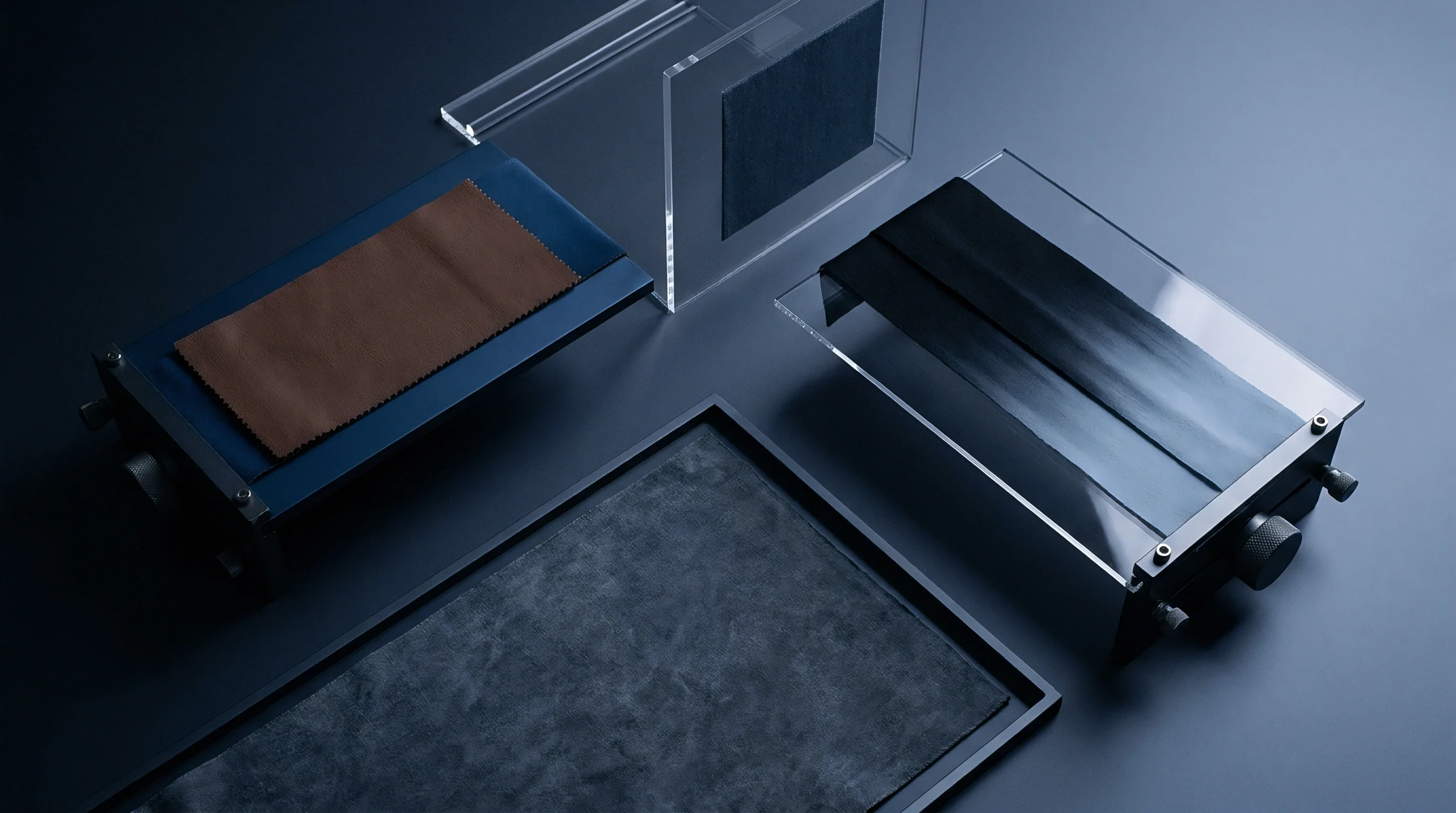
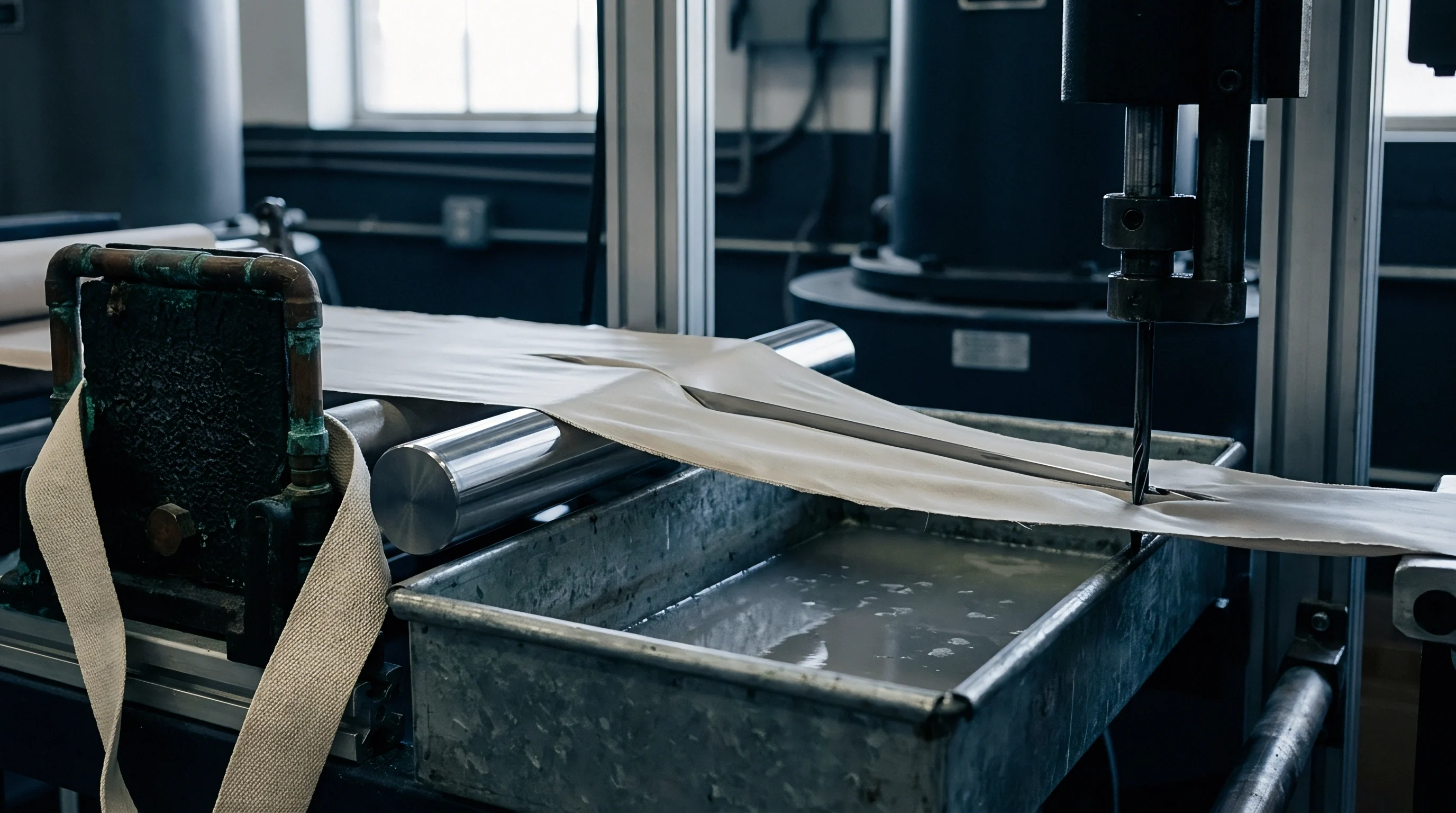
Cutting the sample into roughly 5 millimeters by 5 millimeters pieces maximizes surface contact with the water, though microporous or solid hydrophilic polyurethane coatings require clean cuts so the polymer layer does not peel off the base textile.
Distilled water serves as the solvent for extracting the targeted formaldehyde.
The extraction bottle takes 100.0 milliliters of grade 3 deionized water to maintain a strict 100 to 1 liquor-to-fabric mass ratio. Stoppered tightly with a ground glass joint or PTFE-lined cap so volatile gases cannot escape, the bottle rests in a water bath held at 40°C plus or minus 1°C for 60 minutes. Shaking the vessel mechanically or manually every 10 minutes keeps formaldehyde migrating from the membrane’s internal pores into the surrounding liquid.
Photometric measurement evaluates light absorption at a wavelength of 412 nanometers.
Once cooled to room temperature, the extract is derivatized immediately. A 5.0 milliliter aliquot of filtered solution is mixed with 5.0 milliliters of fresh Nash reagent (prepared with 150 grams of ammonium acetate, 3 milliliters of glacial acetic acid, and 2 milliliters of acetylacetone per liter of aqueous solution). Incubating this mixture at 40°C for 30 minutes in a second bath produces 3,5-diacetyl-1,4-dihydrolutidine, a yellow lutidine compound whose absorbance at 412 nanometers varies linearly with formaldehyde concentration under the Beer-Lambert law.
- Cut the representative membrane specimen into uniform fragments measuring 5 millimeters on each edge using acetone-cleaned stainless steel shears.
- Weigh 1.000 gram of the prepared sample into a 250-milliliter Erlenmeyer extraction vessel with a ground glass stopper.
- Add 100.0 milliliters of grade 3 deionized water, seal the flask securely, and submerge it in a heated water bath calibrated to 40°C for 60 minutes.
- Filter the warm extract through a grade 541 ashless filter paper into a clean receiving vessel, discarding the first 10 milliliters of filtrate.
- Transfer 5.0 milliliters of clear filtrate to a test tube, add 5.0 milliliters of acetylacetone reagent, and heat in a 40°C bath for 30 minutes.
- Cool the colored solution to 20°C in a dark water bath for 15 minutes before reading spectral absorbance at 412 nanometers against a reagent blank.
Freshly prepared reagents are necessary to maintain optical precision during testing.
Absorbance must be measured on a strict schedule after color development. Because the lutidine complex breaks down when exposed to ambient light, waiting longer than 60 minutes post-incubation causes calibration drift. Determining the appropriate shaker mechanism for an extraction bath ensures consistent fluid movement through laminated microporous membranes without causing thermal breakdown of crosslinked polyurethane backings.
Interference
Chemical additives inside waterproof membranes can interfere with optical testing through secondary reactions. Dimethyloldihydroxyethyleneurea resins applied for crease resistance, melamine-formaldehyde flame retardants, and polyurethane crosslinking agents often release residual formaldehyde in warm water. A standard 40°C extraction captures both existing free formaldehyde and monomer fragments split off by mild hydrolysis, making it difficult to separate surface-available free aldehydes from thermal degradation products when testing outerwear membranes.
ISO 14184-1 water extraction at 40°C yields a 16 mg/kg lower limit of quantification when using a 100 mm cuvette.
Polyurethane adhesives tend to trap solvent residues within their structures. During the 60-minute extraction, isocyanate crosslinkers and fluorocarbon water-repellent finishes with alkylphenol ethoxylates can leach organic compounds into the solution, causing turbidity or discoloration. Passing the solution through a 0.45-micron PTFE filter removes suspended solids, but soluble UV-absorbing compounds often pass through and shift the spectrophotometric baseline.
Clause 4 of ISO 14184-1 specifies a 1 to 100 liquor-to-fabric mass ratio, and dropping below this ratio concentrates matrix interferences that cause false positive rejections.
Formaldehyde forms strong chemical bonds with protein structures.
Dyes and optical brighteners leaching into the extraction bath introduce noticeable measurement error. Acid and reactive dyes stripped from nylon or polyester face fabrics add yellow or orange tones that absorb light around 412 nanometers. Standard procedures use a fabric blank extract ~ prepared without Nash reagent ~ to subtract background color absorbance from the sample reading.
If color leaching is too severe for optical correction, liquid chromatography paired with 2,4-dinitrophenylhydrazine derivatization provides the reference measurement.
- Thermal Hydrolysis Breakdown occurs when wet thermal exposure at 40°C cleaves ether linkages in N-methylol finishing agents, artificially inflating measured free formaldehyde levels above ambient values.
- Dye Migration Contamination arises when unfixed acid or disperse dyes dissolve into the extraction liquor, shifting baseline absorbance at the target analytical wavelength.
- Turbidity Interference stems from emulsified silicone softeners and fluorinated polymers forming colloidal suspensions that scatter incident spectrophotometer light.
- Reagent Depletion Shift happens when heavy concentrations of co-extracted sulfite compounds bind free aldehydes before acetylacetone color complex formation occurs.
Tightly sealing the extraction bottles stops volatile aldehydes from evaporating.
Failed test results often stem from background chemical interference or incomplete curing of binder resins.
Quantification
Accurate quantification requires a five-point calibration curve built with formaldehyde solutions standardized by sodium thiosulfate titration. Concentrations typically span 0.15 to 15.0 milligrams of formaldehyde per liter of water, which corresponds to 15 to 1500 milligrams per kilogram in fabric. The slope of the linear regression line yields the conversion factor used to calculate mass fractions from absorbance values.
Standard ISO 14184-1 sets a lower limit of quantification at 16 milligrams per kilogram; readings below this threshold are reported as non-detectable due to background noise.
Thicker expanded polyurethane membranes require extended equilibration times before specimen cutting to prevent trapped volatile gas pockets from distorting mass measurements.
The chosen test standard dictates which chemical fraction is measured. ISO 14184-1 quantifies water-extractable formaldehyde, while ISO 14184-2 measures free formaldehyde released into the air using sealed-flask vapor absorption at 49°C over 20 hours. Japanese Law 112 Method A uses a 40°C water extraction matching ISO 14184-1, but sets an absorbance difference threshold under 0.05 optical density units for infant goods instead of a mass fraction limit.
AATCC Method 112 evaluates vapor-phase formaldehyde evolved under high humidity at 49°C for 20 hours to gauge off-gassing potential during fabric storage.
Reliable calibration requires strong linear response coefficients across all standards.
| Standard Designation | Extraction Medium | Incubation Temp | Incubation Duration | Target Chemical Fraction | Reporting Threshold |
|---|---|---|---|---|---|
| ISO 14184-1 | Deionized Water | 40°C ± 1°C | 60 Minutes | Free and Hydrolyzable Extractable | 16 mg/kg |
| ISO 14184-2 | Vapor Phase over Water | 49°C ± 1°C | 20 Hours | Released Volatile Monomer | 20 mg/kg |
| JIS L 1041 Method A | Deionized Water | 40°C ± 1°C | 60 Minutes | Water-Soluble Free Aldehyde | 0.05 OD Absorbance |
| AATCC 112 | Vapor Phase over Water | 49°C ± 1°C | 20 Hours | Evolved Storage Gas | 20 mg/kg |
Buyer specifications and regulatory frameworks define maximum formaldehyde limits based on end-use. OEKO-TEX STANDARD 100 Class I for baby items allows no detectable formaldehyde, enforcing a strict 16 milligram per kilogram ceiling under ISO 14184-1 testing. Class II for direct skin contact, such as functional base layers and linings, permits up to 75 milligrams per kilogram.
Entry 72 of European REACH Regulation Annex XVII sets a legal maximum of 75 milligrams per kilogram for apparel imported into the EU single market, while Chinese national standard GB 18401 aligns with matching limits for Categories A, B, and C.
| Regulatory Scheme | Product Category Scope | Applicable Test Standard | Maximum Concentration Limit | Compliance Enforcement Body |
|---|---|---|---|---|
| OEKO-TEX STANDARD 100 | Class I: Baby Products (< 36 Months) | ISO 14184-1 | 16 mg/kg (Below LOQ) | Independent Testing Institutes |
| OEKO-TEX STANDARD 100 | Class II: Direct Skin Contact | ISO 14184-1 | 75 mg/kg | Independent Testing Institutes |
| REACH Annex XVII Entry 72 | Apparel and Clothing Accessories | EN ISO 14184-1 | 75 mg/kg | EU Member State Customs |
| GB 18401-2010 | Category A: Infant Textiles | GB/T 2912.1 (ISO 14184-1) | 20 mg/kg | Chinese Market Supervision Administration |
| GB 18401-2010 | Category B: Direct Skin Contact | GB/T 2912.1 (ISO 14184-1) | 75 mg/kg | Chinese Market Supervision Administration |
| Japanese Law 112 | Infant Apparel (< 24 Months) | JIS L 1041 Method A | 0.05 OD Net Absorbance | Ministry of Health, Labour and Welfare |
Measurement uncertainty increases significantly near reporting limits.
Purchase specifications enforce compliance thresholds throughout supply chains. Sourcing contracts often require that any test certificate showing between 16 and 75 milligrams per kilogram on Class I items triggers an immediate lot re-test under accredited third-party supervision at the mill’s expense.

Discrepancy
Test results frequently vary when the same membrane batch is tested at different facilities. Minor temperature shifts in the bath can severely skew findings: extracting at 45°C rather than the specified 40°C speeds up the breakdown of labile resin bonds, raising measured monomer levels. Conversely, poor flask seals allow water vapor and formaldehyde gas to escape into fume hoods, yielding artificially low concentrations.
Temperature shifts alter extraction kinetics and sample chemistry.
For example, consider a 40-tonne production run of three-layer waterproof breathable membrane using thermoplastic polyurethane film with hot-melt crosslinked adhesive. One lab tests five roll swatches under standard ISO 14184-1 conditions at 40°C with a 1:100 liquor ratio, reporting a compliant mean of 12 milligrams per kilogram. An audit lab tests identical swatches but allows the bath to reach 45°C while using a 1:50 liquor-to-fabric ratio.
Higher temperature and lower liquid volume accelerate resin hydrolysis and concentrate the extract, raising measured formaldehyde to 34 milligrams per kilogram and failing brand Class I safety limits.
Do Extraction Bath Temperature Variations Alter Monomer Yields?
Extraction kinetics depend heavily on thermal stability in the bath. A temperature drift of just 2°C increases N-methylol cleavage by roughly 18 percent in uncured crosslinking resins. The table below shows how small procedural changes during handling and incubation impact recorded formaldehyde concentrations.
| Test Scenario Parameter | Water Bath Temp | Liquor-to-Fabric Ratio | Incubation Time | Measured Absorbance (412 nm) | Calculated Concentration | Compliance Status (Class I < 16 mg/kg) |
|---|---|---|---|---|---|---|
| Baseline Method Standard | 40.0°C | 100:1 | 60 Minutes | 0.042 OD | 12 mg/kg | Compliant |
| Thermal Drift (+5°C) | 45.0°C | 100:1 | 60 Minutes | 0.084 OD | 24 mg/kg | Non-Compliant |
| Volume Ratio Deviation | 40.0°C | 50:1 | 60 Minutes | 0.091 OD | 26 mg/kg | Non-Compliant |
| Combined Drift Extreme | 45.0°C | 50:1 | 60 Minutes | 0.119 OD | 34 mg/kg | Non-Compliant |
| Evaporative Volatile Loss | 40.0°C (Unsealed) | 100:1 | 60 Minutes | 0.021 OD | 6 mg/kg | False Pass (Defective Seal) |
Spectrophotometric readings taken beyond 60 minutes after acetylacetone reagent development show absorbance decay due to light sensitivity of 3,5-diacetyl-1,4-dihydrolutidine.
Lamination adhesives can release residual monomer under extraction conditions.
- Thermal Water Bath Calibration verifying calibration against a NIST-traceable thermometer across all immersion locations twice monthly.
- Extraction Vessel Seal Audit discarding cracked ground glass stoppers or worn PTFE gaskets that permit evaporative vapor leakage during hot incubation.
- Spectrophotometer Baseline Verification running dual reagent blanks and matrix color correction blanks for every dyed membrane colorway.
- Specimen Edge Trimming Protocol standardizing specimen perimeter cutting technique to prevent variable adhesive layer exposure to aqueous solvent contact.
Uncontrolled extraction kinetics directly alter test outcomes.
Failing to maintain water bath precision can lead to rejected shipments, port demurrage fees, and product recalls that damage brand reputation.
Traceability
Thorough records provide the legal basis for compliance declarations along international supply chains. A valid ISO 14184-1 test report must document sampling methodology, specimen conditioning, reagent preparation dates, and calibration regression coefficients. Audit scope certificates must name the ISO 17025 accredited facility that performed the testing.
Transaction certificates without linked chemical test reports offer little protection to importers during customs audits.
Laboratory accreditation scopes define specific test capabilities and ranges.
Customs authorities review technical dossiers whenever monitoring systems flag incoming shipments. Frameworks like US CPSC guidelines and European Safety Gate protocols routinely sample imported technical outerwear. If an enforcement lab finds formaldehyde levels over legal limits, the importer must provide batch-specific test records proving compliance.
Without traceable documentation, shipments face immediate seizure, mandatory re-exportation, or destruction under official supervision.
Customs authorities detain non-compliant shipments at port of entry.
Supply contracts protect buyers by tying lot acceptance directly to accredited lab reports. Indemnification clauses assign financial liability for port detentions to the mill if independent testing confirms a specification failure. Keeping audit-ready dossiers with raw spectrophotometric curves and batch sampling plans helps clear shipments through customs without delay.
Detailed analytical records protect both parties in commercial contracts.
Scaling batch sampling frequencies with production volume provides reliable compliance verification across multi-container shipments.