Dynamic Viscoelastic Crimp Interchange Modeling during Continuous Fabric Steaming Operations
Dynamic crimp interchange under steam relies on controlling line tension to balance transverse fiber swell and viscoelastic stress relaxation across weave nodes.
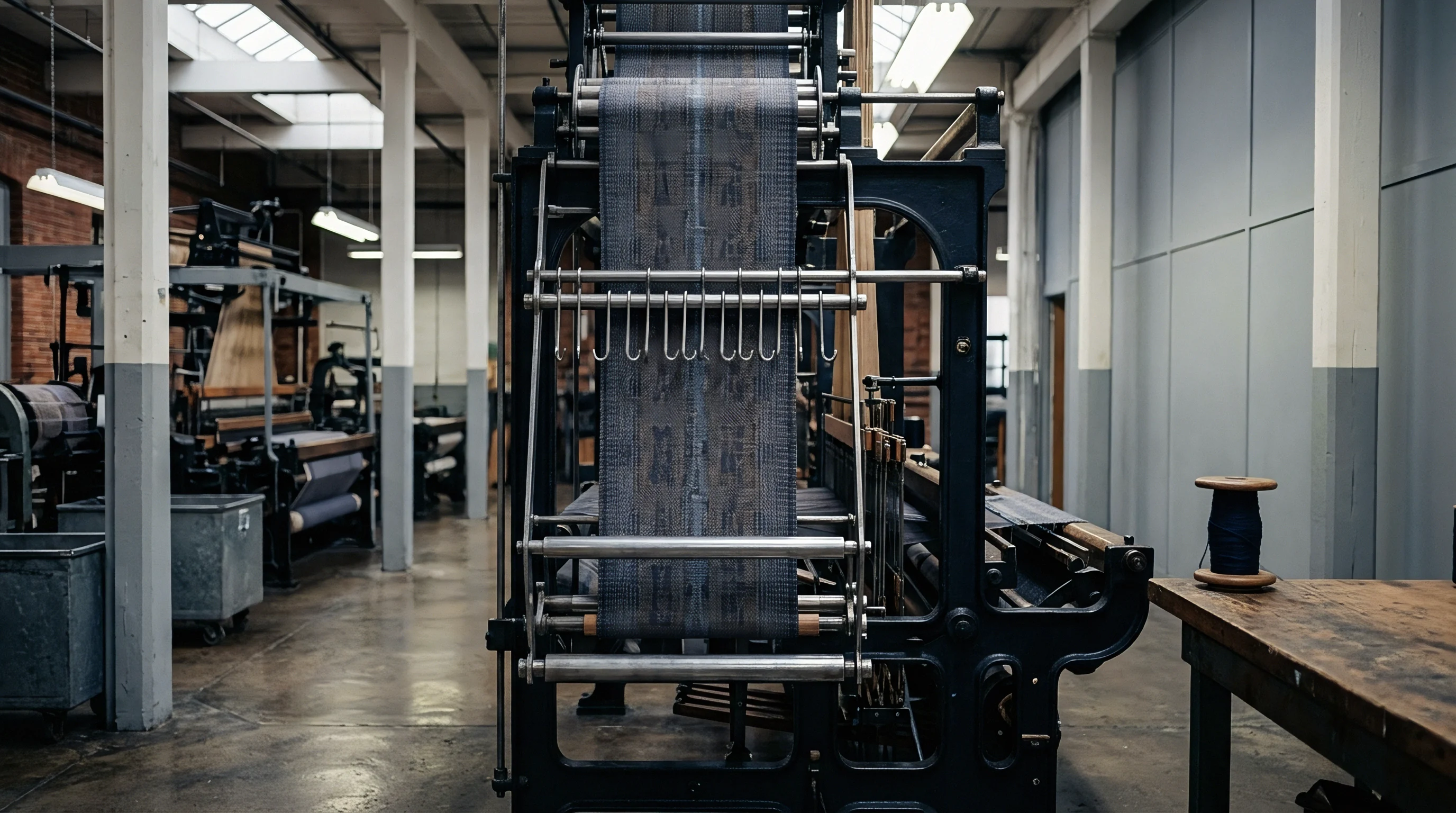

Swell
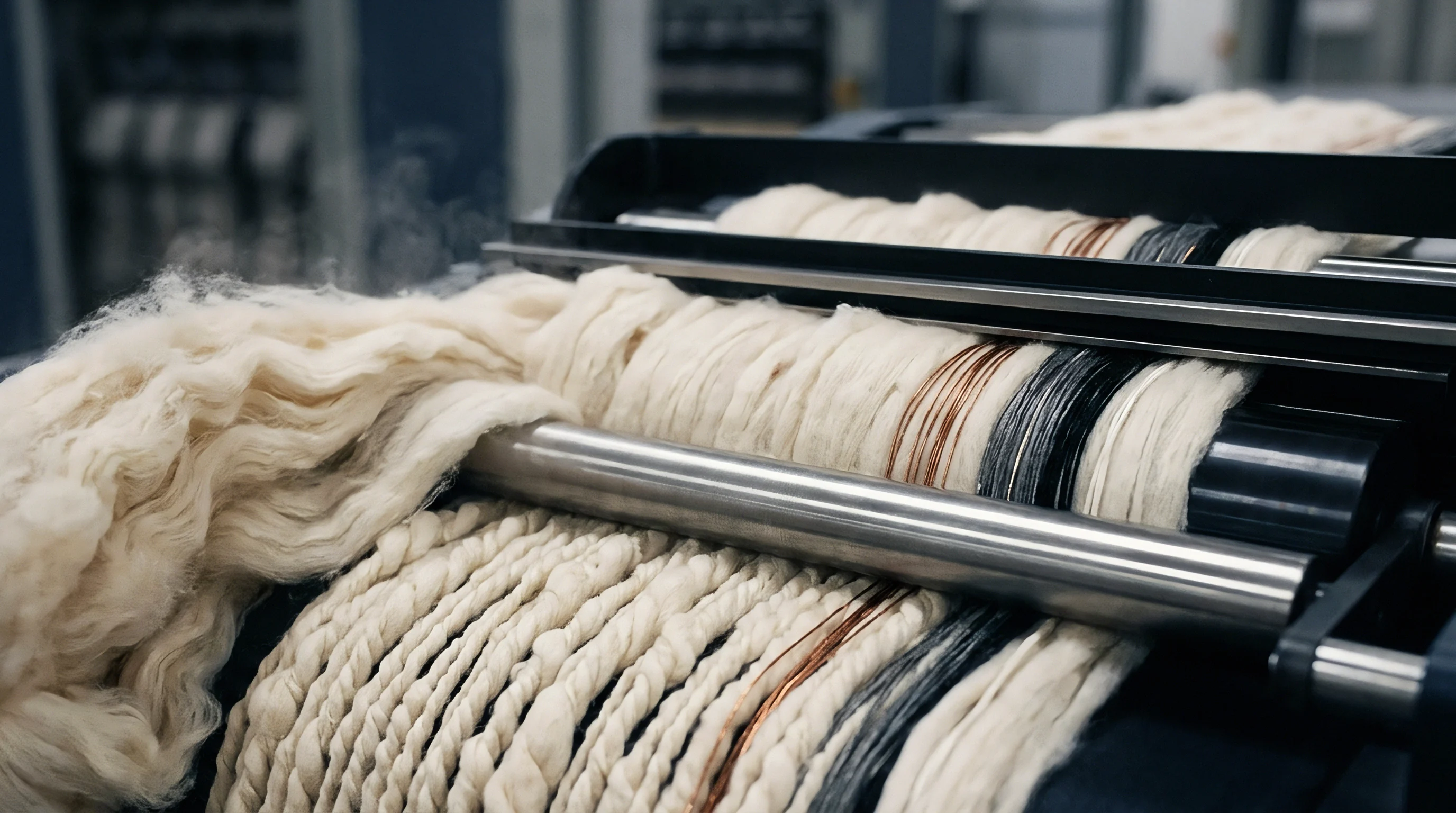
Water molecules enter amorphous regions of hydrophilic fibers or plasticize semi-crystalline synthetic polymers during saturated steam injection. Physical expansion occurs predominantly in the transverse direction due to longitudinal molecular alignment along the fiber axis. Transverse volume growth increases yarn effective diameter by 8 to 22 percent depending on fiber blend ratio and moisture pickup.
Moisture enters the amorphous matrix. Fiber cross-sections expand rapidly. Cross-sectional enlargement alters the geometric packing factor within the weave matrix, forcing adjacent yarn paths to lengthen their wave amplitude around intersecting threads.
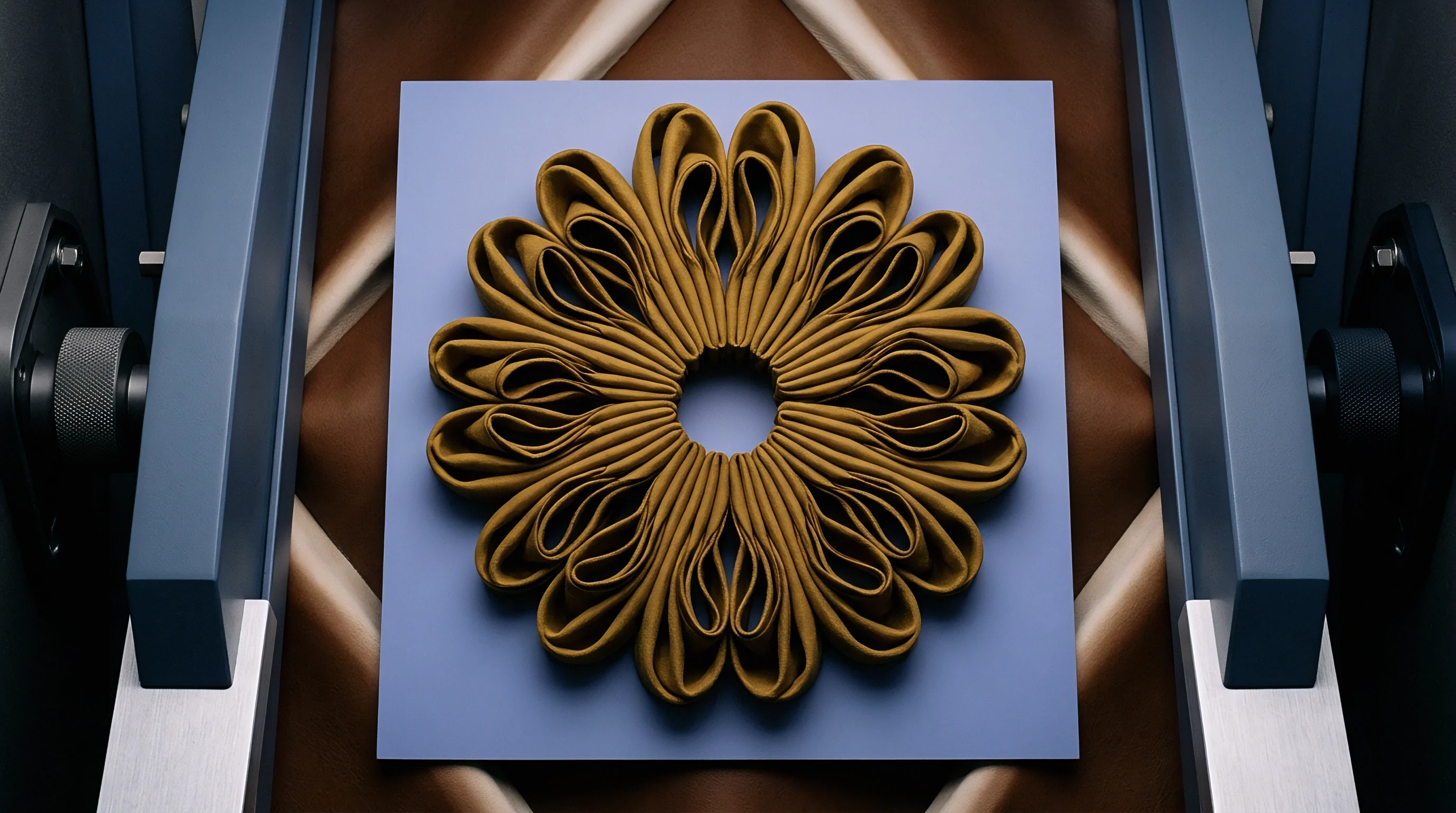
Hydration Dynamics in Hydrophilic Matrixes
Capillary action draws condensed moisture into the inter-fiber voids before steam vapor penetrates the polymer core. In cotton and regenerated cellulose structures, hydrogen bonds between adjacent cellulose chains break upon water absorption, allowing the structure to expand laterally. Wool fibers experience significant lateral swelling as disulfide cross-links yield under simultaneous heat and moisture.
Synthetic fibers like Nylon 6,6 exhibit moderate transverse expansion when steam breaks intermolecular hydrogen bonding between amide groups, lowering the energy required for geometric rearrangement.
A wool-polyester 45-55 blend exhibits a 14 percent transverse yarn diameter expansion when exposed to dry saturated steam at 102 degrees Celsius for 20 seconds.

Geometric Displacement across Interlacing Nodes
Lateral yarn enlargement inside a constrained woven structure forces axial displacement at every interlacing point. As the effective diameter of the warp yarn grows, the weft yarn must travel a longer path around it, provided warp tension remains low. If warp tension is held high by machine draw rolls, the expanding warp yarn displaces the flexible weft yarn instead, forcing the weft into high-amplitude crimp configuration.
The physical space available at the crossover node governs whether dimensional accommodation occurs through thickness swelling or length contraction.
Whether non-uniform condensate deposition across wide-width steamers creates unmodeled localized crimp gradients remains a point of active empirical measurement on high-speed finishing lines.

Interchange
Longitudinal force balance at yarn intersection points dictates how weave structural geometry reorganizes when mechanical constraints ease. Peirce rigid-thread geometry assumes incompressible circular yarn sections, yet high-temperature steaming deforms yarn cross-sections into elliptical profiles at contact points. Warp tension flattens thread paths.
Applied warp tension forces the warp yarn toward a flatter trajectory, transferring wave height to the unconstrained weft yarn. Bending rigidity drops dramatically. Steaming reduces yarn bending rigidity, enabling rapid thermodynamic reorganization toward a minimum energy equilibrium state.
Peirce Geometry under Dynamic Thermal Loads
Classical fabric geometry models treat crimp as a static equilibrium between warp wave height and weft wave height. Under continuous steam exposure, yarn flexural rigidity decreases by up to two orders of magnitude, converting static geometric constraints into a dynamic stress-relaxation system. The weave seeks thermal equilibrium.
When tension in the warp direction exceeds the tension in the weft direction, warp crimp converts into weft crimp according to the classical force-balance relation where warp tension multiplied by warp curvature balances weft tension multiplied by weft curvature.
| Fiber Type | Steam Temperature (°C) | Initial Warp Crimp (%) | Final Warp Crimp (%) | Final Weft Crimp (%) | Modulus Reduction (%) |
|---|---|---|---|---|---|
| 100% Ring Spun Cotton | 100 | 7.2 | 4.1 | 11.8 | 68 |
| 100% Polyamide 6,6 | 105 | 8.5 | 3.8 | 13.2 | 82 |
| Poly-Viscose 65-35 | 102 | 6.8 | 4.5 | 10.1 | 61 |
| 100% Wool Worsted | 100 | 9.1 | 3.2 | 14.6 | 91 |
Bending Rigidity Reduction and Energy Equilibrium
Thermal energy combined with moisture acts as a plasticizer, collapsing the bending moment required to hold yarns in deformed states. Strain energy stored in bent yarns off the loom releases during steaming. The fabric contracts in the direction of lowest tension as yarn crimp shifts to equalize internal strain energy across both setts.
The following structural failure modes surface when crimp redistribution operates under uncalibrated line tension:
- Warp-Dominant Flatness results when excessive entry tension inhibits warp wave formation, driving total crimp into the weft direction.
- Weft Skewing occurs when asymmetric transverse shrinkage forces uneven thread displacement along the rail lines.
- Local Crimp Jamming emerges when yarn packing density reaches maximum geometric capacity before stress relaxation completes.
High entry tension converts prospective fabric width recovery into permanent longitudinal elongation.
Plenum
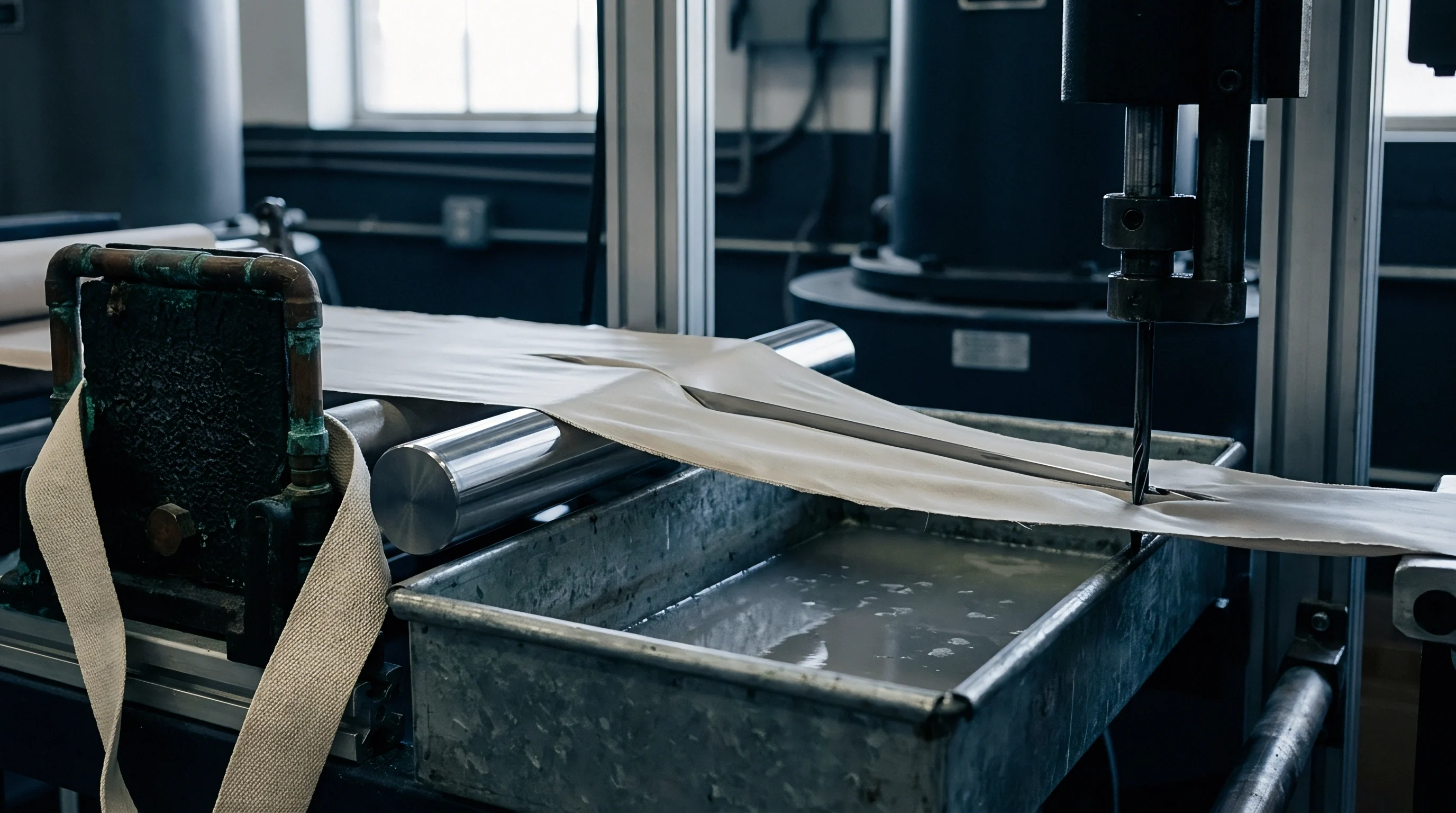
Steamer hardware configuration establishes the boundary conditions for mass and heat transfer into the moving web. Nozzle array placement, steam injection velocity, and internal chamber geometry dictate boundary layer penetration depth. Entry rolls control web feed.
Overfeed units upstream of the steam zone isolate web tension, allowing unrestrained geometric structural adjustment. Condensate management systems prevent droplet formation that causes localized spot-plasticization and uneven crimp development. Condensate droplets ruin fabric finish.

Is Saturated Steam Superior to Superheated Steam?
Moisture condensation rates determine the speed of fiber glass transition depression. Saturated steam delivers latent heat instantly upon contact with cooler fabric, condensing microscopic water films directly onto fiber surfaces. Superheated steam must cool down to saturation temperature before phase-change condensation occurs, delaying the onset of transverse swelling.
For rapid crimp redistribution at line speeds exceeding 40 metres per minute, saturated steam provides higher initial energy transfer than superheated vapor.
Steam chamber temperature drop below condensation thresholds guarantees permanent warp-weft crimp imbalance across the roll width.
Tension Zone Isolation and Overfeed Mechanics
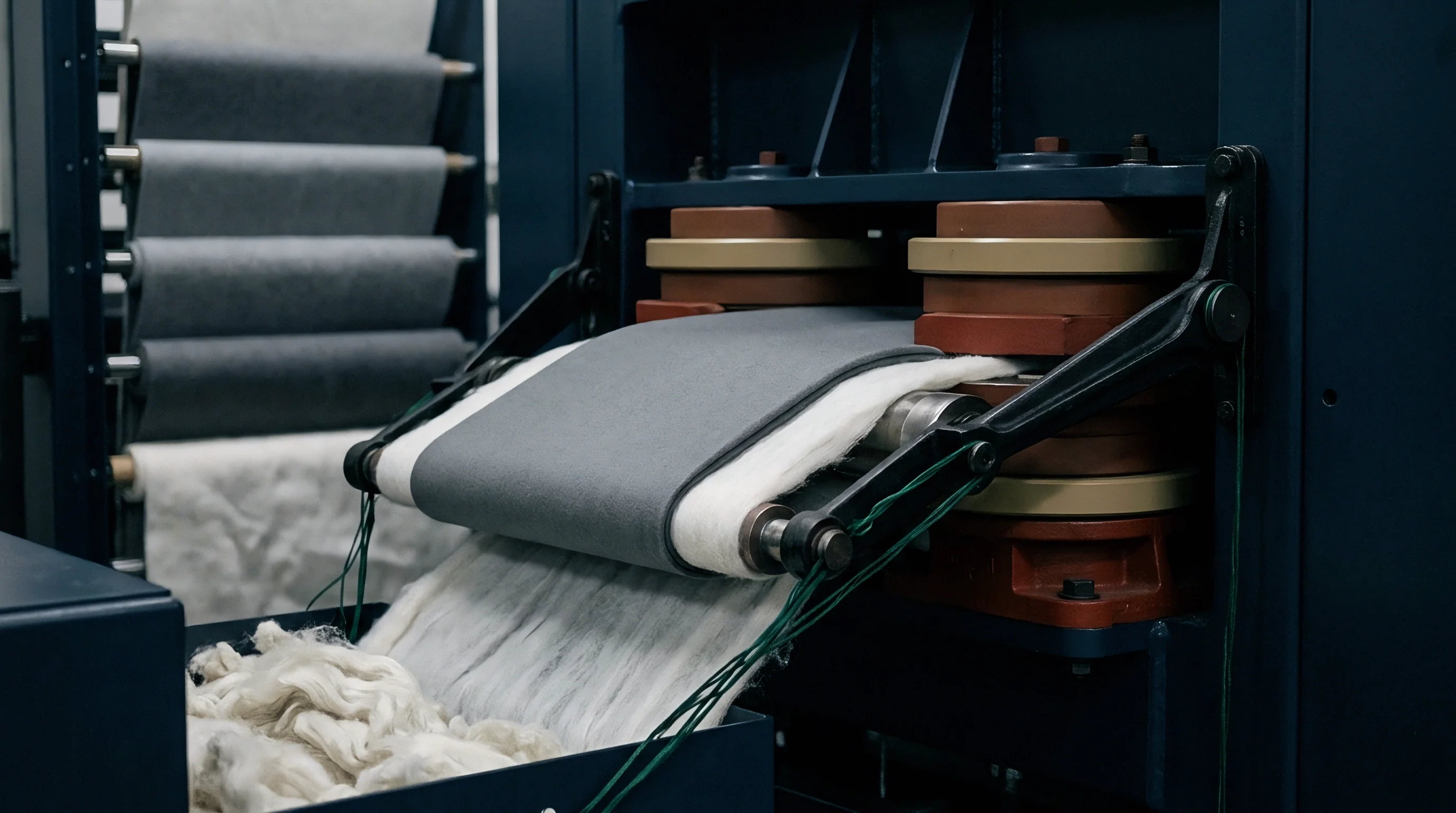
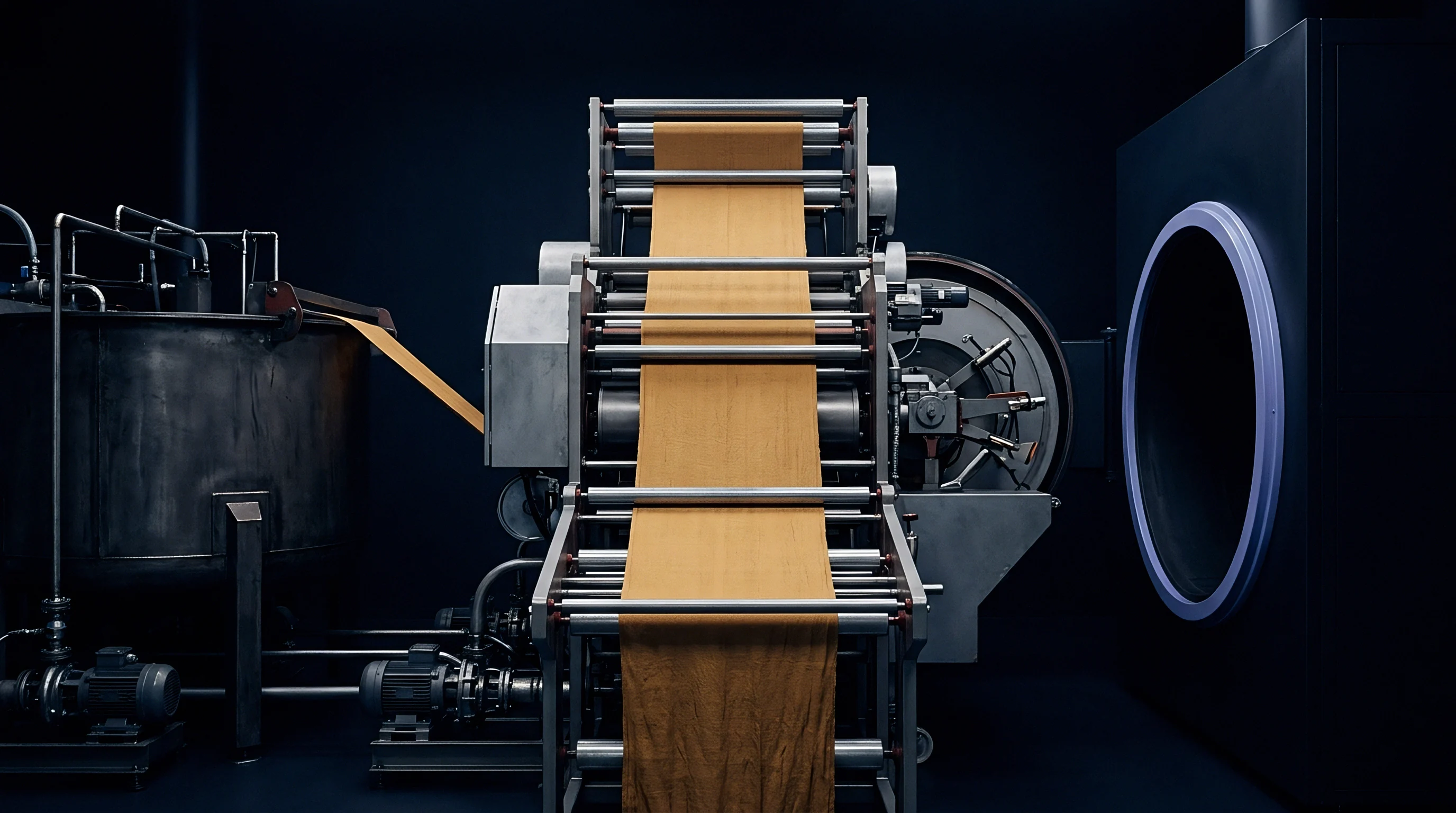
Controlling web strain across continuous steaming zones requires physical isolation of entry and exit tension vectors. Driven overfeed rollers feed fabric into the steam box at a higher velocity than the internal conveyor or exit draw rolls. This positive overfeed supplies the precise length slack needed for warp crimp accumulation as weft yarns swell laterally.
- Fabric enters the pre-conditioning steam manifold at neutral warp tension to allow initial surface condensation.
- Driven overfeed rolls deliver the web into the relaxed steamer chamber at three percent above line speed.
- Heated lip nozzles inject low-pressure dry steam across both fabric faces to equalize cross-sectional hydration.
- Web passes through the stabilization zone where temperature stabilizes at 100 degrees Celsius.
Improper steam delivery zone calibration leads to irreversible width variation across bulk cutting markers, forcing re-inspection of entire dye lots and generating severe cutting room yield losses.
Relaxation
Synthetic and natural polymer networks undergo dramatic viscoelastic softening when ambient humidity and thermal energy coalesce. Steam plasticizes polymer chains. Steam lowers the effective glass transition temperature of polyester from 80 degrees Celsius to below 65 degrees Celsius through polymer plasticization.
Molecular mobility increases sharply. Maxwell relaxation time constants contract from hours to milliseconds under saturated steam flow. Stress decay allows yarn crimp geometry to freeze into its minimum-energy state as the fabric exits the cooling zone.
Yarn height redistributes instantly.

Viscoelastic Spectrum and Polymer Plasticization
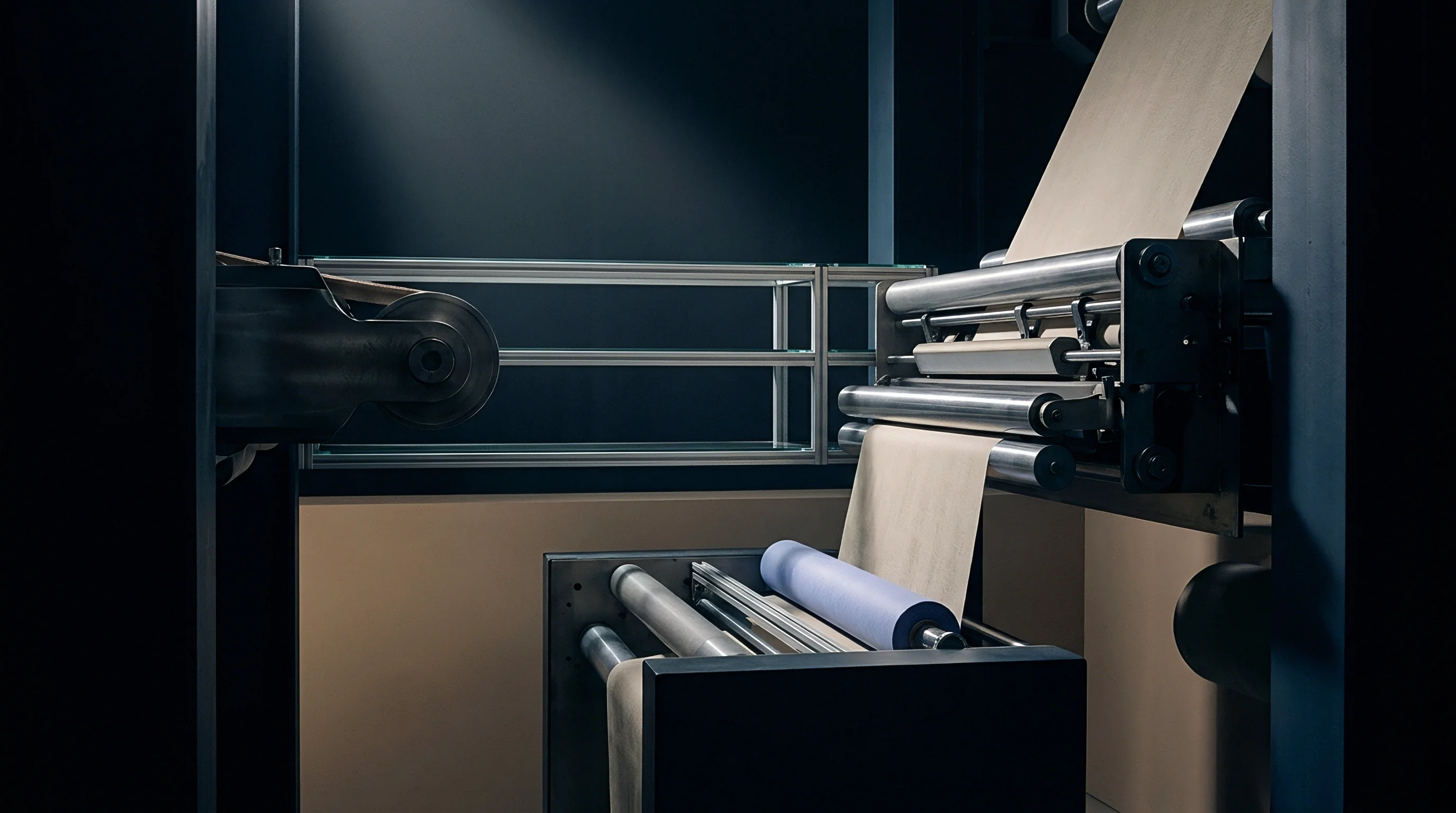
Yarn stress decay under thermal steam treatment follows non-linear viscoelastic behavior. Maxwell and Burger rheological models demonstrate that internal strain dissipates through both instantaneous elastic recovery and delayed viscous flow. Moisture acts directly on secondary inter-chain bonds, accelerating the dissipation of residual weaving stresses.
The relaxation time spectrum shifts toward shorter time intervals as chamber relative humidity approaches 100 percent.
Failure to meet the two percent maximum dimensional change threshold specified in ISO 5077 permits the buyer to reject the entire finishing lot without supplier compensation.
Maxwell Model Time Constant Shifts
Quantitative modeling relies on tracking the complex relaxation modulus over dwell time. When steam penetrates the moving fabric, the relaxation time constant drops exponentially, enabling rapid crimp interchange within a 15 to 30 second dwell window. Rapid cooling at the steamer outlet re-establishes inter-chain bonds, locking the redistributed crimp geometry into place permanently.
| Polymer Matrix | Dry Tg (°C) | Saturated Steam Tg (°C) | Initial Modulus (MPa) | Relaxed Modulus (MPa) | Relaxation Time (s) |
|---|---|---|---|---|---|
| Polyethylene Terephthalate | 78 | 62 | 1450 | 210 | 4.2 |
| Polyamide 6 | 55 | 18 | 1200 | 95 | 1.1 |
| Cellulose Native (Cotton) | 220 | 25 | 3100 | 480 | 0.8 |
| Wool Keratin | 160 | 35 | 2400 | 180 | 0.5 |
Finishers frequently attribute variable post-steam shrinkage to greige yarn tension fluctuations during weaving rather than steam chamber temperature drift.

Metrics
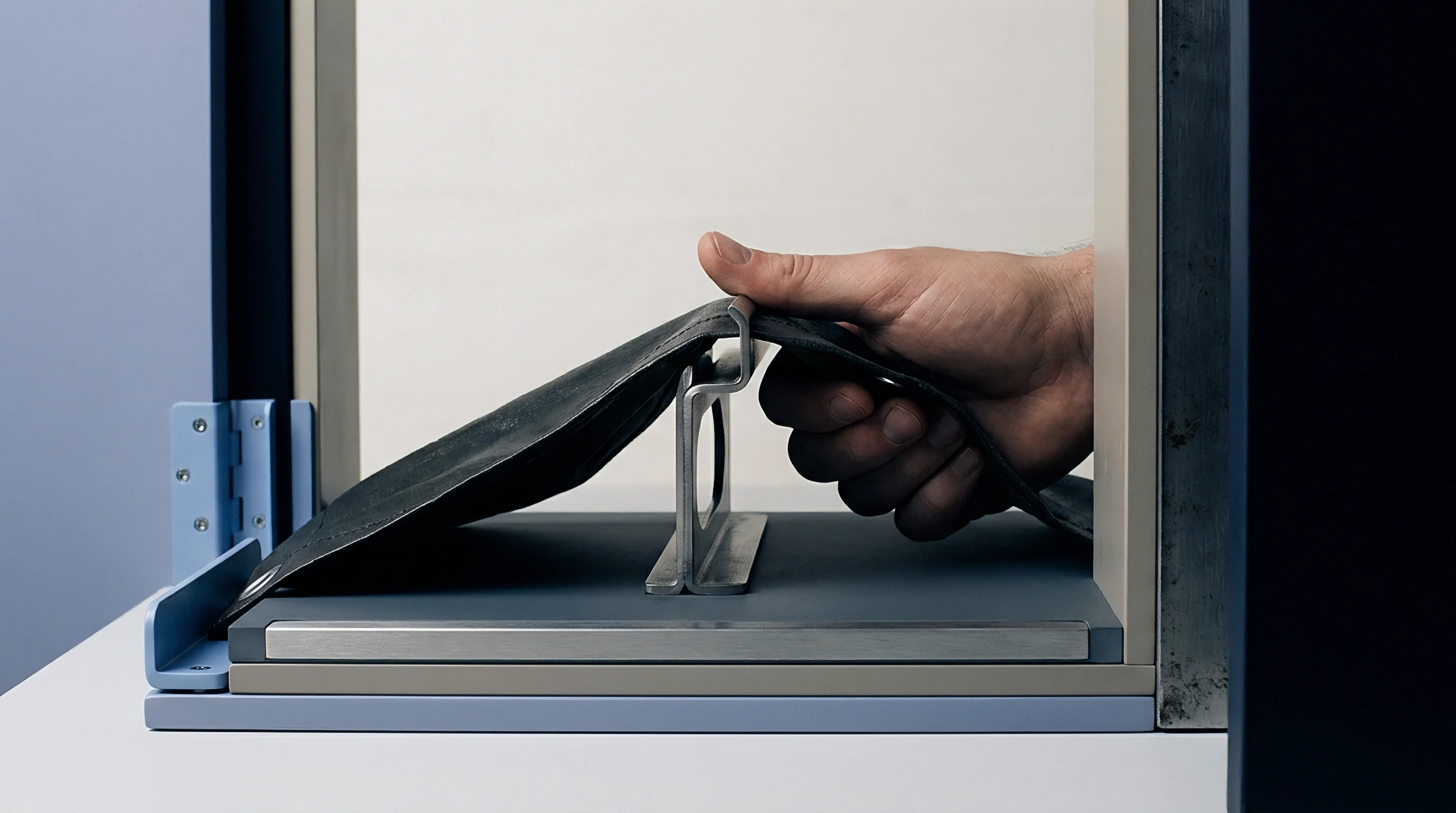
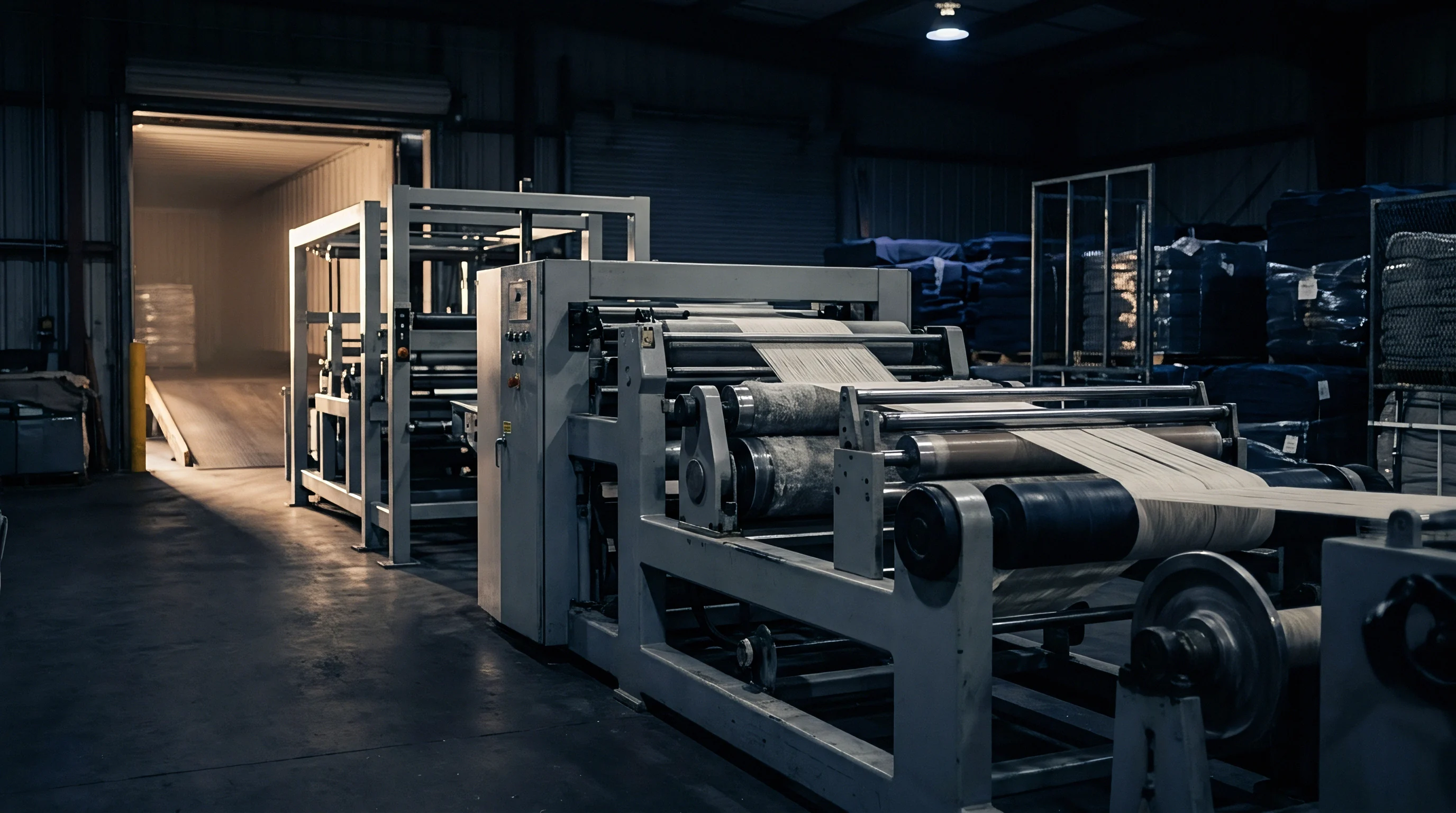
Quantifying structural rearrangement requires standardized physical testing protocols before and after continuous steaming operations. Testing requires strict environmental control. Crimp percentage determination per ASTM D3883 isolates individual yarn lengths removed from the woven matrix.
Mass per unit area shifts per ISO 3801 track the compaction ratio resulting from crimp interchange. Dimensional stability testing under ISO 5077 validates whether the steaming operation successfully set the viscoelastic structure against subsequent laundering. Straightening tension alters measurement accuracy.

Standardized Physical Crimp Determination
Manual dissection of warp and weft yarns from steam-processed fabric samples yields the definitive crimp ratio. Yarns must be straightened without stretching under a standardized force defined by thread linear density. Crimp percentage calculates as the uncurved yarn length minus the distance between original fabric matrix marks, divided by the matrix distance.
Off-loom specs dictate finishing route.
Continuous steaming alters finished fabric weight by increasing thread density per unit length while total yarn mass remains constant.
Mass Density Shifts and Thread Count Dynamics
Crimp interchange directly alters ends and picks per centimetre. As weft crimp increases, fabric width contracts, driving warp end density upward. Conversely, warp crimp accumulation reduces fabric length, increasing pick density per unit distance.
Laboratory verification mandates measuring both dimensions under standard atmosphere conditions following a 24-hour conditioning period.
- Conditioning Protocols dictate sample equilibration at 20 degrees Celsius and 65 percent relative humidity prior to dissecting yarn paths.
- Crimp Measurement Forces specify precise straightening loads to remove yarn bend without inducing secondary polymer draft.
- Density Verification measures warp and weft counts using optical glass grids over five distinct areas of the steam-processed web.
Section 7.2 of ISO 6330 establishes that dimensional stability tolerances apply exclusively to fabrics conditioned for 24 hours post-treatment, invalidating immediate off-mill floor rejections.
Dossier
Commercial purchase agreements must specify allowable dimensional variance and crimp interchange bounds prior to initiating bulk finishing runs. Mill contracts that fail to establish explicit steam relaxation tolerances transfer dimensional stability risk directly to the garment manufacturer. Yield loss impacts unit cost.
Yield calculations depend on predicting width contraction caused by weft crimp elevation during continuous steaming. Sourcing agreements require verified test laboratory reports accompanying each bulk roll dispatch.

Commercial Specification Limits and Yield Economics
Fabric width loss during continuous steaming represents a direct financial input to marker efficiency and cut-plan calculations. A two percent width reduction on a 150 centimetre web removes three centimetres of usable cutting width, reducing pattern yield across high-volume garment layouts. Sourcing teams build targeted crimp interchange allowances into greige reed width calculations to ensure finished goods achieve nominal cuttable width post-steaming.
| Construction Parameter | Nominal Spec | Allowable Tolerance | Test Method | Commercial Risk Area |
|---|---|---|---|---|
| Finished Width (cm) | 148 | -0.5 / +1.5 | ISO 3932 | Marker efficiency loss |
| Warp Crimp (%) | 5.5 | ± 0.8 | ASTM D3883 | Garment length growth |
| Weft Crimp (%) | 12.0 | ± 1.2 | ASTM D3883 | Fabric width collapse |
| Mass per Unit Area (g/m²) | 210 | ± 3.0% | ISO 3801 | Sub-weight duty rejection |
| Wash Shrinkage (%) | 1.8 | Max 2.0 | ISO 5077 | Garment sizing distortion |
Converter Audit Requirements for Continuous Steaming Lines
Auditing a finishing mill involves inspecting continuous steamer control loops, tension load cells, and steam pressure regulators. Calibrated overfeed units and active moisture sensors must be verified against digital control panel outputs. Converters that lack inline tension monitoring risk delivering rolls with variable crimp profiles from head to tail, leading to severe shading and shrinkage variances inside garment assembly plants.
Establishing strict steam chamber operational parameters inside converter quality agreements ensures consistent fabric yield and prevents costly width variations across bulk cutting runs.