Greige Thread Density Shift Calculation across Wet Finishing Operations
Greige thread density shifts inversely with finished width and length relaxation, requiring exact warp overfeed and reed contraction compensation.
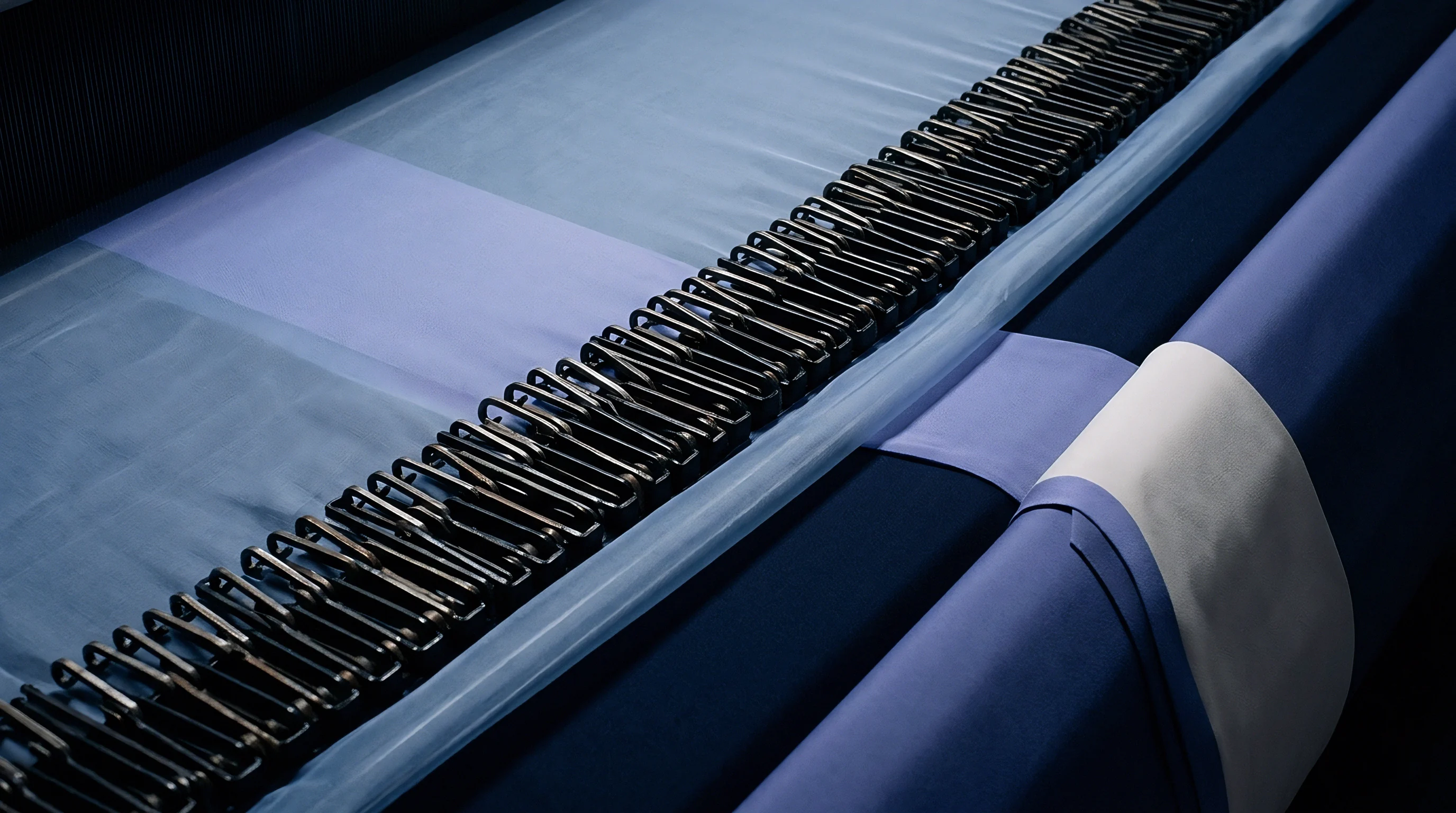

Geometry
Loom setup establishes the initial spacing of ends and picks across the reed width. Warp yarns stay under continuous longitudinal tension during weaving, elongating under mechanical draft while filling yarns insert with minimal strain. This mechanical tension leaves greige cloth in an unstable geometric state.
Greige ends per centimetre depend entirely on the reed count and drawing-in plan, while greige picks per centimetre are governed by the take-up motion of the sand roll.
The reed plan establishes these initial geometric boundaries.
When tension releases at roll doffing, the fabric undergoes immediate elastic recovery. Structural reorganization takes place later during wet processing, as moisture enters the fiber matrix. Liquid swelling relaxes internal yarn stresses, driving crimp interchange between warp and weft systems.
As warp yarns shorten, their wave height increases, pushing filling yarns closer together and raising the filling sett.
Tighter greige constructions limit wet contraction by restricting internal yarn mobility within the interlacing matrix.
Specifying target finished densities without accounting for crimp exchange leads to severe structural faults. Greige goods woven too narrow or without sufficient reed allowance yield finished fabric that fails dimensional specs. The relationship between greige density and finished density follows physical yarn kinematics rather than simple linear shrinkage rates.

Canopy Displacement across Crimp Interchange
Interlacing forces warp yarns to bend around filling yarns while under tension. In greige cloth, warp crimp remains suppressed, often measuring between 4 percent and 7 percent in standard twills, while filling crimp absorbs most of the deflection, frequently exceeding 12 percent off the loom. During desizing and wet relaxation, water plasticizes the fibers, releasing latent spinning and weaving strains.
Warp crimp increases to 11 percent or 14 percent, pulling filling yarns into closer lateral proximity.
Picks per centimetre increase as a result of this movement.
Yarn spacing failures during loom-to-finish transitions typically stem from specific mechanical tension issues:
- Excessive Warp Beam Braking generates elevated greige ends per centimetre by stretching warp yarns on the loom, which produces extreme downstream relaxation shrinkage during boiling.
- Insufficient Reed Dent Allowance crowds warp ends together in the reed, causing localized yarn chaffing and unpredictable lateral expansion during aqueous washing.
- Asymmetric Yarn Twist Imbalance induces skewing across the planar surface when filling yarns untwist in scouring liquors, distorting the squareness of the pick alignment.
- Inadequate Loom Take-Up Tension permits irregular pick density throughout the roll package, creating wide variations in finished weight per unit area across a single production lot.
Heavier filling yarns reduce warp crimp amplitude and require greater reed allowance.
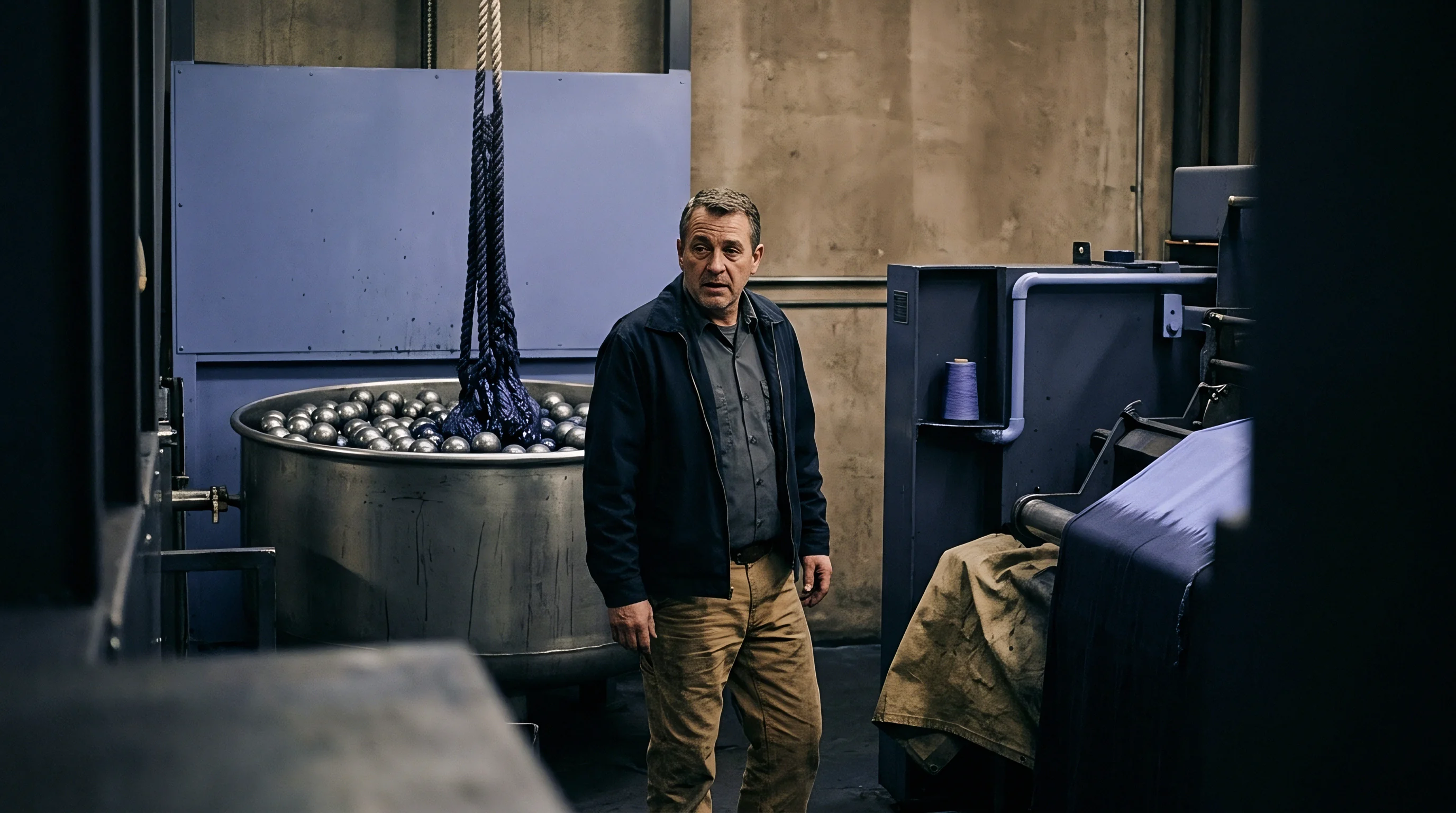

Bath
Aqueous scouring liquors release the mechanical tensions locked into yarns during weaving. Immersion lets swollen fibers shift inside the yarn cross-section, reducing yarn packing density while expanding yarn diameter. Spun cotton yarns swell diametrically, and this volumetric growth pushes adjacent yarns into new equilibrium positions that alter both warp and weft counts per unit length.
Caustic liquor acts rapidly to shrink cellulosic fibers.
Mercerization accentuates this density shift through concentrated sodium hydroxide action. At concentrations between 28 and 30 degrees Baumé, caustic soda penetrates cotton cellulose, breaking intermolecular hydrogen bonds and converting the crystalline structure from Cellulose I to Cellulose II. The untwisting of cotton fibers during swelling causes substantial longitudinal shrinkage if goods run slack.
Processing under tension enhances luster, whereas controlled slack mercerization increases ends and picks per centimetre by up to 18 percent.
Caustic soda treatment at 28 degrees Baumé increases filling density by 14 percent under zero-tension wash conditions.
The degree of wet contraction varies with raw material composition and bath temperature. Synthetic filament fabrics exhibit thermal relaxation rather than chemical swelling, whereas regenerated cellulosics like viscose or lyocell undergo dramatic lateral expansion in water, increasing wet yarn diameter by over 30 percent. Scouring lines must accommodate these differing physical behaviors through variable line drives and load-cell tension isolation.
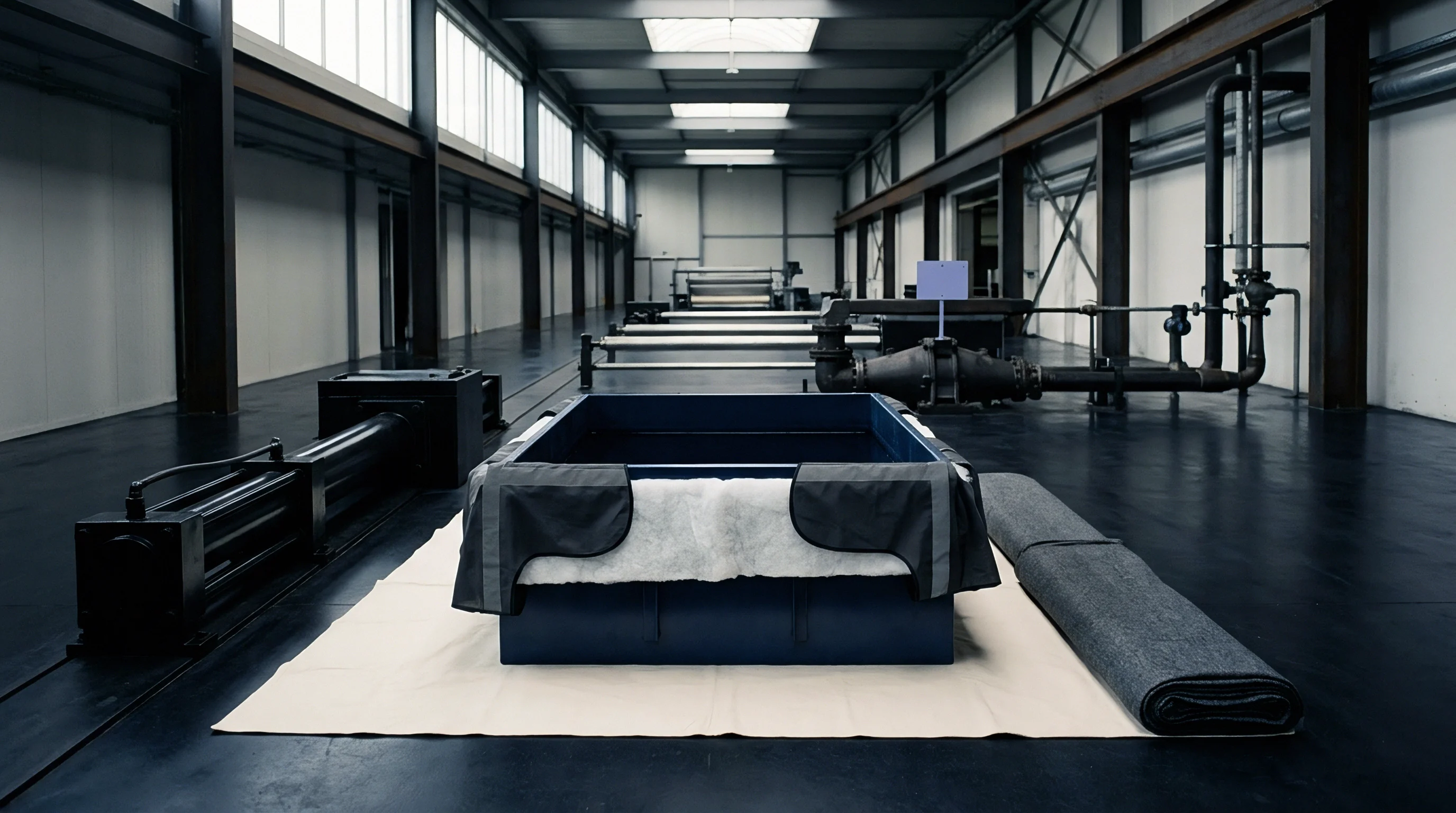
How Does Aqueous Relaxation Reorganize Crimp Distribution?
Water breaks hydrogen bonds within cellulosic fibers. As lubricants, sizing starches, and natural waxes wash out in the scouring bath, yarns lose the adhesive coatings that kept them stiff. Free of sizing binders, warp yarns shorten along their longitudinal axis, pulling the fabric inward from the selvages.
Desizing flushes away this temporary binder.
A typical 100 percent ring-spun cotton 3/1 twill exhibits 14.5 percent filling relaxation contraction under AATCC 135 wash cycles across 50 production lots. This figure rests on a spinning twist factor of 4.2 and an alkali concentration of 40 grams per litre sodium hydroxide during scouring. Shifting the twist factor to 3.8 or allowing the alkali bath to drop below 32 grams per litre reduces swelling, cutting filling contraction down to 11.2 percent and leaving finished pick density below target values.
| Substrate Composition | Process Stage | Warp Shrinkage (%) | Width Contraction (%) | Ends/cm Shift (%) | Picks/cm Shift (%) |
|---|---|---|---|---|---|
| 100% Ring-Spun Cotton Twill | Enzyme Desize & Scour | +6.2 | +8.5 | +9.3 | +6.6 |
| 100% Ring-Spun Cotton Twill | Caustic Mercerization | +3.8 | +12.4 | +14.1 | +4.0 |
| 65/35 Poly-Cotton Plain Build | Continuous Pad-Steam Scour | +2.1 | +4.5 | +4.7 | +2.2 |
| 100% Viscose Plain Interlacing | Hot Wash Relaxation | +8.4 | +11.2 | +12.6 | +9.2 |
| 100% Polyester Microfiber | Jet Scour & Relaxation | +1.2 | +3.1 | +3.2 | +1.3 |
Controlling wet relaxation lines requires strict mechanical and chemical boundaries to preserve target thread densities:
- Liquor Concentration Verification maintains caustic soda levels within 0.5 degrees Baumé to prevent sudden shifts in lateral contraction across continuous runs.
- Tension Roll Synchronization regulates nip motor speeds across wash boxes, preventing downstream drafts from pulling out the warp shrinkage gained during scouring.
- Temperature Profiling Across Wash Tanks prevents thermal shock in synthetic components, which can freeze distorted yarn crimp before mechanical leveling occurs.
- Water Hardness Monitoring eliminates multivalent metal ion deposits that stiffen yarn bundles and artificially restrict relaxation shrinkage.
Incoming greige lot variations frequently account for discrepancies in finished width.
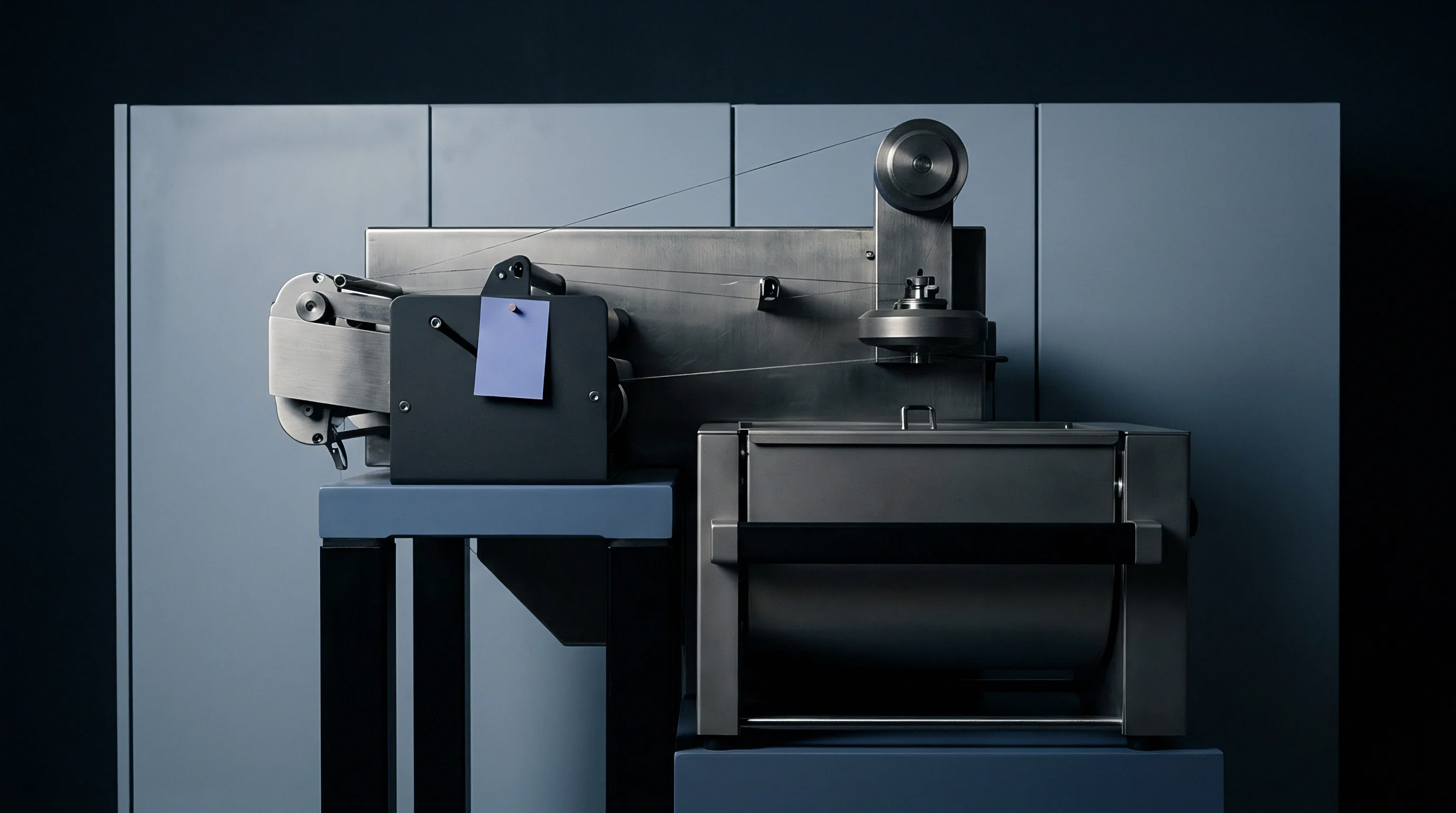
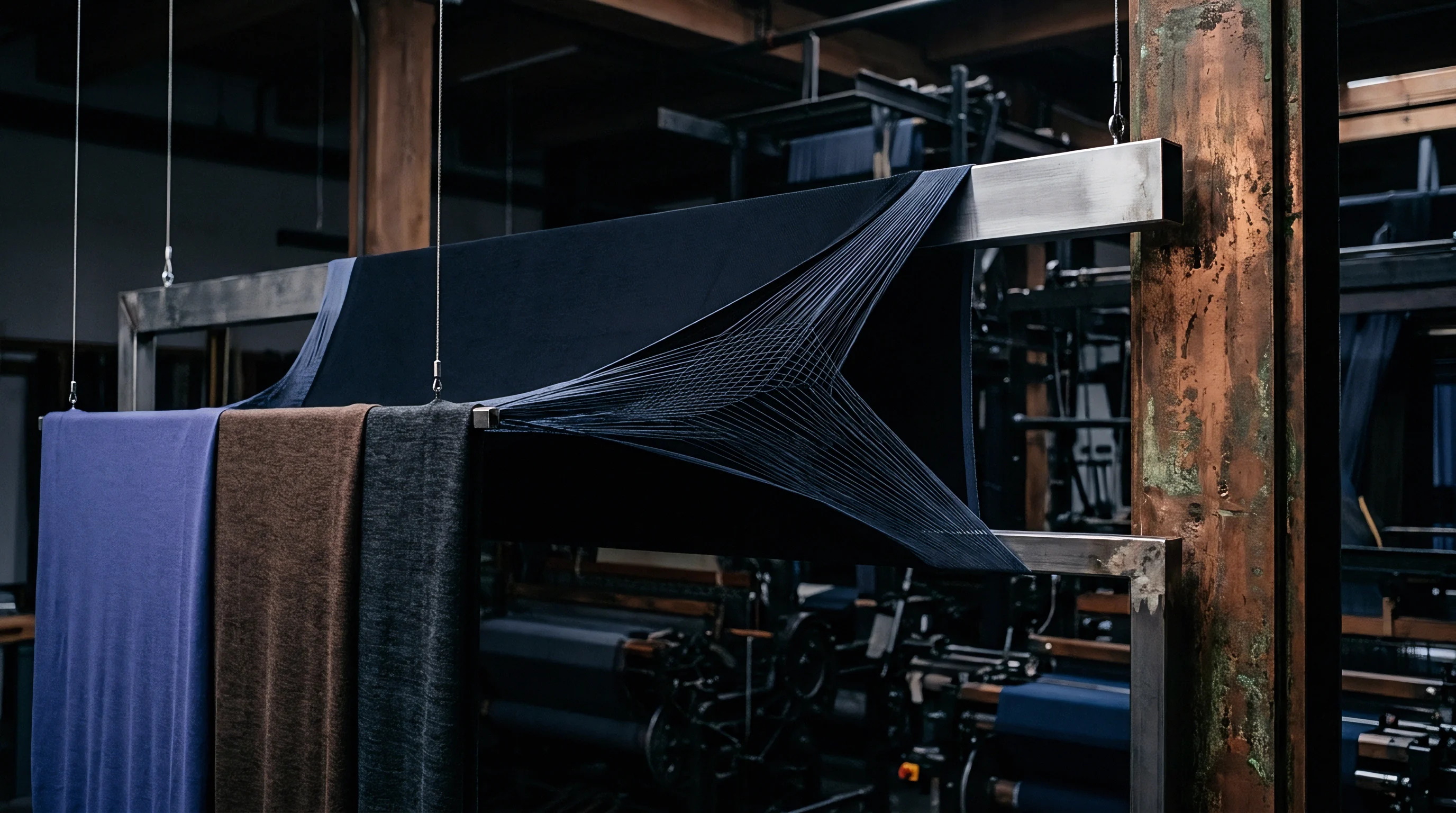
Stenter
Stenter frames exert biaxial control over running fabrics during drying and heat setting. Pin chains grip both selvages, pulling the wet textile out to width while feed rollers drive the cloth longitudinally into the drying chamber. Adjusting the speed differential between entry nip rollers and pin chains introduces warp overfeed.
Stenter clips grip the selvage edge.
Warp balance responds directly to overfeed settings.
Positive overfeed delivers more fabric length than the chain travels, crowding warp yarns in the machine direction and increasing finished picks per centimetre. Diverging the chain rails spreads warp ends apart, directly lowering finished ends per centimetre across the usable width. The stenter establishes the final thread density count before batching or inspection.
Mechanical overfeed controls warp thread spacing while tenter width rails set filling thread density.
Operating a pin frame under heat demands a precise balance between thermal dwell time and yarn moisture content. If synthetic fibers dry before reaching final width, heat-setting locks in incorrect thread densities, causing permanent off-gauge output. Frame rail steel expands inside continuous ovens ~ matching thermal expansion tolerances seen in rail transport infrastructure ~ requiring regular track gauge recalibration to ensure width settings stay accurate along forty-meter heating enclosures.
Uneven heat across chambers generates edge-to-middle density gradients, leaving the center slack while selvages carry high tension.
Can Overfeed Adjustments Compensate for Upstream Greige Extension?
Pin chains carry selvages through heating zones under precise speed differentials. Overfeed values typically range from negative 2 percent to positive 8 percent depending on substrate construction. Applying 6 percent overfeed lets warp crimp reform, packing picks tightly along the length.
However, excessive overfeed produces wavy selvages and localized bagginess that disrupt downstream automated cutting.
Open widths can drop by five centimetres under these conditions.
When finishing a 280 gsm cotton twill substrate, operators apply a 4.2 percent warp overfeed setting on an 8-chamber pin frame at 175 degrees Celsius with a 120-second dwell time. This operational figure assumes incoming moisture content stays below 18 percent. If goods arrive wetter, evaporation consumes thermal energy, leaving synthetic yarns under-set or cellulosic yarns damp, which allows residual shrinkage to alter pick counts during roll winding.
Calibrating frame controls to achieve exact density figures involves sequential steps:
- Align the entry uncurler pressure to ensure selvage edges sit flat on pin bars without curl distortion that steals usable width.
- Adjust the overfeed roll speed percentage above the main chain velocity, locking in target pick counts before entering the primary heat zone.
- Set the width spindle motors to expand chain rails incrementally across the first three chambers, avoiding abrupt cross-direction tears in tenderized wet fibers.
- Calibrate circulating air nozzle velocity to float the substrate evenly between upper and lower air cushions, preventing longitudinal drag against baffle plates.
Whether high-speed vacuum extraction alters residual filling crimp before pins engage the selvage edge remains an open technical question.

Arithmetic
Predicting finished construction starts with the mass and spacing equations of greige goods. Calculating finished density requires converting reed width, loom-state pick counts, and wet processing dimensional contraction factors into reliable finished values. Greige dimensions ultimately dictate cutting marker layouts.
Finished ends per centimetre rise in direct proportion.
Let greige ends per centimetre be E_g, greige picks per centimetre be P_g, reed width in centimetres be W_r, loom-state cloth width be W_g, and finished usable width be W_f. As the substrate shrinks in width during wet processing, total warp ends remain constant while occupying a narrower width. Consequently, finished ends per centimetre (E_f) increase proportionally to width reduction:
E_f = E_g (W_g / W_f) = (Total Warp Ends) / W_f
Similarly, finished picks per centimetre (P_f) depend directly on warp-direction length shrinkage (S_L), expressed as a decimal fraction of greige length:
P_f = P_g / (1 – S_L)
When applying mechanical overfeed (OF) on the stenter frame, length shrinkage combines with machine overfeed to determine finished filling density:
P_f = P_g (1 + OF) / (1 – S_process)
Here, S_process accounts for length change incurred during desizing, scouring, and continuous dyeing prior to stenter pin entry.
Formulations for Warp and Filling Compaction
Loom-state ends per centimetre multiply by width contraction to establish finished warp sett. To engineer a specific finished density, technical designers invert the calculation to determine the required reed count and take-up wheel setting. The reed width must satisfy both width contraction and selvage trim allowances:
W_r = W_f / (1 – S_W_total)
Total width contraction (S_W_total) encompasses off-loom elastic snap-back (S_loom), scouring shrinkage (S_scour), and finishing tentering balance (S_tenter):
S_W_total = 1 – ( (1 – S_loom) (1 – S_scour) (1 + E_tenter) )
A standard technical rule assumes an average 1.8 percent chemical weight loss during enzyme desizing on open-end rotor yarns. This estimate carries uncertainty because weavers rarely disclose sizing binder formulations, wax additions, or starch-to-polyvinyl-alcohol ratios. Given this uncertainty, the buyer tests three greige cone samples and runs lab desize wash-offs before approving the production plan.
| Parameter | Greige State (Loom) | After Scour & Mercerize | After Stenter Finishing | Final Inspected Target |
|---|---|---|---|---|
| Warp Yarn Count | 20/1 Ne (29.5 tex) | 19.8/1 Ne (29.8 tex) | 19.6/1 Ne (30.1 tex) | 19.6/1 Ne (30.1 tex) |
| Filling Yarn Count | 16/1 Ne (36.9 tex) | 15.7/1 Ne (37.5 tex) | 15.5/1 Ne (38.0 tex) | 15.5/1 Ne (38.0 tex) |
| Total Warp Ends | 5,120 | 5,120 | 5,120 | 5,120 |
| Cloth Width (cm) | 172.0 (in reed) / 165.0 (off loom) | 144.0 (relaxed) | 150.0 (pinned finished) | 148.0 (cuttable) |
| Ends per Centimetre | 31.0 | 35.5 | 34.1 | 34.6 |
| Picks per Centimetre | 22.0 | 25.2 | 24.5 | 24.5 |
| Areal Weight (g/m²) | 215.0 | 248.0 | 242.0 | 244.0 |
| Methods note: Values calculated under standard atmospheric conditions of 20 ± 2 degrees Celsius and 65 ± 4 percent relative humidity in accordance with ISO 139. | ||||
Take a bulk production scenario starting with 10,000 metres of greige goods. Greige pick count sits at 22.0 picks per centimetre with a greige width of 165 centimetres. Wet scouring and mercerizing compact length by 6.0 percent while width drops to 144 centimetres.
The stenter pulls width back out to 150 centimetres while applying 3.0 percent overfeed. The resulting picks per centimetre calculate directly:
P_f = 22.0 (1 + 0.03) / (1 – 0.06) = 22.0 1.03 / 0.94 = 24.1 picks per centimetre
The ends per centimetre calculate across the 150-centimetre pinned width:
E_f = 5,120 / 150 = 34.1 ends per centimetre
Higher pick densities translate directly into higher weaving costs.
Weaving costs scale with pick count because loom output in metres per hour is inversely proportional to picks per centimetre. If a converter erroneously plans for 26.0 finished picks per centimetre by inserting 24.0 picks per centimetre at the loom instead of the required 22.0, loom output drops by 8.3 percent. On a 100,000-metre order, that error consumes 140 additional machine hours, adding significant weaving surcharges that erase project profit margins.
Miscalculating the finished filling count creates tight marker yields, forces recutting cycles, and forfeits gross margin on the cutting table.

Tolerances
Inspection tables register real discrepancies between technical specifications and commercial deliveries. Counting glass measurements taken across finished roll lengths frequently uncover variations that trace back to fluctuating tension on the slasher, erratic dye jigger cycles, or differential drying rates across stenter cans.
Warp tension tends to pull the total width inward.
Commercial acceptance parameters demand precise statistical limits. Mill specifications that omit clear tolerances invite disputes over deliveries that run light on thread count or narrow on cuttable width. Thread density deviations directly alter key performance attributes: tearing strength drops when thread counts tighten excessively because yarn bundles cannot shift to share applied stress, while air permeability falls and tensile strength climbs.
Purchase agreements specifying ISO 7211-2 thread count compliance permit rejection of lots deviating by more than two ends per centimetre.
A buyer sourcing continuous yardage must link thread density tolerances directly to post-wash dimensional stability limits. A finished textile delivered on-spec for weight but deficient in pick count will fail domestic laundry tests: loose filling spacing leaves excess room for relaxation, causing garment shrinkage in consumer hands. Setting precise density limits protects both apparel fit and physical durability.
Inspection Standards and Commercial Settlement
Four-point grading systems penalize roll lots when warp or weft density wanders outside specification bounds. Standard test procedures such as ASTM D3775 and ISO 7211-2 specify counting threads across at least five distinct sections of the roll, excluding selvage zones within ten percent of overall width. Discrepancies exceeding ±3 percent on warp ends or ±5 percent on filling picks indicate systematic process failures in tension control or chemical scouring.
Sizing starch temporarily locks the woven structure.
Commercial contracts must define whether thread count applies to conditioned laboratory swatches or roll goods directly off the inspection carriage. Textiles tested immediately behind the stenter winder display transient elongation, masking up to 2 percent of latent warp recovery. Conditioning for 24 hours under standard atmosphere relaxes this elastic hold, shifting the true pick count upward and revealing whether the finisher met contract specifications.
Inserting standard ASTM D3775 pick-count tolerances directly into procurement terms binds the finisher to pay cut-and-sew downtime claims on out-of-spec goods.