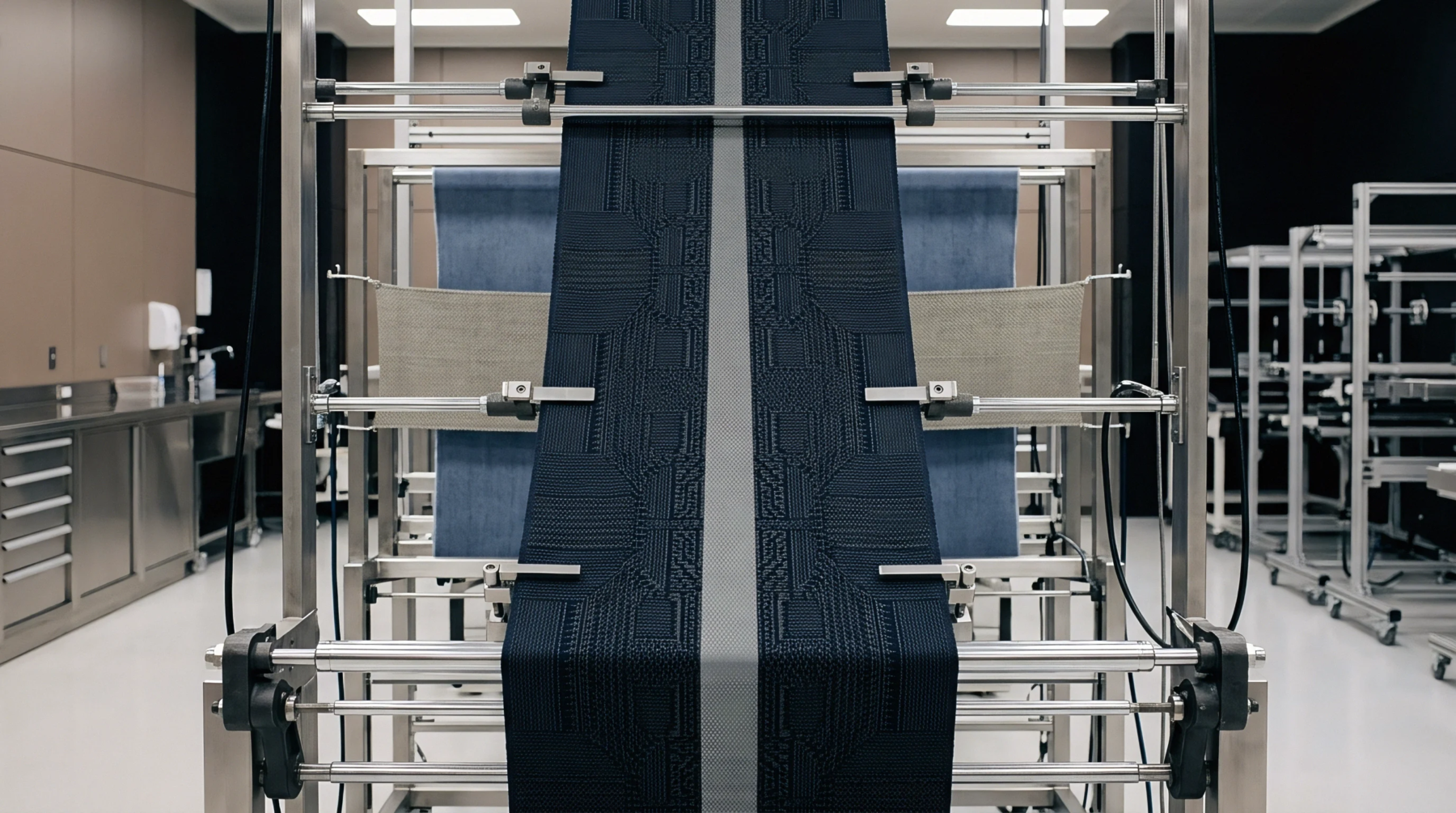
Yarn Intake
The specific length of yarn, measured in millimeters or inches, delivered from a warp beam to knit four hundred courses of fabric represents a necessary control value in warp knitting. This parameter, referred to as runner length, is measured to ensure the stitch structures remain uniform throughout the roll.
Stitch Geometry
Loop size and fabric weight are directly controlled by the volume of yarn fed into the needles. A higher runner length means that more yarn is fed per course, resulting in larger loops and a lighter, more open fabric. Conversely, a shorter feed results in tight, compact stitches that increase the density of the final textile.
This balance determines not only the visual appearance of the fabric but also its physical properties, such as air permeability, bursting strength, and elastic recovery.
Process Optimization
Regular measurement of the warp feed prevents tension imbalances across different guide bars. By matching the actual yarn consumption with the calculated design values, operators prevent yarn breakages and stop-marks. The runner length is recorded on the production sheet for every roll of fabric produced.
Yield Assurance
Consistent yarn delivery ensures that the fabric meets the specified width and weight. Slight deviations in the feed rate can alter the yield, leading to commercial rejections.