Dynamic Interaction between Elastomeric Draft Recovery and Jet Hydrodynamics in High Density Interlock Formations
Dynamic elastomeric draft recovery under jet hydrodynamics demands tuned nozzle velocity and prescour relaxation to eliminate permanent interlock rope marks.
Draft
Circular knitting machines operating at fine gauges between 36G and 44G subject continuous elastomeric core filaments to high dynamic strain as loops form. Spandex fed under positive tension is drafted from 2.8 to 4.2 times its relaxed length, storing considerable elastic energy inside the double-knit structure. Once greige fabric leaves the needle bed, immediate recovery causes the knit matrix to pull in across both length and width.
Because fine-gauge interlock is so dense, full relaxation cannot occur in the dry, unwashed state, trapping residual stress at the yarn crossover points.
Kinematic Recoil Mechanics in Core Synthetic Yarns
Polyurethane-based viscoelastic filaments recover from knitting tension over time. Plied synthetic yarns ~ micro-denier polyamide or polyester wrapped around an elastomeric core ~ realign internally in two stages: immediate elastic recoil compacts the structure within seconds of knitting, followed by viscoelastic creep recovery over several hours that alters overall fabric dimensions. In fine-gauge interlock double jersey knits, high structural packing restricts loop movement and impedes this slower recovery, generating localized stress gradients along the fabric tube.
Unrolling greige fabric into aqueous wet processing exposes it to thermal energy that breaks intermolecular hydrogen bonds across the synthetic matrix and elastomeric core. Heat lowers the activation energy needed for polymer chains to move, prompting rapid elastic recovery. When this snap-back happens while the fabric is confined inside a jet dyeing vessel, internal recoil forces fight directly against the mechanical forces of moving liquor.
| Elastane Linear Density (dtex) | Draft Ratio at Feed | Dry Unwashed Recoil (%) | Thermal Recovery at 80°C (%) | Residual Stress (cN/tex) |
|---|---|---|---|---|
| 22 | 3.0 | 38.5 | 88.2 | 0.42 |
| 33 | 3.5 | 44.1 | 92.6 | 0.58 |
| 44 | 3.8 | 48.7 | 95.1 | 0.71 |
| 78 | 4.2 | 52.3 | 97.8 | 0.89 |
Viscoelastic Stress Relaxation under Thermal Gradient
Immersion in hot liquor accelerates relaxation kinetics in strained core filaments, with contraction rates dictated by bath temperature, exposure time, and loop packing. In a 40-gauge interlock containing 18% elastane, thermal contraction forces reach up to 0.85 cN per loop column as the bath heats quickly from 30°C to 90°C.
As recoil forces compress adjacent courses, fabric area shrinks while thickness and weight per unit area increase. If rope movement inside the vessel is uneven, localized variations in this elastic recoil leave permanent longitudinal creases and structural distortion across the fabric.
Fabric processed below its thermal relaxation threshold retains strain that shows up as irregular rope marks during high-velocity jet circulation.
Managing draft recovery requires careful control over temperature ramp rates and mechanical tension in the early stages of wet processing. Mills that skip pre-relaxation subject the strained interlock to erratic thermal contraction under fluid impact. Balancing tension during spinning and knitting provides the baseline stability needed for consistent wet processing.

Hydraulics
Aqueous processing of high-density knits relies on fluid momentum, with centrifugal pumps forcing liquor through restricted venturi nozzles. These high-velocity streams carry the fabric rope through transport tubes into the main vessel to maintain the turnover rate needed for level dyeing. Hydraulic action on the fabric surface combines normal impact pressure, wall shear stress, and turbulent drag inside the nozzle core.
Venturi Nozzle Shear and Fluid Momentum
Fluid accelerates inside the venturi nozzle as the cross-sectional area narrows, converting kinetic pressure into dynamic impact on the fabric rope. Operating nozzle pressures from 1.2 bar to 2.4 bar produce liquor velocities between 180 and 320 metres per minute in high-density interlock goods. Drag forces pull the fabric tube forward while forcing liquor through the porous knit matrix.
Dense 36G to 44G interlock fabrics offer less fluid permeability than open mesh or single jersey. Because hydrodynamic drag accumulates on the outer surface instead of penetrating easily through inter-loop voids, concentrated fluid impact squeezes fabric folds into tight longitudinal ropes, raising friction against the transport tube walls.
- Hydrodynamic Surface Chafing occurs when localized high-velocity jets abrade tight loop crowns, causing visible fiber disruption and micro-fuzzing on fine-denier synthetic microfilaments.
- Permanent Jet Creasing develops when continuous hydraulic pressure compresses longitudinal folds as the elastomeric core contracts thermally inside the transport tube.
- Loop Distortional Displacement arises when asymmetrical drag forces pull course loops out of alignment, causing diagonal spirality and wale distortion across the fabric width.
- Elastane Fiber Fracture occurs when extreme hydrodynamic impact and mechanical friction break exposed elastomeric core filaments at loop crossover points.
When Does Hydrodynamic Impact Overpower Recovery Force?
The balance between kinetic fluid pressure and internal elastomeric recoil determines fabric stability inside the machine. Hydrodynamic pressure flattens and stretches the fabric rope axially inside the venturi throat, where friction restricts transverse loop sliding. As fabric exits the nozzle into the accumulation chamber, fluid velocity drops rapidly and releases external hydrodynamic tension.
If internal recoil energy exceeds the fluid forces attempting to open the rope, the fabric collapses back into tight folds. This uncontrolled contraction sets long creases into the matrix before mechanical plaiters can open the rope. Impact overpowers recovery when nozzle pressure exceeds 2.0 bar on un-preset interlock containing over 15% elastane.
Severe rope marking on fine-gauge interlock is often attributed to poor plaiting or insufficient lubricant, but that overlooks the primary physical mechanism. High nozzle velocity on thermally unstabilized interlock creates mechanical shear that overpowers loop mobility, locking structural creases into the fabric long before lubricants take effect.
Interlock
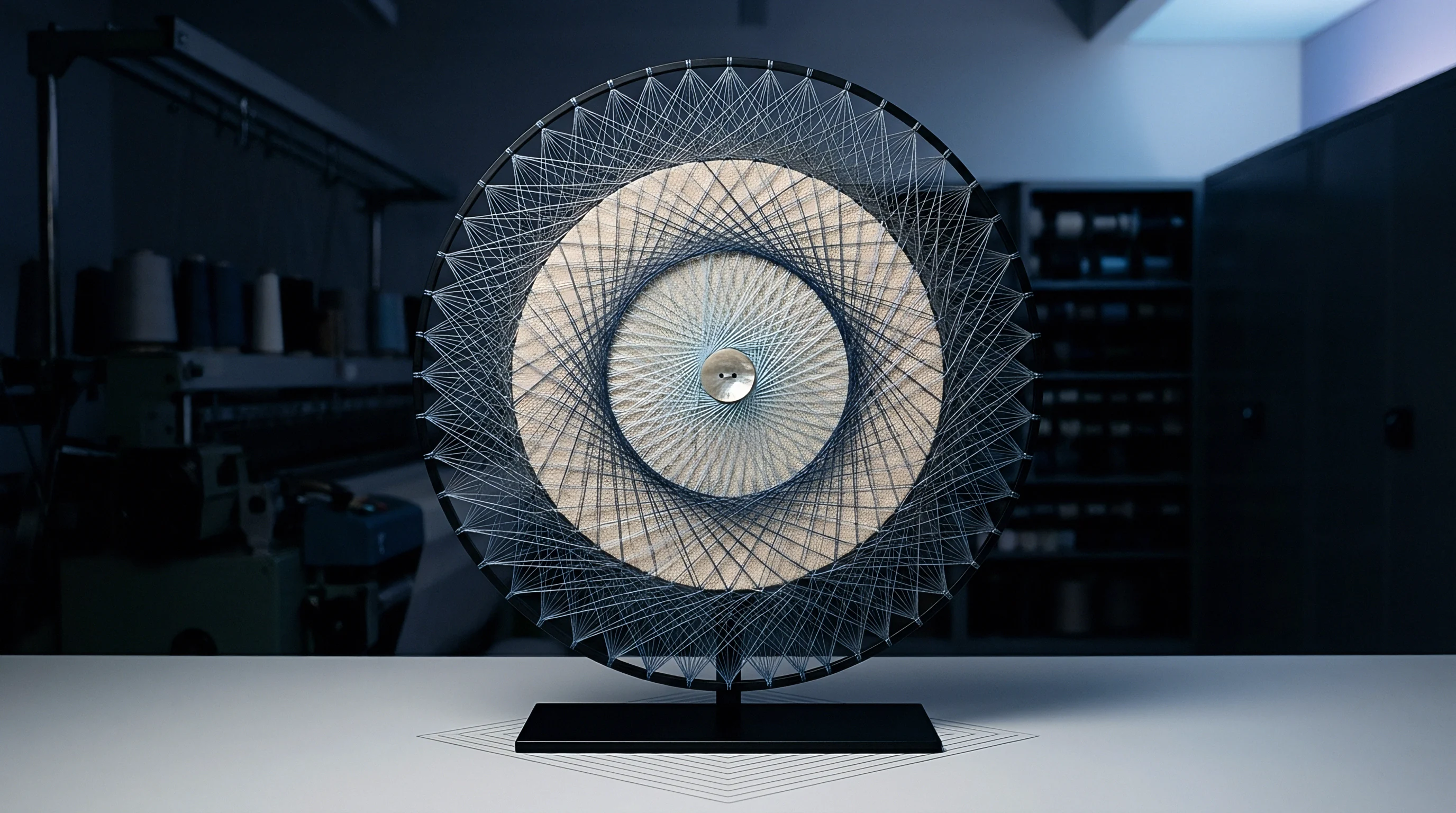
Double jersey interlock is built from two 1×1 rib structures knitted alternately on cylinder and dial needles, giving both faces identical smooth surfaces. Cylinder and dial needles align directly opposite each other to form intermeshing loop columns. Tight wale spacing and high course density generate heavy friction at loop intersections, restricting yarn movement and altering how the fabric responds to mechanical force.
Gating Configurations and Double Jersey Friction
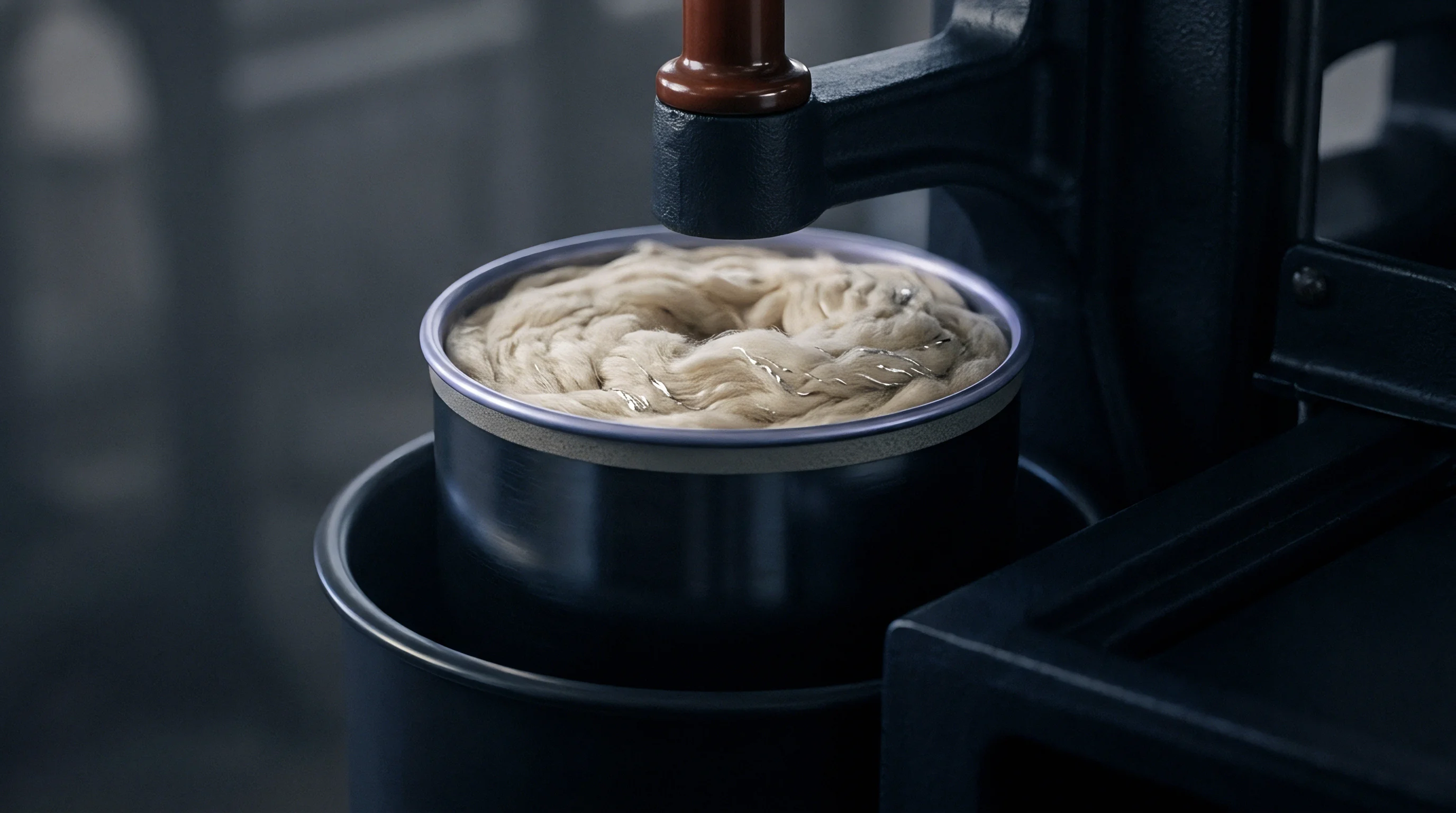
Interlock needle gating creates a tight geometry with each course alternating between front and back needle beds. In a 40G interlock, inter-loop contact area per unit surface exceeds that of an equivalent single jersey by over 140%. Friction between yarns resists transverse expansion during wet processing, pushing the structural tightness factor ~ the ratio of cover factor to loop length ~ to critical limits in fine gauges.
When high-density interlock passes through a jet nozzle, fluid pressure compresses the double-layer fabric. Unlike single jersey, which yields under transverse shear, interlock resists flat compression because of its opposing loop columns. Internal friction locks adjacent loops, preventing mechanical stress from distributing evenly across the sheet.
At a liquor ratio of 1:6 and a nozzle pressure of 1.8 bar, 40-gauge interlock knit experiences localized fluid shear forces exceeding 45 cN per square centimetre.
Loop Jamming Coefficients and Structural Drag
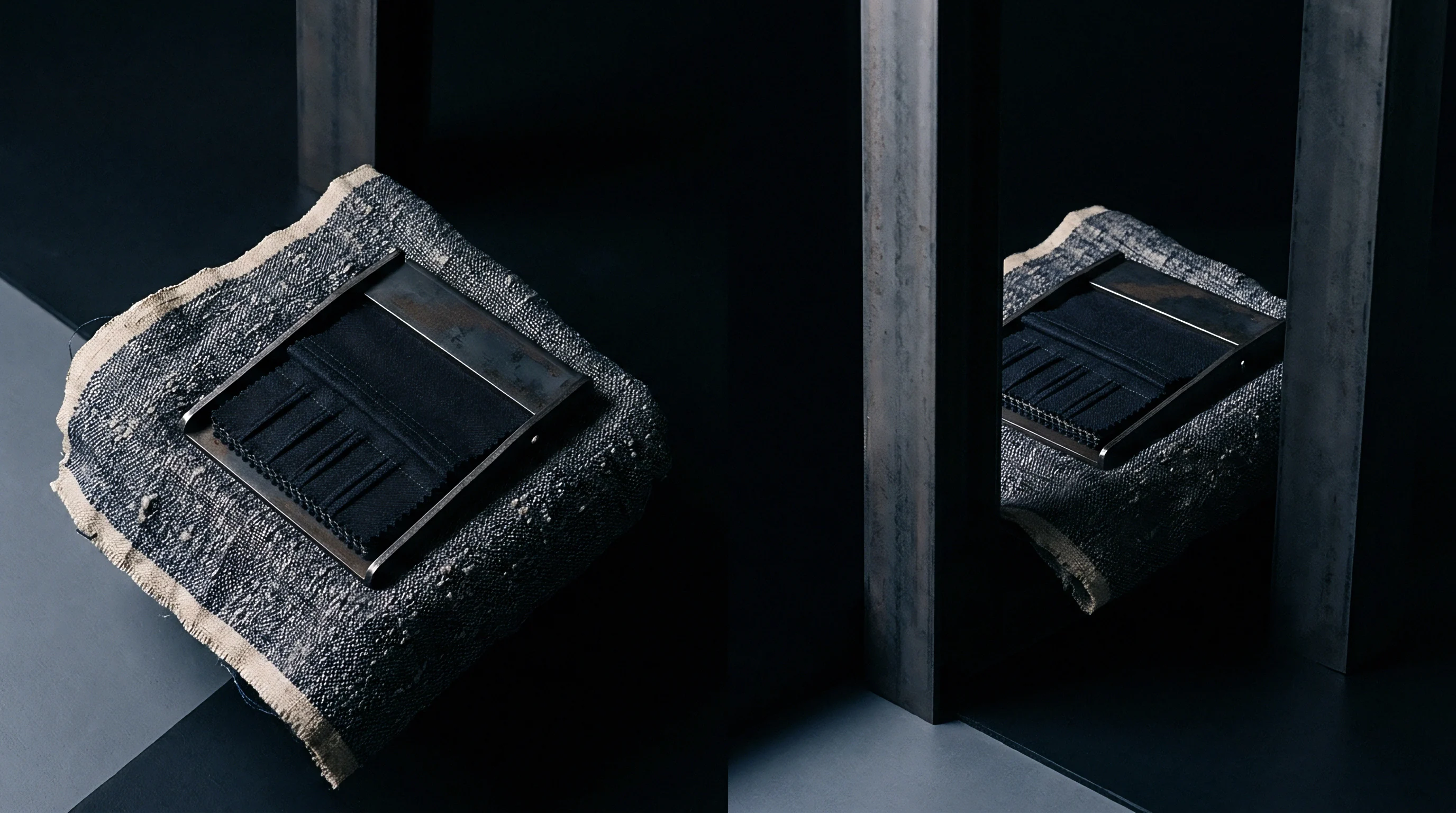
Mathematical modeling of interlock loop geometry marks a structural jamming limit where adjacent yarn columns touch and eliminate space for movement. Loop lengths in high-density interlock range from 2.1 mm to 2.6 mm per stitch. When stitch length falls below 2.2 mm on a 40G machine, the yarn volume fraction in the unit cell exceeds 0.68, nearing theoretical packing limits.
At this limit, fluid flow through inter-loop voids drops significantly, converting drag forces almost entirely into transverse compression. Winch draft adds longitudinal tension, pulling jammed loops into rigid linear arrangements that resist opening inside the jet vessel.
| Machine Gauge (G) | Average Loop Length (mm) | Jamming Factor | Fluid Drag Coefficient | Deformation Threshold (cN) |
|---|---|---|---|---|
| 32 | 2.62 | 0.54 | 0.38 | 28.5 |
| 36 | 2.45 | 0.61 | 0.49 | 36.2 |
| 40 | 2.28 | 0.69 | 0.63 | 47.8 |
| 44 | 2.12 | 0.76 | 0.81 | 62.1 |
Evaluating structural parameters before bulk dyeing requires standard laboratory testing on greige samples to identify processing limits before machine loading.
- Loop Length Measurement under ISO 8388 confirms stitch length accuracy across cylinder and dial feeds to within ±1.5%.
- Wale and Course Density Counting under ISO 7211-2 quantifies structural packing density in relaxed greige goods.
- Fabric Mass Per Unit Area Analysis under ISO 3801 verifies yarn linear density and overall weight post-conditioning.
- Greige Bursting Strength Verification under ISO 13938-1 establishes initial structural integrity before wet processing.
Procurement specifications for fine-gauge elastomeric interlock routinely set strict standards for dimensional stability. Standard contracts mandate that dimensional change after three wash cycles under ISO 6330 cannot exceed ±3.0% in either direction, with skewness and spirality capped at 2.0%.
Disruption
Jet dyeing subjects core elastomeric yarns and synthetic face fibers to heat and mechanical strain that alter their molecular alignment. When dense interlock carrying residual strain is heated under compression, thermal softening, viscoelastic recoil, and fluid shear combine to lock deformations into the polymer matrix.

Thermomechanical Setting and Crease Propagation
Synthetic filaments reach glass transition (Tg) when amorphous polymer chains shift from a rigid structure to a flexible state. In water, polyamide 6,6 reaches wet Tg between 40°C and 55°C, polyester between 65°C and 80°C, and elastomeric filaments undergo soft-segment relaxation above 60°C.
As bath temperatures pass these glass transition thresholds inside a jet, mechanical pressure resets polymer orientation. If rope folds stay static or take repeated localized pressure at these temperatures, permanent marks set into the weave. Cooling the liquor rapidly through glass transition zones without opening the rope structure freezes those creases into the finished cloth.
ISO 6330 testing requires three consecutive relaxation cycles before dimensional stability measurements are taken to determine compliance against master specifications.

Prescouring Relaxation and Lubricant Injection
Preventing thermomechanical defects requires preparation sequences that manage elastomeric recoil before high-temperature processing. While prescouring removes spinning oil residues, open-width presetting on a stenter frame before jet dyeing relaxes draft strain, fixes initial width and density, and raises the Tg threshold of face yarns. Presetting between 185°C and 195°C establishes thermal memory that resists creasing during subsequent jet circulation.
When open-width presetting is skipped for cost reasons, low-tension prescouring between 40°C and 60°C permits controlled contraction before dyeing. High-molecular-weight fatty acid ester lubricants added to the prescour liquor coat yarn surfaces, dropping the inter-loop friction coefficient from 0.45 down to 0.18.
- Mount greige rolls onto a low-tension unwinding station with edge-guiding sensors to maintain lateral alignment.
- Feed fabric into an open-width washer at 50°C containing 2.0 g/L non-ionic scouring agent and 1.5 g/L polymeric lubricant.
- Transport fabric through immersion troughs using driven nip rollers calibrated for overfeed ratios between +5% and +12% relative to line speed.
- Deliver wet fabric to a stenter drying frame, overfeeding by +15% onto pin chains while adjusting rail expansion to target width.
- Dry fabric at 130°C to remove moisture without heat-setting the elastomeric core, allowing full tension relaxation before batch dyeing.
- Batch fabric onto large-diameter roll A-frames under minimal surface drive tension to prevent secondary strain before loading the jet vessel.
Bypassing thermal presetting or pre-relaxation sharply raises defect rates during bulk dyeing. Un-preset fine-gauge interlock run through high-velocity jet vessels develops permanent jet creases, center-to-selvage shade banding, and area yield losses exceeding 12% across finished lots.
Ledger
Commercial viability in high-density synthetic fabrics depends on balancing wet processing yield against machine productivity and reject rates. Fine-gauge elastomeric interlock carries high yarn and knitting costs because of micro-denier inputs and low machine speeds. Uncontrolled dyeing defects quickly erase converting margins through scrap, lost yield, and re-dyeing expense.

Cost Calculations across Alternative Processing Routes
Selecting a processing route for 40G elastomeric interlock requires weighing equipment utilization, chemical and utility costs, and defect risk. Direct jet dyeing without pre-relaxation skips upfront steps but carries heavy risk of creasing and width variation. Conversely, open-width presetting adds stenter processing expense while dramatically reducing fabric rejection rates.
For a 10,000 kilogram lot of 40-gauge polyamide/elastane interlock (82% PA 6.6 / 18% EA, 220 g/m² target weight), evaluating three processing routes shows how front-end thermal stabilization impacts landed cost per finished metre.
| Process Route Configuration | Processing Cost ($/kg) | Average Yield Loss (%) | Quality Rejection Rate (%) | Landed Cost ($/m) |
|---|---|---|---|---|
| Route A: Direct Jet Scour & Dye (Un-preset) | 2.10 | 14.2 | 8.5 | 4.82 |
| Route B: Continuous Open-Width Scour + Jet Dye | 2.65 | 8.1 | 2.8 | 4.41 |
| Route C: Open-Width Heat-Set + Jet Dye + Finish | 3.15 | 4.5 | 0.6 | 4.28 |
Route A produces high scrap rates from irreversible rope marks and density variation, forcing heavy edge trimming and length loss during stenter re-framing. Route C adds $1.05 per kilogram in upfront processing expense but recovers length, stabilizes width, and brings rejection near zero ~ cutting net landed cost by $0.54 per linear metre compared to direct jet processing.
Uncontrolled thermal recoil in fine-gauge double jersey fabrics permanently alters course density prior to heat setting.
Technical Specifications for Mill Procurement Agreements
Bulk procurement contracts for high-density interlock typically embed mandatory processing parameters directly into purchase agreements, establishing clear operational limits for mill responsibility.
These agreements specify machine loading, liquor ratios, heating profiles, and chemical additions. Capping nozzle pressure at 1.6 bar, holding liquor ratios to at least 1:7, and limiting ramp rates to 1.5°C per minute protects fabric structure during jet dyeing. Technical schedules require continuous open-width presetting on any interlock over 36G or containing more than 12% elastane before loading into jet vessels.
Finding the exact fluid velocity that ensures full levelness in 44-gauge micro-denier interlock without crossing the shear threshold that causes surface damage requires balancing fluid dynamics against fiber friction.