Structural Mechanics of High Density Woven Fabrics
High density woven performance depends on theoretical yarn jamming limits, where mechanical packing restricts crimp, lowers tear strength, and shifts fluid flow.

Jamming
High density woven structures reach physical limits where adjacent threads contact each other across the width and length. In non-jammed fabrics, open space exists between threads, allowing yarns to shift under lateral pressure. As thread count per centimetre increases for a given yarn linear density, the clearance between adjacent yarns collapses to zero.
At this point, known as the jammed state, further insertion of picks or ends demands mechanical deformation of the yarn cross-section itself. Peirce geometric models define this boundary using thread diameter, yarn spacing, and crimp height. Calculating yarn diameter from linear density in tex and fibre density in grams per cubic centimetre provides the theoretical maximum ends and picks per centimetre before compression occurs.

Geometrical Limits of Thread Packing
Peirce models yarn as circular cylinders that deform into race-track cross sections under beating force. Assuming rigid yarn geometry, the maximum ends per centimetre for a square plain weave fabric equals the inverse of the yarn diameter. Filament synthetics compress more easily than ring-spun cotton yarns, shifting the theoretical jamming line toward higher pick densities.
When calculating fractional cover factor, values approaching 1.0 indicate complete surface coverage by one yarn system. Walz fabric tightness factors above 0.95 signal severe mechanical resistance during weaving.
High yarn count reduces diameter. Twill structures allow tighter packing. Plain weaves jam at lower thread counts than twills due to their higher frequency of thread intersections per unit area.
A 2/2 twill weave isolates intersections, enabling picks to slide closer together before yarn-to-yarn jamming locks the structure.
| Weave Structure | Yarn Count (dtex) | Max Ends/cm (Theoretical) | Max Picks/cm (Theoretical) | Maximum Fractional Cover Factor |
|---|---|---|---|---|
| Plain 1/1 | 167 dtex polyester | 38.2 | 34.0 | 0.96 |
| Twill 2/1 | 167 dtex polyester | 46.5 | 41.0 | 0.98 |
| Twill 3/1 | 167 dtex polyester | 51.0 | 45.5 | 1.02 |
| Satin 5/2 | 167 dtex polyester | 55.8 | 49.0 | 1.05 |
Calculated Sett Limits against Beat-Up Forces
Determining maximum construction limits requires evaluating yarn linear density against thread spacing. High-speed rapier and air-jet looms generate peak beat-up forces at the cloth fell when pushing tight picks into a jammed shed. When beat-up resistance exceeds warp tension capacity, the cloth fell bounces backward, causing irregular pick spacing and reed marks.
Mills calculate the maximum insertion rate by comparing the cloth fell displacement per beat-up against yarn compressive modulus.
Heavy beating causes reed marks. Warp tension alters yarn shape. Calculating the precise jammed state for a target specification uses a structured mathematical workflow.
- Determine the nominal yarn diameter in millimetres using yarn linear density in tex divided by bulk density.
- Calculate thread spacing in millimetres by taking the reciprocal of warp ends per millimetre and weft picks per millimetre.
- Compute the fractional cover for warp and weft separately to establish raw surface coverage.
- Calculate the combined fabric cover factor using the sum of warp and weft cover minus their product divided by theoretical packing factors.
- Derive the maximum pick insertion resistance limit by multiplying thread intersection count per square centimetre by yarn flexural rigidity.

How Does Warp Tension Limit Cover Factor?
Excessive longitudinal pull flattens the pick paths, raising the mechanical resistance of the loom beat. When warp yarn tension exceeds twenty percent of single-end break strength during shedding, filament damage occurs before the reed strikes the fell. The reed cannot advance the pick to its theoretical jammed position without creating thick-and-thin bars across the roll width.
High warp sheet tension compresses the weft yarn into an elliptical shape, reducing fabric thickness while forcing the warp to remain entirely straight. This structural asymmetry shifts all crimp into the weft system, altering mechanical properties along the orthogonal axes.
Placing a 1/1 plain weave construction at ninety-eight percent theoretical cover factor on an air-jet loom increases fell bounce by three millimetres when warp tension drops below 1.2 grams per dtex.
Attempting to weave beyond ninety-eight percent theoretical cover on a standard rapier loom causes excessive warp end breakages, stop marks, and permanent reed streaking across the grey goods.

Crimp
Structural flexibility in tightly packed woven structures relies on how warp and weft weave around each other. Crimp represents the percentage increase in original yarn length when drawn out of a fabric sample, expressed relative to the distance between thread boundaries in the woven state. In low-density fabrics, warp and weft share crimp load according to yarn linear density and warp tension.
In high density constructions, crimp distribution becomes highly asymmetric. The yarn system under higher mechanical tension during weaving surrenders its crimp to the orthogonal yarn system, driving the relaxed thread system into extreme wave geometry.

Yarn Curvature and Thread Intersection Mechanics
When continuous filaments bend over orthogonal picks, compressive forces flatten the contact zone. The radius of curvature at thread intersections dictates the maximum bending moment sustained by the yarn. Finer yarns with lower flexural rigidity accommodate tighter radii without mechanical stress concentration.
As thread density increases, thread spacing drops below the combined nominal diameter of warp and weft, forcing significant cross-sectional flattening. This mechanical interaction creates contact pressure at every intersection, frictionally locking the threads in place.
Yarn friction locks thread crossings. Tight packing raises crimp amplitude in the non-tensioned yarn system. Higher crimp percentage enhances fabric extensibility along that specific axis under initial tensile loading.
Unbalanced crimp distribution concentrates tensile strain into the straight yarn system, causing premature yield at low elongation values.

Crimp Interchange under Biaxial Tension
Loading a fabric along the warp axis straightens the longitudinal threads while forcing transverse yarns to increase wave height. This process, termed crimp interchange, governs initial low-load extension before actual yarn filament stretching begins. In dense woven structures, crimp interchange space is limited because the transverse threads already abut adjacent ends.
Applying tensile load along the warp forces weft picks outward, but high pick density prevents lateral movement, causing rapid stress accumulation.
High pick counts lock thread movement. The fabric exhibits high initial tensile modulus along both axes. Structural stiffness increases rapidly because geometric straightening cannot occur without cross-sectional compression of adjacent threads.
Equilibrium crimp values depend on loom settings, sizing percentage, and wet-processing tension during scouring and heat setting.

Pore
Fluid flow through dense textiles depends on the void spaces remaining between packed yarns. In high-density constructions, total porosity decreases while pore size distribution narrows sharply. Pore dimensions govern both air permeability measured under ISO 9237 and hydrostatic water resistance measured under ISO 811.
Small hydraulic pore diameters resist liquid water entry while allowing water vapor diffusion through the interstitial spaces. Calculating equivalent capillary pore radii provides the baseline for predicting water head performance prior to coating or finishing operations.

Inter-Thread Channel Geometry and Fluid Barrier
Capillary resistance within tight woven matrices scales inversely with thread clearance. Water penetration requires overcoming Laplace pressure, which increases as pore radius shrinks. In high density micro-filament woven structures, inter-thread spacing drops below five micrometres.
At these dimensions, surface tension of water prevents liquid penetration under moderate hydrostatic pressure even without fluorocarbon or polyurethane hydrophobic finishes. Inter-filament spaces within the yarn bundle itself create secondary fluid channels, acting as parallel capillary pathways.
Fabric density governs air flow. Small pores restrict liquid flow. Water penetration depends on pore radius.
High pick density restricts mass transfer across the textile plane.
| Picks/cm | Mean Pore Radius (µm) | Air Permeability at 100 Pa (mm/s) | Hydrostatic Head ISO 811 (kPa) | Water Vapor Resistance ISO 11092 (m²Pa/W) |
|---|---|---|---|---|
| 30.0 | 18.5 | 45.2 | 2.1 | 3.8 |
| 34.0 | 12.1 | 18.4 | 4.5 | 4.2 |
| 38.0 | 6.8 | 5.1 | 8.9 | 4.9 |
| 42.0 | 3.2 | 0.8 | 14.2 | 5.5 |
| 45.0 | 1.9 | 0.2 | 19.8 | 6.1 |
Hydrostatic Resistance and Air Permeability Balance
Elevating pick density narrows inter-yarn gaps, raising hydrostatic head while dropping air flow. Achieving air permeability below one millimetre per second at one hundred pascals pressure differential requires thread counts within ninety-five percent of the theoretical jamming limit. At this density, air flow transitions from turbulent to laminar viscous flow governed by Darcy law.
Water head values scale non-linearly near the jamming limit, as small reductions in thread clearance produce large increases in resistance pressure.
Engineers manage trade-offs between air permeability and water resistance when designing down-proof outdoor shell fabrics. Down feathers require air permeability below 1.5 millimetres per second to prevent feather shaft penetration, requiring precise control over interstice dimensions.
- Inter-thread pore collapse occurs when pick density reaches jammed state, causing air flow to drop below measurable levels on standard test equipment.
- Filament bundle blooming during wet processing fills interstitial channels, lowering hydrostatic entry thresholds if tension control fails.
- Calender surface glazing flattens surface crown threads, reducing inter-thread pore volume while creating asymmetrical fluid barriers across fabric faces.
- Reed mark channel formation leaves periodic wide interstitial lines, causing localized hydrostatic head failures well below theoretical performance targets.
Mathematical Model of Interstice Cross-Sections
Hydraulic diameter calculations assume rectangular or elliptical cross-sections for interstitial openings. In a fully jammed plain weave, the interstice forms a complex three-dimensional converging-diverging channel. The minimum hydraulic radius occurs at the mid-plane of the fabric thickness where warp and weft crowns align.
Fluid dynamics equations model air flow through these channels by summing frictional drag along yarn surfaces against pressure gradients across the fabric thickness. Micro-tomography data demonstrates that yarn cross-sectional flattening under loom beat-up alters pore cross-sections from square shapes to narrow slits, reducing effective flow area without altering total volumetric porosity.
How much inter-filament capillary flow persists when inter-thread flow is completely blocked by mechanical compaction remains difficult to isolate without dynamic tracer fluid analysis.
Deformation
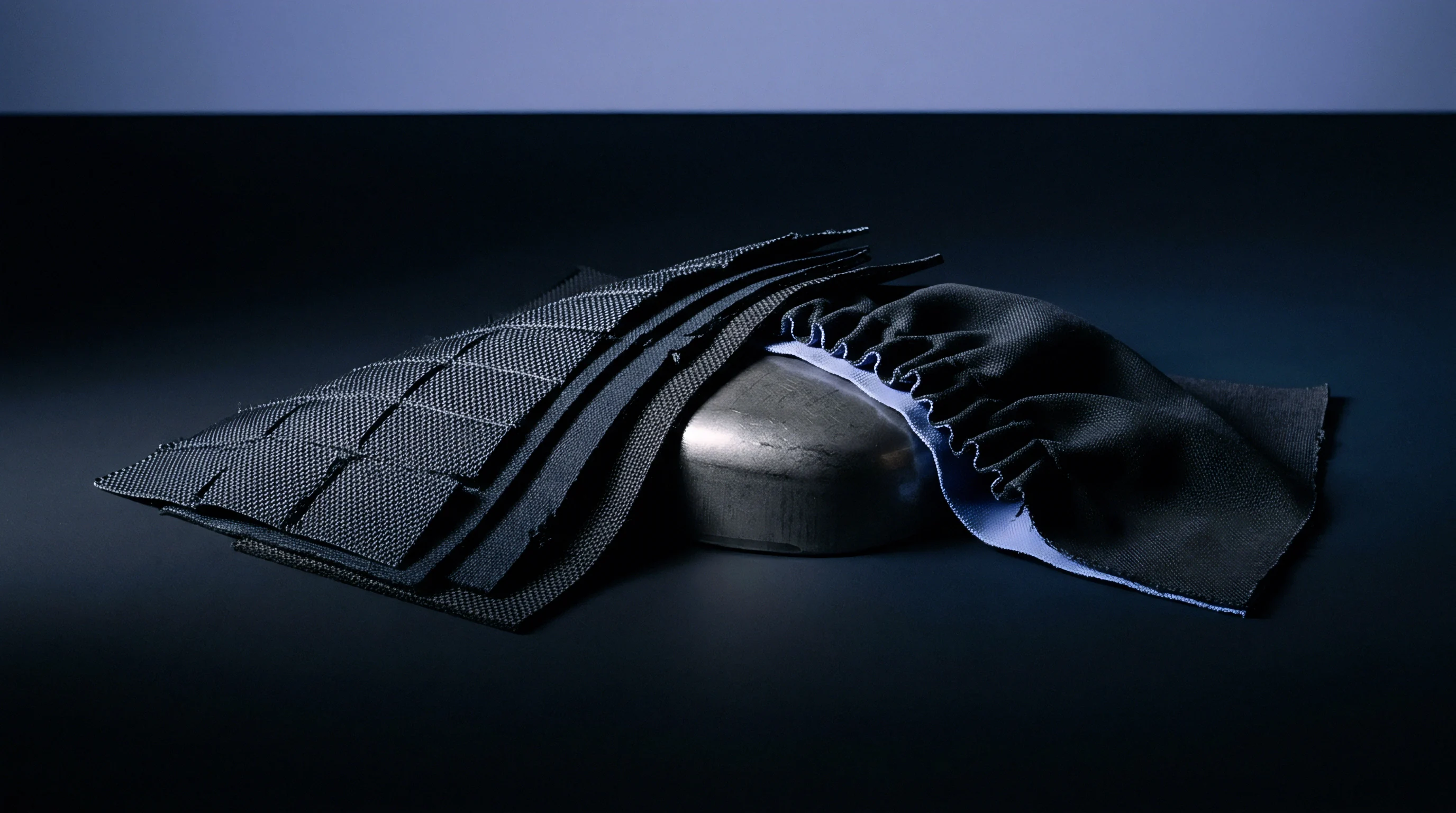
Mechanical response to low-load stress dictates how dense woven materials handle during garment assembly. High density fabrics exhibit elevated shear stiffness, high bending rigidity, and reduced Elmendorf tear strength compared to open weaves of identical weight. When yarn density increases, internal friction between tightly packed threads prevents relative movement.
This structural restriction modifies mechanical response across tensile, shear, and bending modes, causing stiff drape characteristics and crisp hand feel measured via Kawabata Evaluation System parameters.
Yarn Immobility and Tear Strength Degradation
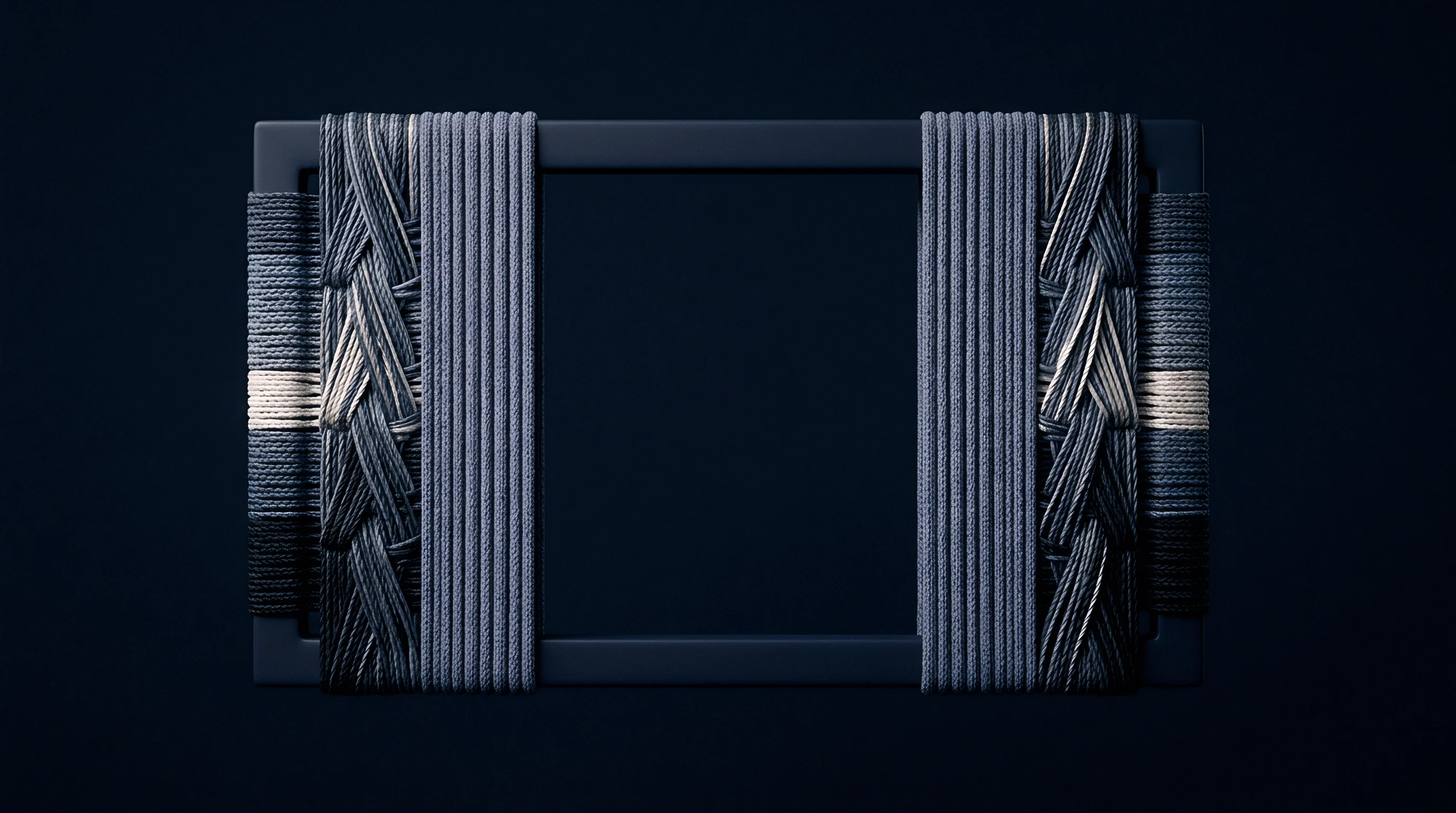
High thread packing prevents individual ends from sliding into groups when subjected to tearing forces. In open woven structures, tearing stress bunches multiple threads together at the tear delta, distributing the load across a yarn bundle. In high density fabrics, intense friction locks each yarn in place, forcing the tearing force to rupture single ends sequentially.
This mechanism reduces tear resistance by up to sixty percent compared to an open structure carrying the same thread tensile rating.
High cover reduces tear propagation. Single yarns break individually under load. Increasing thread tensile strength fails to recover lost tear resistance if thread mobility remains completely restricted within the jammed lattice.
Executing Elmendorf tear testing according to ISO 13937-2 on high density plain weave polyamides yields lower force values than tests performed on lower density twill constructions of identical mass per unit area.
Low-Load Bending and Shear Stiffness Behavior
Inter-thread friction drives up fabric stiffness, causing stiff drape in high-density constructions. Kawabata KES-FB testing quantifies this response through bending rigidity B and shear stiffness 2KG. Bending rigidity scales with yarn flexural rigidity and thread count, but increases exponentially once yarn-to-yarn contact creates internal frictional resistance to bending curvature.
Shear stiffness reflects the torque required to rotate warp and weft yarns at their intersection points; in jammed fabrics, rotation cannot occur without compressive deformation of intersecting thread crowns.
To qualify dense fabric constructions for production, technical dossiers must include specific low-load mechanical criteria measured after wet processing.
- Shear stiffness hysteresis 2KG5 measured on KES-FB3 equipment must remain below 4.5 gf/cm·deg to prevent seam puckering during automated sewing.
- Bending rigidity B along the warp axis must not exceed 0.18 gf·cm²/cm for apparel applications to maintain acceptable garment drape.
- Elmendorf tear strength measured per ISO 13937-2 must exceed 12 Newtons despite high pick density restrictions.
- Tensile linearity LT measured per KES-FB1 must stay within 0.60 to 0.75 to ensure uniform spreading on the cutting table.
When tear strength falls short on high density contracts, mills frequently claim that yarn tensile limits prevent higher performance, ignoring how yarn mobility restrictions drive the failure.
Calender
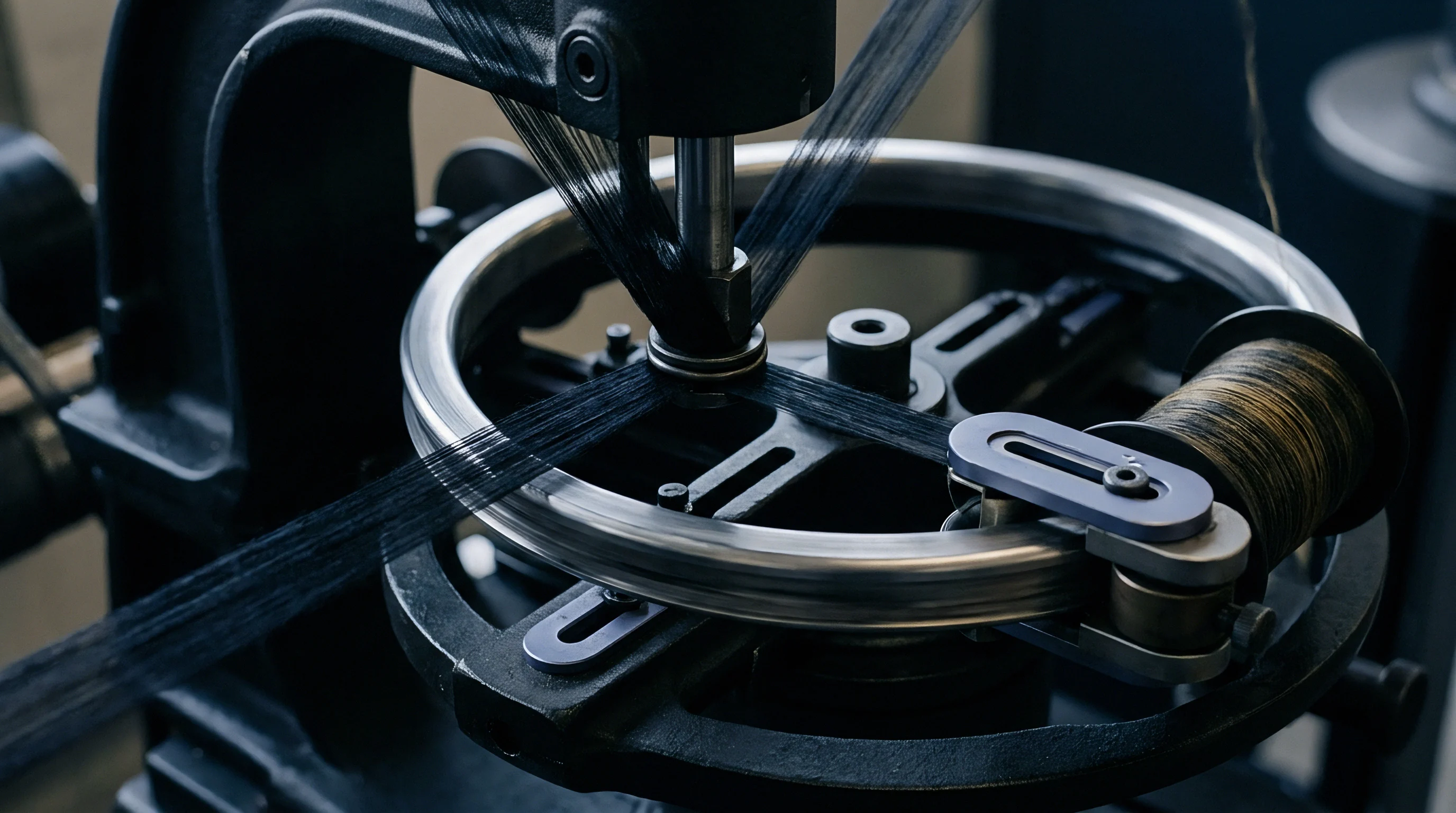
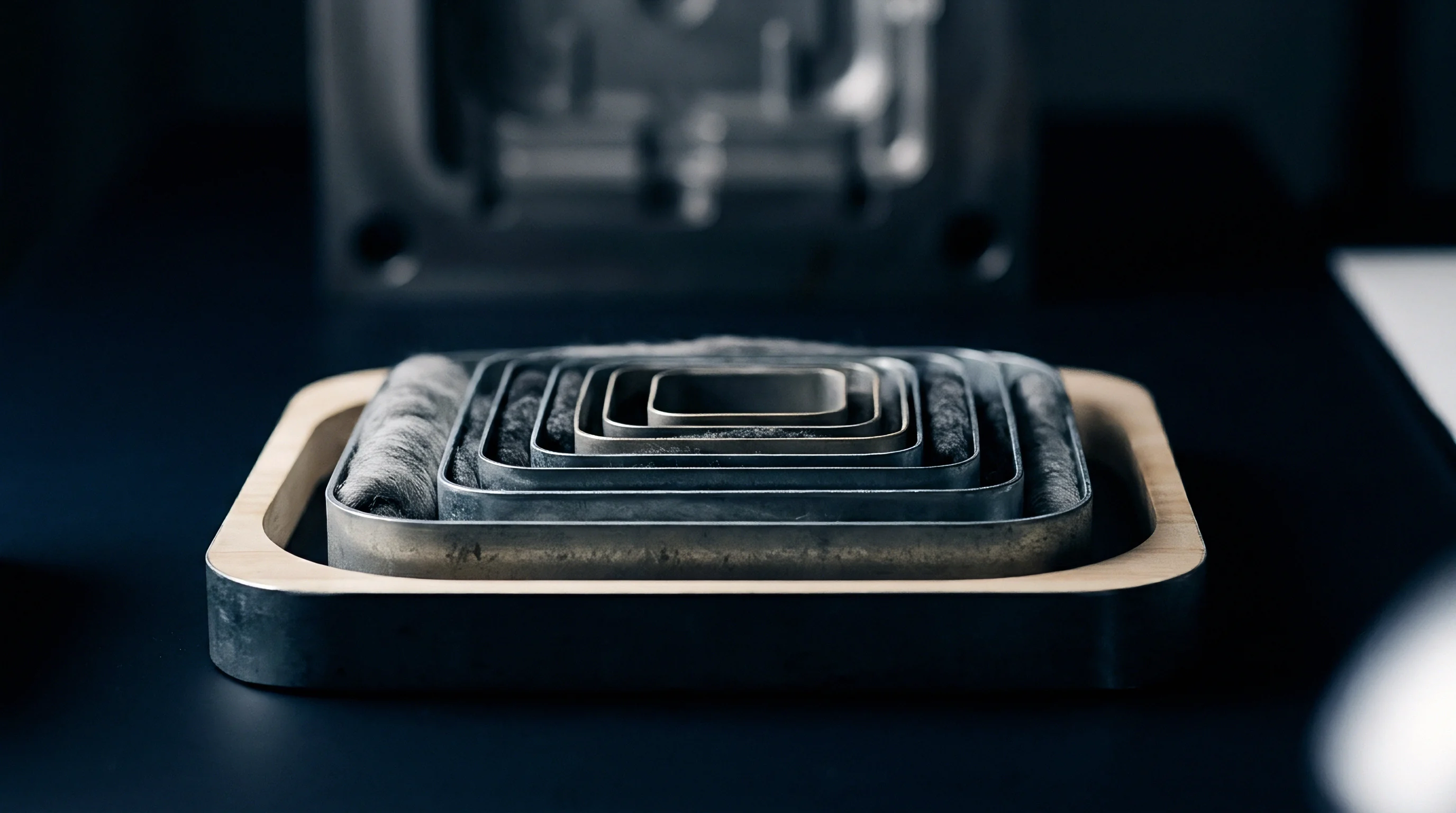
Applying heat and mechanical compression to a dense fabric alters yarn shape after weaving. Industrial calendering passes cloth through a nip formed by heated steel rolls and softer composite or cotton rolls under high nip pressures. This process deforms circular or elliptical yarn cross-sections into flat ribbons, reducing fabric thickness while permanently altering surface smoothness, air permeability, and hydrostatic head.
Thermal execution requires precise balance between temperature, nip pressure, and speed to prevent thermal degradation of synthetic polymers.
Thermo-Mechanical Compaction and Thread Flattening
Passing dense synthetic cloth between heated steel and cotton rolls flattens surface crown height. Temperatures approaching the polymer glass transition point allow synthetic filaments to flow under mechanical compression. This plastic deformation permanently closes inter-thread gap openings, flattening the face of the fabric.
Fabric thickness decreases by fifteen to thirty percent, increasing overall density without adding mass per unit area.
Heat sets synthetic threads. Surface pressure flattens cross sections. Calendering lowers fabric thickness.
The structural density gained through calendering modifies fluid barrier properties without requiring high loom pick counts.
| Roll Temp (°C) | Nip Line Pressure (N/mm) | Line Speed (m/min) | Thickness (mm) | Air Permeability ISO 9237 (mm/s) | Hydrostatic Head ISO 811 (kPa) |
|---|---|---|---|---|---|
| Uncalendered | 0 | 0 | 0.112 | 12.4 | 3.2 |
| 140 | 150 | 30 | 0.094 | 4.1 | 6.8 |
| 170 | 200 | 30 | 0.086 | 1.2 | 11.5 |
| 190 | 250 | 25 | 0.079 | 0.3 | 17.4 |
| 205 | 300 | 20 | 0.072 | 0.1 | 21.0 |

Fluid Resistance Alteration under Mechanical Surface Pressure
Mechanical compaction collapses surface interstitial gaps, creating a thin physical barrier without liquid coatings. Thermal friction calendering (cire finish) uses differential roll speeds to glaze the surface, melting surface filament tips slightly to form an impermeable film layer. This extreme compaction elevates hydrostatic resistance while driving air permeability toward zero.
Excess pressure or temperature stiffens hand feel, lowering tear strength by fusing adjacent filaments within the yarn core.
Calendering changes air permeability performance across bulk runs.
- Temperature control precision across the roll face within plus or minus 1.5°C prevents center-to-edge air permeability variance.
- Hydraulic nip force logging continuous tracking ensures roll-to-roll consistency in mechanical compaction density.
- Speed synchronization prevents shear distortion of high density grid lines in ripstop weave structures.
A standard quality clause specifies that dimensional stability after home laundering per ISO 5077 must not exceed 1.5 percent in warp or weft, ensuring that mechanical compaction gained through calendering does not wash out during laundry cycles.


Margin
Production economics for dense woven cloth hinge on loom speed limits and fabric defect rates. Operating looms near theoretical jamming limits forces reductions in loom speed to avoid constant warp end failures. A rapier loom weaving standard 100 dtex polyester operates efficiently at 650 revolutions per minute; increasing pick density to ninety-eight percent of the jammed limit forces speed reductions to 450 revolutions per minute.
This thirty-percent drop in machine output directly increases conversion cost per linear metre.
Loom Capacity and Weave Energy Expenditure
Inserting picks into a jammed warp shed demands extreme beat-up force, accelerating reed wear. Modern air-jet looms consume significantly more compressed air when operating on high density constructions because higher main nozzle pressures are needed to carry the pick through a narrow, high-tension warp shed. Power consumption per meter of cloth increases by up to forty percent under these conditions.
Loom main motors run under heavy electrical load, requiring enhanced cooling and frequent maintenance of beat-up cam mechanisms.
Tight sett increases loom beat force. Energy costs rise with density. Weaving machine wear accelerates on high cover factor contracts.

Yield Penalties and Sizing Recipe Demands
High warp end density increases yarn-to-yarn abrasion during shedding, requiring specialized binder sizing. Sizing formulations for dense synthetics use high-solid polyvinyl alcohol and acrylic binders to lay down surface fibers and build an abrasion barrier. Size pickup percentages rise from six percent on standard weaves to twelve percent on high density builds, increasing sizing chemical costs and desouring burden during wet processing.
Defect rates rise exponentially when weaving within two percent of the theoretical jamming limit. Slubs or yarn thick places that pass through open weaves without incident cause immediate warp breaks or loom stops in high density sheds. Second-quality fabric yields increase from a standard benchmark of two percent up to eight percent on extreme high density runs.
Sourcing practices compensate for this yield loss by adjusting greige weave pricing models to absorb mill speed penalties, sizing costs, and scrap allowances.