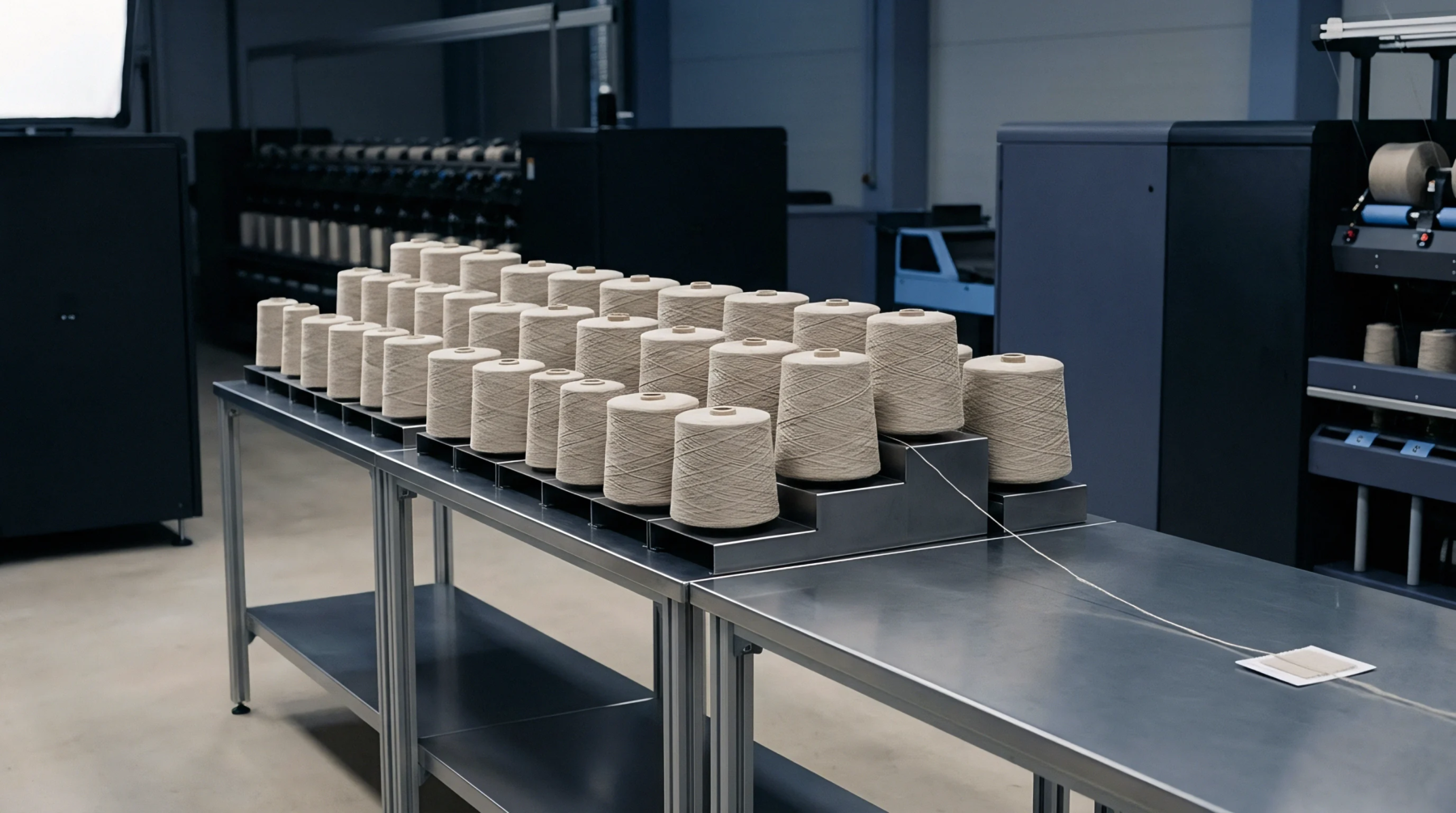
Who Pays the Retest When a Bulk Batch Fails
When a bulk batch fails primary testing, the mill pays for accredited retests if counter-sample analysis confirms non-compliance under contract terms.
When a bulk batch fails primary testing, the mill pays for accredited retests if counter-sample analysis confirms non-compliance under contract terms.

Confirmed chemical non-compliance requires immediate split-sample secondary retesting under ISO 17025 protocols to enforce contractual indemnity and landed cost recovery.

Subcontracted wet processing liability requires explicit pass-through indemnity clauses and batch-linked transaction certificates to bind sub-tier dyehouses.

Regulators demand lot-specific transaction certificates matched to bills of lading, backed by chemical verification and strict mass balance auditing.

Repeat order verification relies on targeted chemical screening and transaction document cross-checking to confirm batch conformity against baseline approvals.

Reconciling yarn extrusion transaction certificates requires adjusting gross output weight for spin finish oils and moisture against real extruder purge loss.

Shipments dispatched after certificate expiry lose legal compliance standing, triggering customs holds, analytical testing costs, and invoice chargebacks.

Verify mid-run expired scope certificates by auditing automated dyehouse dosing timestamps against certifier extension rules and ISO 17025 chemical retesting.

Unified chemical threshold matrices enable multi-market fabric clearance by harmonizing the strictest global limits into single-lot test protocols.
Verify that physical manufacturing dates fall completely within active scope certificate validity windows before paying for certified goods.

Empirical laboratory testing of raw liquid chemical auxiliaries prior to vat injection is mandatory to prevent subcontracted dyehouse contamination.

A Scope Certificate proves facility qualification, but only a Transaction Certificate verifies the organic status of a specific textile shipment lot.

Calculate converting indemnity reserves by aggregating full cut-and-sew garment losses, freight, retests, and disposal rather than processing fees alone.

Depolymerized nylon mass balance ledgers require precise physical yield loss deductions before allocating recycled caprolactam inventory credits across batches.

Reconciling multi-site mass balance ledgers under ISCC PLUS requires strict conversion factor accounting, national boundary enforcement, and 12-month expiry controls.

ISO 18218-1 LC-MS/MS testing after 50 °C methanol extraction provides the definitive quantitative benchmark to verify 100 mg/kg fabric ethoxylate limits.

Cross-border chemical recycling claims require matrix-validated ICP-MS and LC-MS/MS testing to quantify trace non-volatile contaminants below regulatory limits.

Maintain uninterrupted textile compliance by requiring scope certificate validity sixty days past vessel arrival and tying payment release to valid transaction certificates.

Enforceable conversion contracts bind wet processors to restricted substance lists through technical annexes, accredited batch testing, and quarantine holds.

Retest variance allocation requires contractual uncertainty bands and automated cost-shifting mechanisms when secondary testing confirms chemical non-compliance.

Rejections stemming from expired mill scopes require immediate date-matching, batch segregation, and rapid engagement with certifiers under grace-period policies.
Validating transaction certificates demands digital QR verification, line-item invoice reconciliation, and mass-balance accounting prior to customs entry.

Recurrent fabric compliance demands batch-level analytical testing, scope-matched transaction certificates, and mill auxiliary chemical audit controls.

Multi-fibre blend weight disputes turn on reconciling oven-dry chemical separation mass with standard moisture regain allowances under strict international test rules.
Contractual action limits combine guarded acceptance rules and split-sample referee protocols to arbitrate repeat textile test variations fairly.

Managing analytical variance in repeat fabric testing requires ISO 17025 lab alignment, ISO 10576 guardbanding, and cryogenic sample preparation.

Mass balance allocation models track chemical recycling credits through ledgers, but regulatory chemical compliance requires direct empirical batch testing.

Verify transaction certificates against bulk broadcloth shipments by checking live digital registries, mass loss ratios, container seals, and roll tags.

Closing analytical limit gaps requires testing finished production garments against regulatory screening limits rather than commercial reporting cutoffs.

Audit scopes must encompass spinning inputs through subcontract finishing lines to hold prime vendors liable for latent wet processing defects.
Expertise is a utility, not a secret. sentiention™ publishes its working knowledge as open reference: intelligence layer covering the materials it sources, the markets it enters, and the reference that serves both.