Analytical Methodology
Analytical detection technology functions through the combination of molecular separation by polarity and mass identification by fragmentation to determine specific concentrations of trace chemical residues within textiles. The liquid chromatography-tandem mass spectrometry protocol separates dissolved dye carriers or finishing agents based on their differential distribution between a mobile phase and a stationary stationary phase inside a packed column. Subsequent stages introduce the eluate into an ion source where gas phase molecules receive an electrical charge before entering a vacuum chamber.
Collision cells fragment these ions into predictable patterns that act as digital identifiers for the original chemical entity.
Retention Calibration
The procedure requires strict adherence to internal standards to ensure that ion suppression effects do not bias the quantification of restricted substances in finished apparel. Lab technicians monitor the signal intensity of known isotopes added to the sample extract to correct for matrix effects arising from complex finishes or residual spinning lubricants. Deviations from the target peak area signify inconsistent flow rates or suboptimal temperature settings in the high pressure pump assembly.
Equipment performance relies upon periodic calibration against pure chemical standards to maintain an accurate measurement window for toxicological screening.
Sampling Preparation
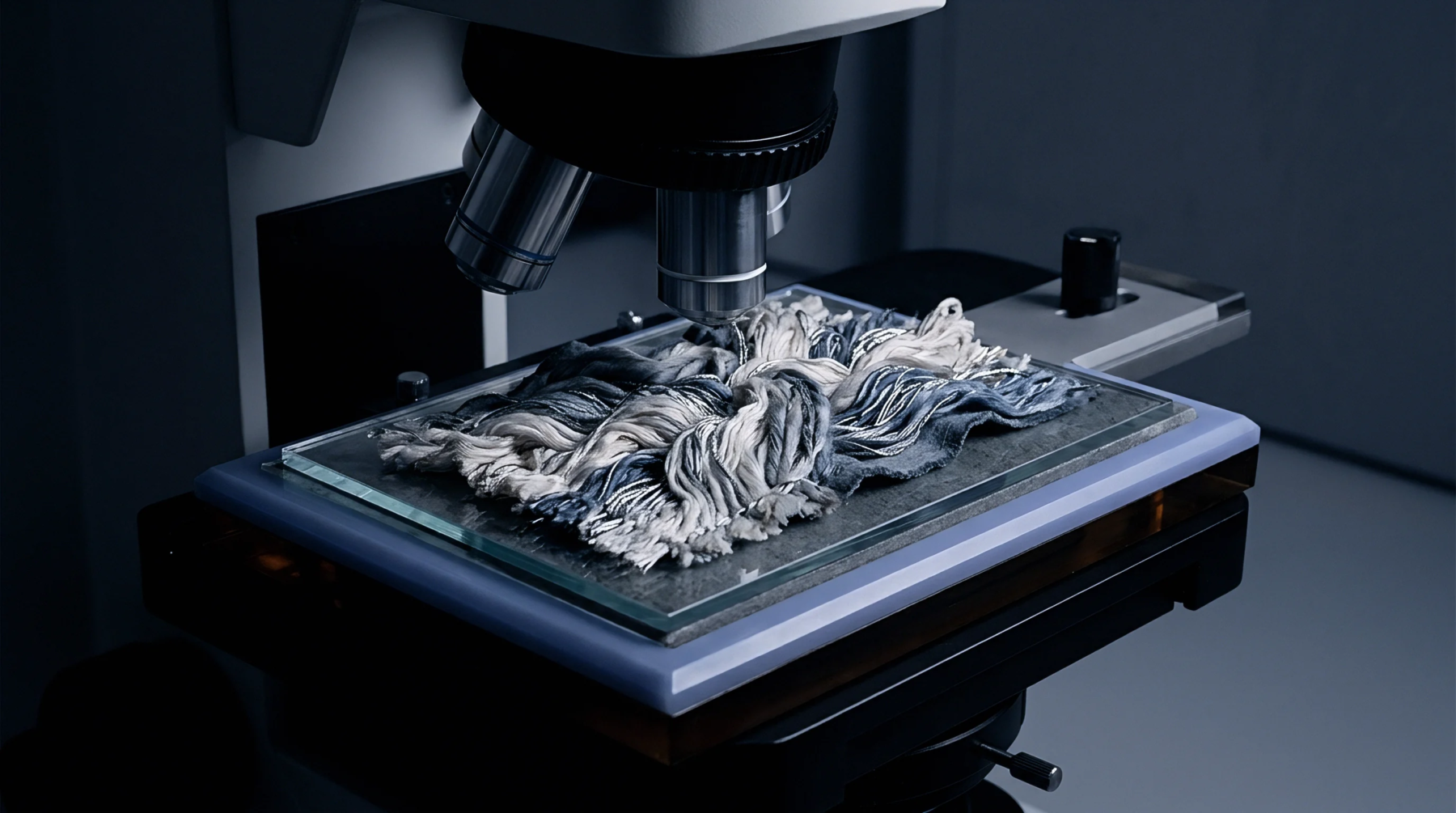
Bulk production samples undergo solvent extraction before being introduced into the system for trace level detection of prohibited chemical species like phthalates or perfluorinated compounds. Solid fabric pieces require homogenization to ensure the resulting fluid represents the bulk material rather than a localized surface anomaly. This homogenization allows the system to detect substances embedded deep within the fibre structure or sequestered by specific resin coatings applied during finishing operations.
Accurate detection hinges on the complete dissolution of the target analytes during the initial preparation phase because any non-dissolved particle misses the detection path entirely.
Performance Limitation
Regulatory compliance checkpoints rely on the sensitivity of these instruments to detect chemical presence at parts per billion concentrations in diverse textile matrices. Higher throughput requirements necessitate faster gradient elution protocols which can reduce the time allotted for peak separation and increase background noise. Matrix interference sometimes prevents the quantification of specific isomers when their mass to charge ratios overlap or their elution times become indistinguishable under rapid conditions.
The precision of mass identification remains tied to the quality of the mass filter settings and the stability of the ion trap during the total run duration. The limit of quantitation dictates the threshold at which a lab can certify a garment as compliant with safety regulations.