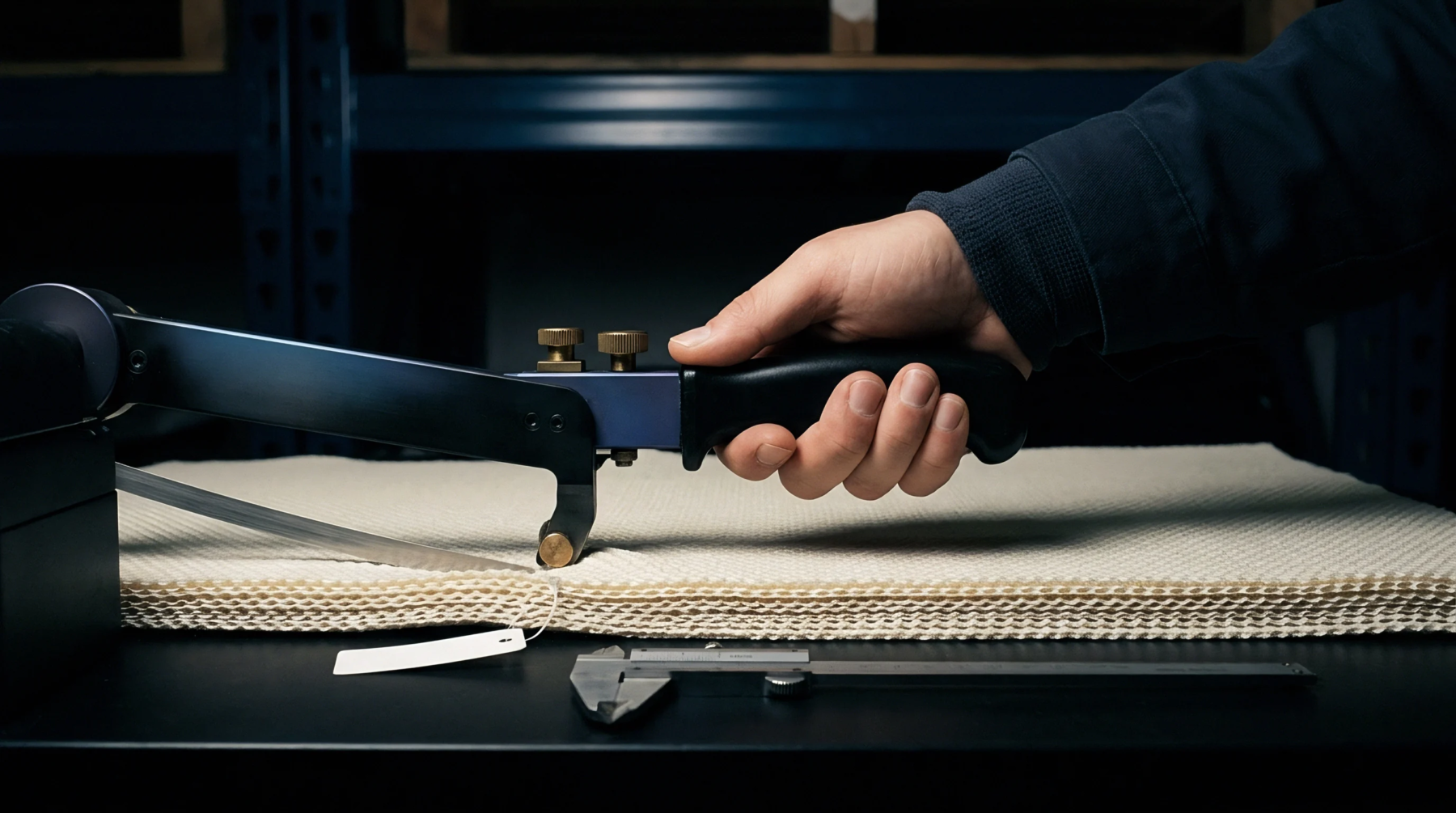
Swatch Sampling Position Deciding Whether a Batch Passes
Physical swatch position across fabric width and length determines chemical compliance, requiring three-point cross-web sampling to validate batch pass status.
Physical swatch position across fabric width and length determines chemical compliance, requiring three-point cross-web sampling to validate batch pass status.

Cross-web chemical variances require three-point variable acceptance sampling to prevent edge-concentration hotspots from triggering border detentions.

Subcontracted wet processing liability hinges on lot-level transaction certificates, retained split samples, and explicit pass-through warranty clauses.

Global textile clearance demands lot-specific ISO 17025 test reports verifying chemical limits and physical integrity standards matching customs entries exactly.

Confirmed chemical non-compliance requires immediate split-sample secondary retesting under ISO 17025 protocols to enforce contractual indemnity and landed cost recovery.

Subcontracted wet processing liability requires explicit pass-through indemnity clauses and batch-linked transaction certificates to bind sub-tier dyehouses.

Subcontracted garment washing introduces unlisted auxiliary contaminants that invalidate scope certificates and require batch-level analytical verification.

Type approval certificates prove mill capability, while targeted lot indicator testing on repeat orders verifies shipment conformity before vessel loading.

Repeat order verification relies on targeted chemical screening and transaction document cross-checking to confirm batch conformity against baseline approvals.

Chemical recycled content validation requires dual ICP-MS metal catalyst profiling and stable isotope ratio mass spectrometry to verify physical monomer purity.

Automated multi-point sensor calibration and matrix-corrected titrations generate traceable batch data required to clear border compliance audits.

Polyurethane residual solvent quantitation requires ultrasonic liquid extraction with methanol and GC-MS SIM analysis to verify REACH and OEKO-TEX batch limits.

High sodium ionic strength distorts electrochemical probe signals in mercerization baths, requiring Pitzer activity corrections to prevent quality defaults.

Subcontracted extract dossiers require temperature coefficient corrections and membrane sorption controls to prevent regulatory non-compliance.
Polymer membrane swelling and unmixed boundary layers delay formaldehyde release during ISO 14184-1 testing, causing severe extraction dossier discrepancies.

Shipments dispatched after certificate expiry lose legal compliance standing, triggering customs holds, analytical testing costs, and invoice chargebacks.
Flowing restricted substance lists to subcontracted dyehouses demands batch-level chemical tracking, verified bath controls, and explicit back-to-back testing indemnity.

Subcontracted dyehouse chemical risk requires binding PO flowdown clauses, batch-level ISO 17025 testing, and strict financial retainage mechanisms.

ISO 17025 envelope testing establishes clearance by testing worst-case chemical and physical fabric boundaries to clear full material families across markets.
Optimize GC-MS solvent testing using methanol swelling and deuterated internal standards to verify sub-ppm polar amide compliance before shipment clearance.

Verify mid-run expired scope certificates by auditing automated dyehouse dosing timestamps against certifier extension rules and ISO 17025 chemical retesting.

Subcontracted dyehouse chemical compliance depends on lot-level testing schedules aligned with substrate risk and auxiliary flowdown.

Mid-season PFAS spec changes require re-engineering fabric density, adjusting curing parameters, and holding lot-traceable total fluorine CIC test evidence.

Releasing detained textile containers requires an audited dossier pairing transaction certificates with mass balance scrap calculations and IRMS origin testing.

Global textile import compliance requires matching exact article specifications against legal chemical limits using lot-traceable ISO 17025 test dossiers.
Reconciling trace contaminant migration across recycled fiber tiers requires combining partition-coefficient modeling with batch testing rather than relying on paper mass balance credits alone.
Standardized formaldehyde acceptance testing relies on ISO 14184 water extraction and ISO 17226 chromatography to quantify residual resin risks before shipment.

Statistical acceptance sampling for restricted chemical finishes requires composite dilution accounting to protect buyers from hazardous batch contamination.

Greige fabric certification demands batch testing of sizing agents, spin finishes, and biocide residues before finishing treatments mask regulated chemicals.
Verify that physical manufacturing dates fall completely within active scope certificate validity windows before paying for certified goods.
Expertise is a utility, not a secret. sentiention™ publishes its working knowledge as open reference: intelligence layer covering the materials it sources, the markets it enters, and the reference that serves both.