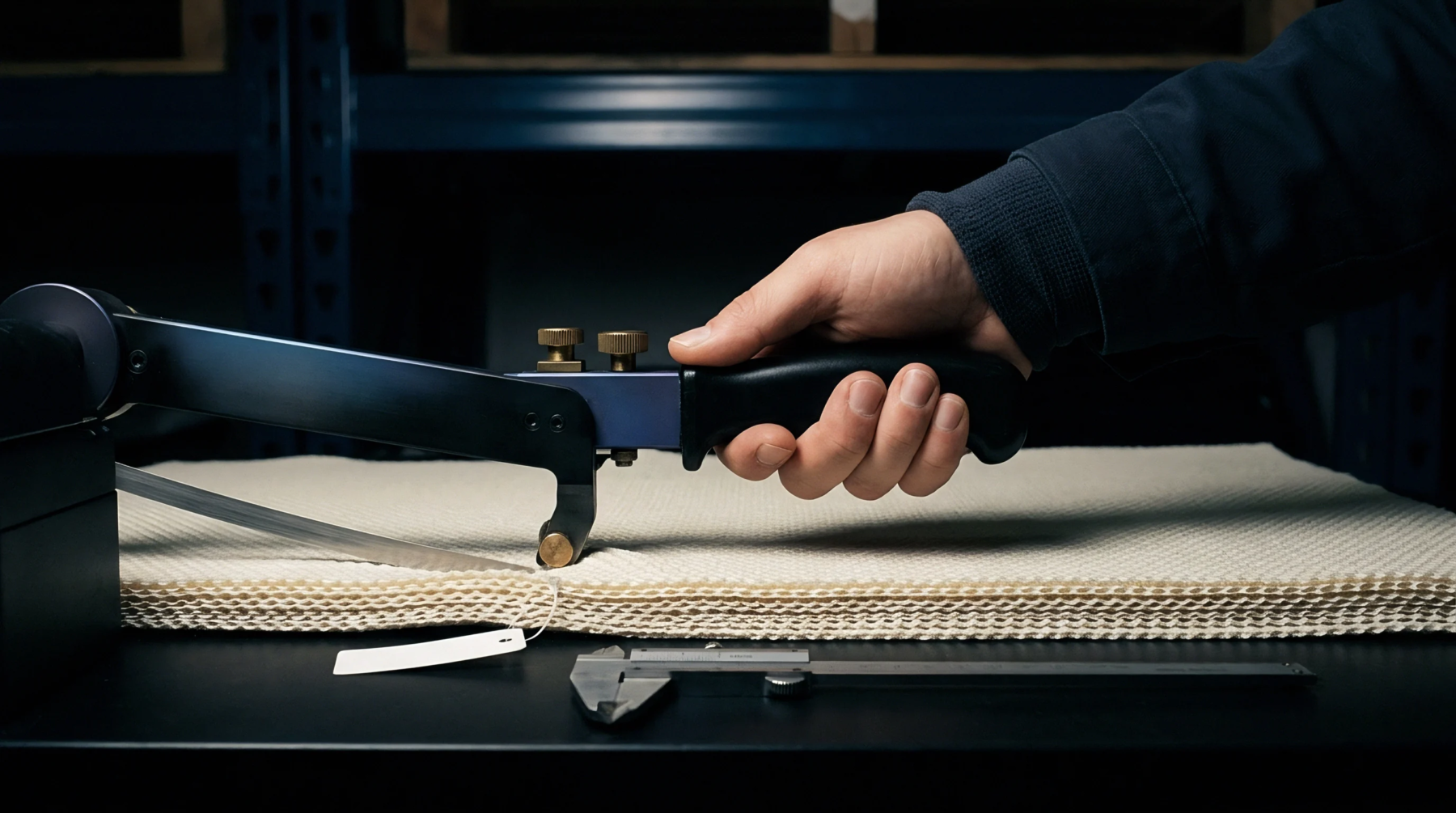
Swatch Sampling Position Deciding Whether a Batch Passes
Physical swatch position across fabric width and length determines chemical compliance, requiring three-point cross-web sampling to validate batch pass status.
Physical swatch position across fabric width and length determines chemical compliance, requiring three-point cross-web sampling to validate batch pass status.
When a bulk batch fails primary testing, the mill pays for accredited retests if counter-sample analysis confirms non-compliance under contract terms.
Verify textile compliance using lot-specific ISO 17025 test reports and valid transaction certificates matched directly to invoice numbers and batch weights.

Cross-web chemical variances require three-point variable acceptance sampling to prevent edge-concentration hotspots from triggering border detentions.

Subcontracted wet processing liability hinges on lot-level transaction certificates, retained split samples, and explicit pass-through warranty clauses.

Global textile clearance demands lot-specific ISO 17025 test reports verifying chemical limits and physical integrity standards matching customs entries exactly.

Confirmed chemical non-compliance requires immediate split-sample secondary retesting under ISO 17025 protocols to enforce contractual indemnity and landed cost recovery.

Subcontracted wet processing liability requires explicit pass-through indemnity clauses and batch-linked transaction certificates to bind sub-tier dyehouses.

Subcontracted garment washing introduces unlisted auxiliary contaminants that invalidate scope certificates and require batch-level analytical verification.

Regulators demand lot-specific transaction certificates matched to bills of lading, backed by chemical verification and strict mass balance auditing.

Type approval certificates prove mill capability, while targeted lot indicator testing on repeat orders verifies shipment conformity before vessel loading.

Bayesian acceptance sampling with depth-isolated microtome preparation isolates localized layer non-compliance, reducing consumer import risk below zero point five percent.

Harmonize multi-market physical fabric testing by implementing worst-case envelope protocols and validating ISO 17025 laboratory accreditation scopes.

Harmonizing transpacific chemical retests requires matrix-matched solvent selection, standardized extraction temperatures, and agreed guardbanding decision rules.

Chain of custody compliance demands batch-level cross-referencing of transaction certificates against intake weigh tickets and laboratory chemical screening.

Reconciling chemical recycled filament supply chains requires deducting batch process yield losses from transaction certificates and verifying monomer purity via analytical testing.

Repeat order verification relies on targeted chemical screening and transaction document cross-checking to confirm batch conformity against baseline approvals.

Process drift on repeat textile orders requires mill-floor indicator testing backed by statistical skip-lot laboratory verification to prevent RSL border holds.

Dirichlet process prior mixture modeling resolves latent outgassing clusters in architectural fabrics, identifying volatile-rich rolls before structural seam failure.

Resolving seam slippage discrepancies between ASTM and GB protocols demands harmonizing pretension baselines and jaw surface compliance before curve subtraction.

Reconciling yarn extrusion transaction certificates requires adjusting gross output weight for spin finish oils and moisture against real extruder purge loss.

Hierarchical Dirichlet Process models cluster dyehouse outgassing variance to isolate volatile chemical non-compliance before shipment release.

Enforceable split sample protocols mandate nitrogen-sealed tripartite swatches, pre-agreed ISO 17025 test methods, and statistical reproducibility limits.

Verify APEO compliance by testing input chemical formulations via ISO 18218-1 LC-MS/MS at the mill kitchen rather than relying solely on fabric certificates.

Verify coated fabric chemical compliance by demanding batch-specific ISO/IEC 17025 lab reports for DMFa and phthalates from roll core swatches before shipment release.

Chemical recycled content validation requires dual ICP-MS metal catalyst profiling and stable isotope ratio mass spectrometry to verify physical monomer purity.

Automated multi-point sensor calibration and matrix-corrected titrations generate traceable batch data required to clear border compliance audits.

Polyurethane residual solvent quantitation requires ultrasonic liquid extraction with methanol and GC-MS SIM analysis to verify REACH and OEKO-TEX batch limits.

Analytical verification of depolymerized monomer purity requires chromatographic trace contaminant profiling to substantiate cross-border recycled claims.

Standardizing glass electrodes across wet processing ranges requires bracketed two-point calibration using lithium glass membranes and temperature-corrected buffers.
Expertise is a utility, not a secret. sentiention™ publishes its working knowledge as open reference: intelligence layer covering the materials it sources, the markets it enters, and the reference that serves both.