
Hansen Solubility Parameter Selection for Polyalkylene Glycol Spin Lubricant Removal
Matching solvent parameters to polyalkylene glycol interaction spheres with energy difference below 0.8 clears spin finish without filament plasticization.

Matching solvent parameters to polyalkylene glycol interaction spheres with energy difference below 0.8 clears spin finish without filament plasticization.

Accurate fiber quantification separates extractable finish silicones from base polymer oligomers using liquid chromatography mass balance before calculating dry mass.

Direct spectral transformation between benchtop spectrophotometers requires profiling matrix calibration to keep inter-instrument agreement within 0.15 Delta E.

Allocate interlaboratory retest variance using ILAC-G8 guard bands, accredited referee laboratories, and escrow retentions to resolve border chemical clearance disputes.

Subcontracted dyeing requires lot-level cleavage testing, certified machine segregation, and contract chargeback clauses to prevent toxic amine detentions.

Maintain spectrophotometer calibration using certified ceramic plaques and optical filters to ensure repeatable digital color approval across textile supply chains.

Soxhlet extraction isolates nonfibrous matter to establish true dry fiber mass, protecting blend accuracy and correct customs tariff classification.

Integrating batch-level analytical testing into commission dyeing contracts secures border clearance and assigns chemical non-compliance financial liabilities.
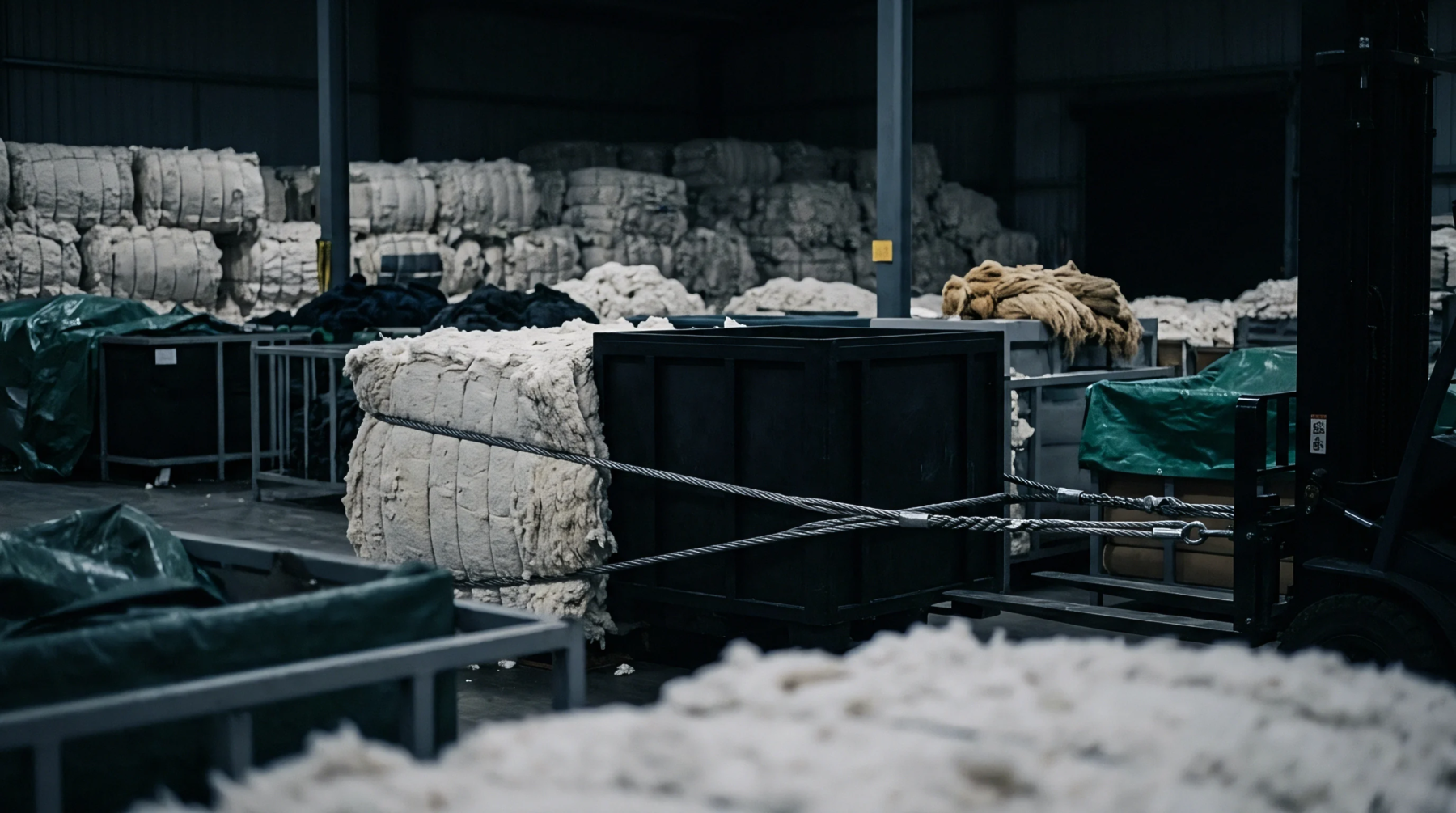
Dense yarn cone moisture transport is governed by intra-package diffusion limits; protecting shipments requires low initial regain and container humidity controls.

Resolving dyehouse chemical cross-contamination requires mandatory subcontractor registration, machine wash verification, and composite batch-level laboratory testing.

Desorption hysteresis distorts landed yarn mass; resolving weighbridge discrepancies relies on oven-dry testing per ISO 6741 to establish commercial weight.

Subcontracted wet processing requires binding batch-level chemical verification and milestone payments to prevent catastrophic border seizures of converted yardage.

Commercial regain mass calculations convert gross shipment weight to solvent-free oven-dry mass, applying weighted ISO 6741 regain percentages to fix invoices.

Transoceanic yarn weight shifts stem from differential fiber regain kinetics, requiring vapor barrier foil packaging and ISO 6741 dry mass contract rules.

Cross-border PFAS cargo detentions allocate demurrage and retest liabilities based on contractually modified INCOTERMS and definitive LC-MS/MS lab speciation.

Solvent swelling power and fabric milling particle size determine partition equilibrium and extractable PFAS recovery yields in woven fluoropolymer finishes.

Digital shade pass fail models in multi mill wet processing chains require strict ISO 139 atmospheric conditioning or polynomial humidity matrix transforms.

European customs enforces PFAS limits at 0.025 mg/kg under POPs regulations, requiring batch-level LC-MS/MS test reports to prevent border detention.

Chemical partitioning control in subcontracted wet finishing requires automated bath replenishment, strict mass balance auditing, and lot-linked testing files.

Clean oven-dry mass calculations subtract moisture and non-fibrous extractables before applying standardized regain schedules to establish true commercial weight.

Testing textile sludge for PFAS demands EPA Method 1633 dry weight conversion and TOP assay screening to prevent toxic waste reclassification.

Calibration of spectrophotometer integrating spheres requires SCI mode and port sizes above 25 mm to eliminate micro-shadowing errors on textured weaves.

Daily zero trap dark-current offset and white standard validation preserve spectrophotometer inter-instrument agreement within zero point one Delta E CMC.

Continuous 28 kHz acoustic cavitation drives rapid dye liquor penetration into dense heavy duck yarns, increasing color yield while cutting thermal energy use.

Subcontracted wet processors transfer PFAS risk to buyers unless contract flow down mandates chemical batch testing and inventory cross-verification.

Ocean container moisture gain alters gross arrival weight without adding fibre substance; ISO 6741 commercial mass reconciliation converts wet transit weight to legal billing mass using oven-dry polymer weight plus official regain rates.

Air freight relative humidity spikes lock fibers into secondary hysteresis loops, distorting arrival regain tests and requiring pre-conditioning to prevent tariff reclassification.

Chemical dissolution testing yields dry mass ratios that require conversion via commercial regain schedules to establish binding commercial fiber percentages.

Commercial mass calculations adjust oven-dry fibre weight by standardized moisture regain values to define contractually binding invoice weights.

Controlled progressive electrolyte dosing suppresses early surface exhaustion, permitting reactive dyes to reach dense yarn cores before fixation.
Expertise is a utility, not a secret. sentiention™ publishes its working knowledge as open reference: intelligence layer covering the materials it sources, the markets it enters, and the reference that serves both.