Standardizing Core Sampling Protocols for Moisture Mass Adjustments in Wool Imports
Standardized core sampling under IWTO-19 aligns declared wool shipment weights with oven-dry commercial mass, eliminating moisture-driven invoice disputes.

Standardized core sampling under IWTO-19 aligns declared wool shipment weights with oven-dry commercial mass, eliminating moisture-driven invoice disputes.

Polyurethane laminates release formaldehyde under hydrolytic conditions when moisture cleaves unreacted methylol crosslinkers during warm container transit.
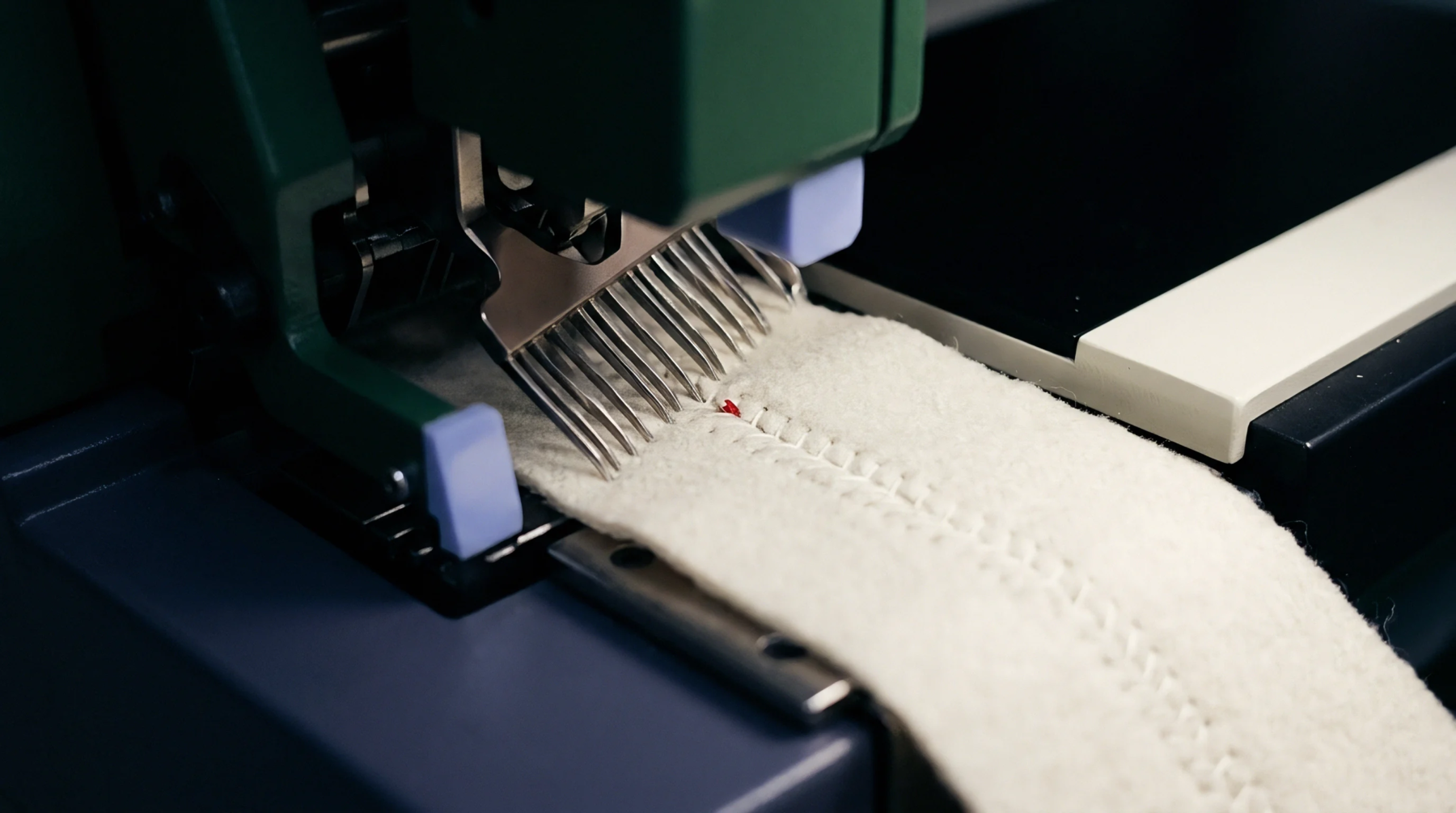
Mixed alkali sodium-potassium silicate padding solutions increase thermodynamic hydroxide activity, preventing micro-gelation and cutting wash-off water usage.
Water bath extraction per ISO 14184-1 quantifies free formaldehyde in textile membranes via 40°C incubation and acetylacetone spectrophotometry at 412 nm.
Liquid junction potential mitigation in sodium silicate fixation liquors requires double-junction sleeve reference electrodes with lithium acetate bridges.

Correcting transient relative humidity deviations requires mapping fiber-specific regain hysteresis before arbitrating synthetic blend mechanical strength disputes.
Standardizing atmospheric preconditioning eliminates hysteresis error and stabilizes fabric moisture regain for consistent cross-laboratory physical acceptance.

Commercial regain allowance calculations adjust raw cotton invoice weights by converting oven-dry fiber mass to standard commercial weight at 8.5 percent regain.

Potentiometric calibration in dye baths requires temperature-compensated two-point buffer routines to prevent alkali dosing errors and fabric extraction failures.

Potentiometric pH bias in alkali dyebaths is resolved by modeling hydrogen ion activity coefficients with Pitzer equations and matching reference junction salts.

Combat wax-induced absorption drift using heptane-isopropanol solvent flushes, oleophobic silane surface coatings, and multi-band dynamic baseline compensation.

Uncompensated glass electrode alkaline error under-reports hot dyebath pH, causing automated systems to over-dose alkali, accelerate dye hydrolysis, and fail audits.
Standard moisture regain for cotton fabric is fixed at 8.5 percent, governing commercial mass billing and laboratory conditioning under ISO 139 standards.

Reconciling mill settlement requires subtracting preparation mass losses from dry finish add-on to establish accurate greige fiber density balances.
Dynamic dual-band ratiometric calibration decouples moisture absorption from polymer detection, preventing false lint ejections and downstream fabric claims.

Sodium ion interference in high-salt reactive dyebaths introduces negative pH measurement bias, causing alkali overdosing and dye hydrolysis failures.

Chemical add-on variations stem from mangle nip deflection and rapid drying thermomigration, requiring gravimetric controls to enforce delivery specs.
Verify clean greige mass by deducting paper core tare, excess warp size chemistry, and moisture regain above standard allowances before final invoice settlement.

SWIR calibration isolates white polypropylene from cotton lint by balancing 1650 nm dual-band spectral ratios against shifting moisture regain baselines.
Thermodynamic junction potential corrections prevent false compliance readings by eliminating multi-millivolt diffusion errors in high-salinity textile effluent.
Matrix-matched buffer standardization eliminates sodium and junction errors in high-salinity reactive dye baths, securing pH accuracy and color reproducibility.

Joint HVI sample drawing demands seventy-five millimetre penetration depth, strict dual-side extraction, and twenty-four-hour conditioning to defend tenacity claims under international cotton rules.
Inter-laboratory reproducibility limits for elastane extraction in cellulosic blends require a 1.2 percent variance band to resolve lab discrepancies.

Adjust invoiced cotton mass by converting net scale weight to oven-dry mass and applying the standard 8.5 percent regain factor under ISO 6741 standards.

High-salinity dyebaths degrade potentiometric sensors via glass desiccation and junction clogging; daily cleaning and salt-matched calibration prevent off-shade batch rejections.

Standard cotton moisture regain requires drying core samples at 105°C to constant mass under ASTM D2495 to adjust commercial invoice weight against the 8.5% standard.
Subcontracted lab digestion anomalies require spatial thermal mapping under ISO 17025 to prevent false compliance passes on heavy metals and azo dyes.

Container transit alters fibre moisture equilibrium, demanding standard laboratory conditioning before instrument strength testing to eliminate commercial claims.
Thermal gradients across extraction heating blocks bias chemical recovery rates, creating false negative test dossiers that fail border compliance audits.
High Volume Instrument calibration tolerances require strict ISO 139 atmospheric control and CSITC bias evaluation to prevent costly lint misvaluation claims.
Expertise is a utility, not a secret. sentiention™ publishes its working knowledge as open reference: intelligence layer covering the materials it sources, the markets it enters, and the reference that serves both.