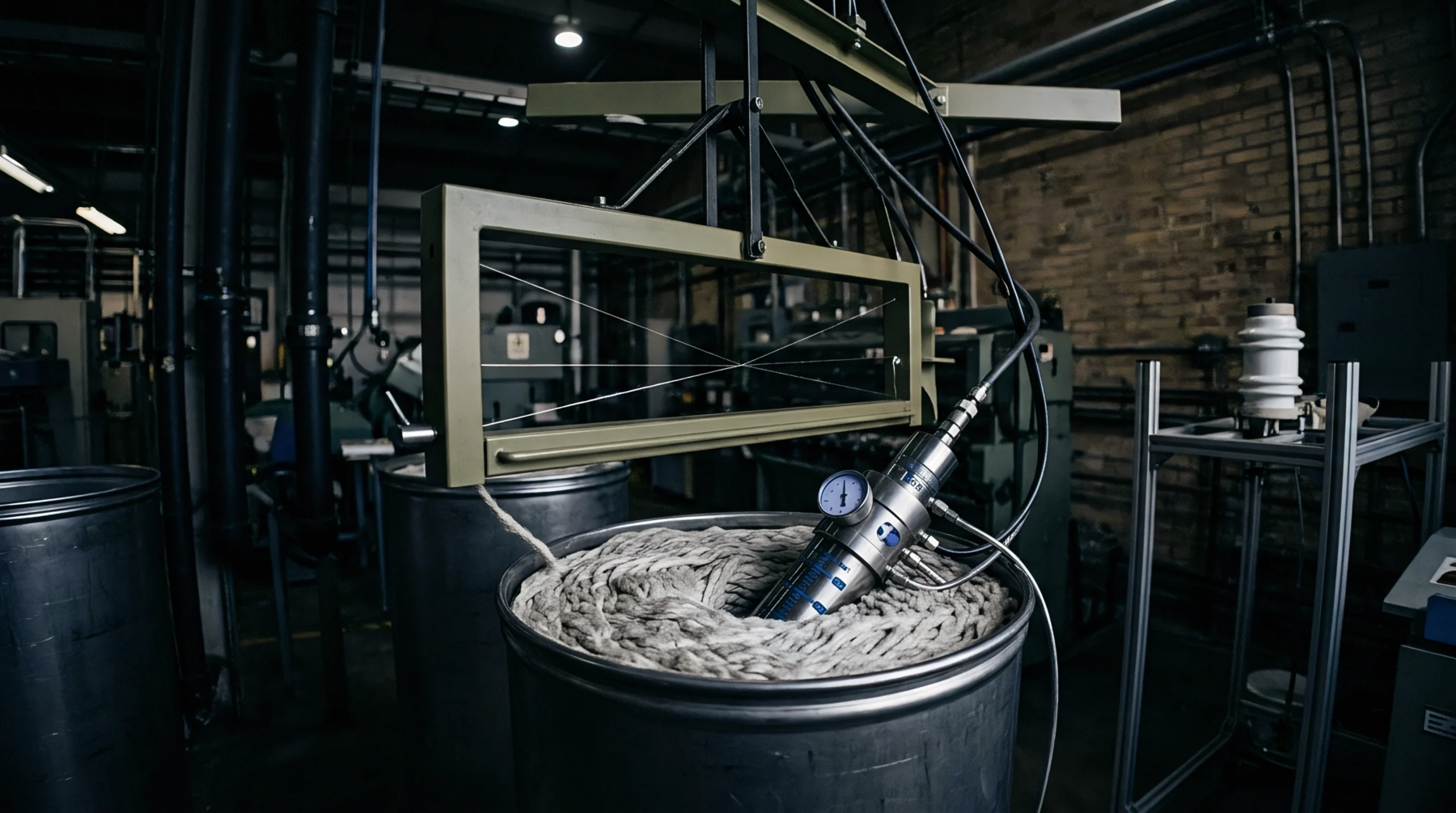
Caustic Concentration Measurement in Industrial Cotton Mercerization Processes
Continuous caustic measurement demands titrametric validation to separate active sodium hydroxide from carbonate and hemicellulose accumulation.

Continuous caustic measurement demands titrametric validation to separate active sodium hydroxide from carbonate and hemicellulose accumulation.

Hot caustic scouring solutions induce large liquid junction potential offsets in glass electrodes, causing transmitters to underreport pH and overfeed sodium hydroxide.

Commercial moisture regain adjustments under ISO 1833 prevent customs reclassifications caused by ambient humidity variations during quantitative fibre testing.
Dynamic Pitzer activity coefficient compensation in caustic probe transmitters eliminates non-linear concentration errors across high-molality textile baths.
Statutory commercial moisture regain adjustments applied to oven-dry laboratory masses invert border chief weight classification between natural and synthetic fibres.
Inline calibration of mercerizing probes requires dual-endpoint lab titration cross-checks to compensate for carbonation and non-linear thermal shifts.

Acoustic cavitation generates high-velocity microjets that displace boundary layers and trapped air, driving uniform reactive dyestuff diffusion into dense plied yarns.

Dynamic surface tension below 32 mN/m at 20 milliseconds combined with 3.5 bar nip pressure prevents core starvation in high-twist plied wovens.

Dynamic heat balance models account for non-linear enthalpy and viscosity shifts in caustic baths to ensure uniform cellulose conversion and prevent batch rejections.
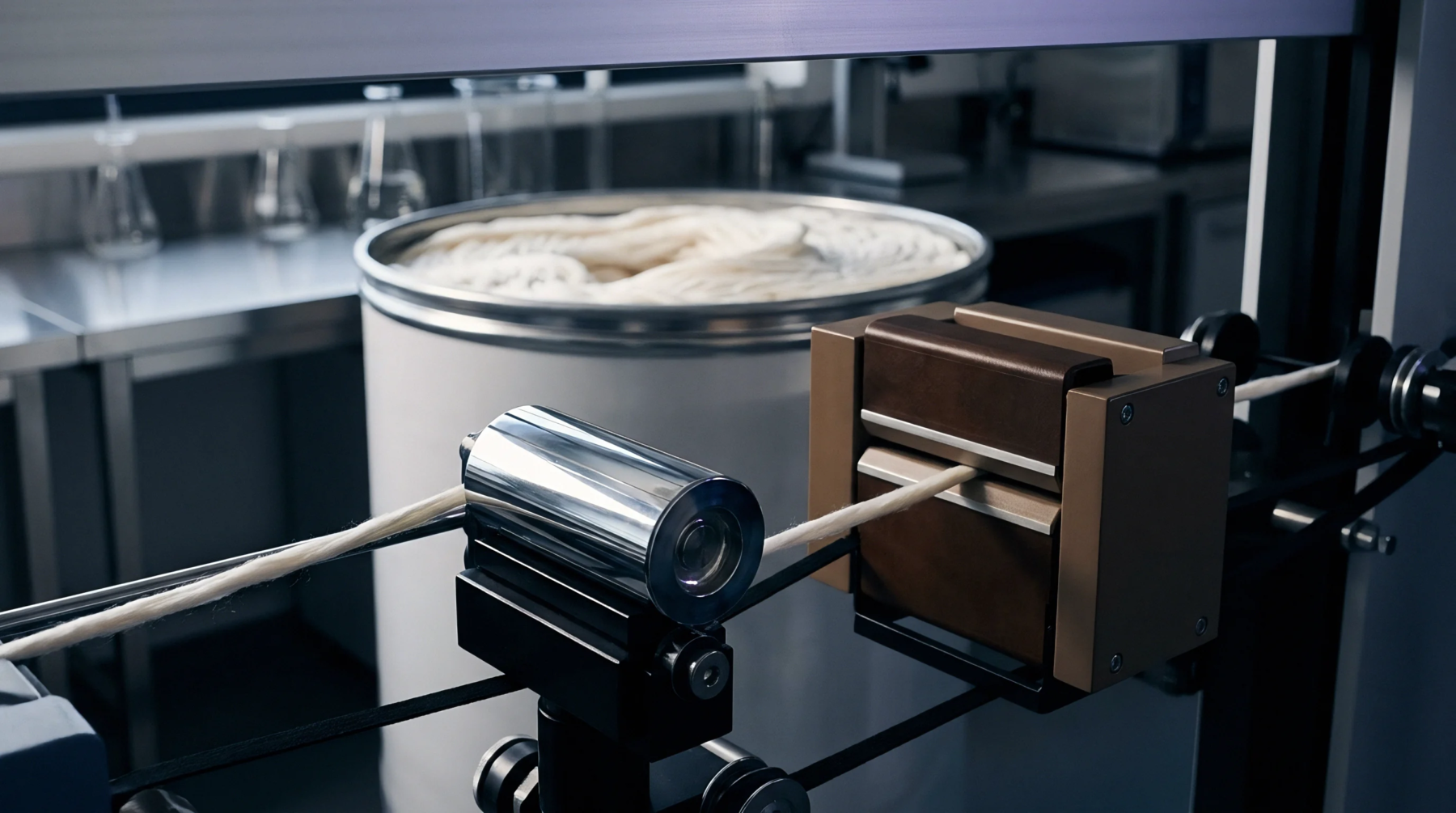
Manage baled textile cargo moisture risk by pairing calcium chloride desiccants with verified pre-stow moisture testing and ISO 6741 commercial mass adjustment.

Matched quadratic temperature coefficients prevent optical refractometers from over-dosing caustic soda during high-temperature textile mercerization stages.

Combed cotton yarns accelerate capillary wicking through uniform micro-channels formed by parallel long-staple fibers once alkaline scouring removes wax cuticles.

Mercerization liquor density analysis mandates thermal expansion correction and acidimetric titration to separate active caustic from carbonate buildup.

Commercial weight settlement corrects wet scale mass to dry fiber mass plus official regain allowance, preventing buyers from paying fiber prices for transit water.
Accurate high-resolution mass spectrometry of pyrolysis oils requires chromatographic pre-fractionation to prevent polar matrix-induced ionization suppression.

Non-volatile depolymerization purges must be mathematically debited from mass balance registries to prevent invalidating certified recycled content claims.

Dynamic surface tension control below 30 mN/m enables complete core dye penetration in heavy plied cotton at high pad-steam line speeds.

Mercerizing plied cotton demands lowering caustic surface tension below 35 mN/m using cresol-free organophosphates to achieve complete core yarn penetration
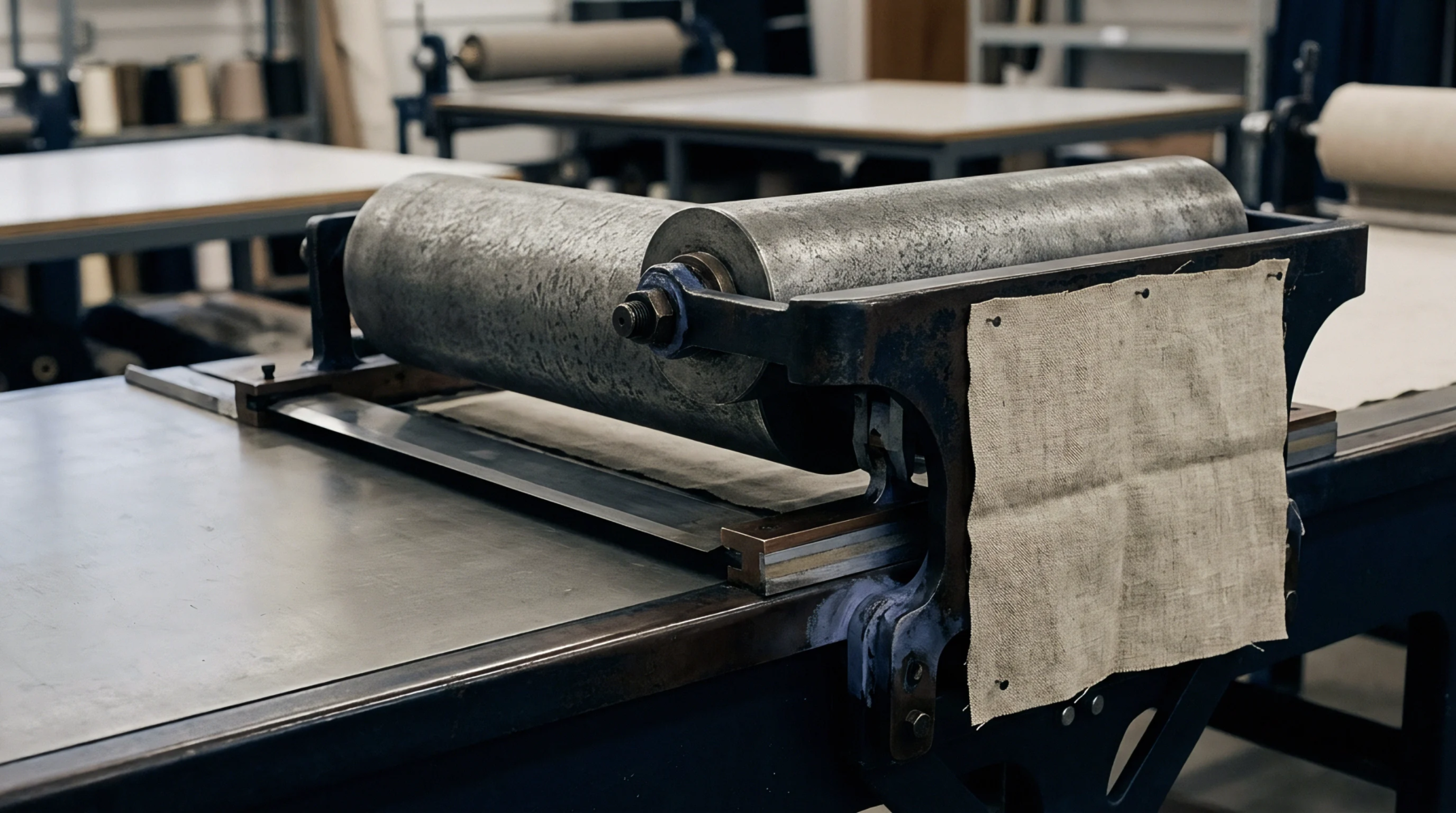
Testing heavy metals in chemically recycled resins demands microwave acid digestion and ICP-MS verification to prove batch compliance against regulatory limits.

Higher yarn twist reduces intra-yarn void volume, lowering continuous dye bath liquor pickup and slowing core dye diffusion during pad application.
Cross-border transaction certificate reconciliation requires subtracting physical distillation and wash losses from certified depolymerized nylon mass balances.

ISO 22095 solvolysis yield audits require adjusting stoichiometric mass caps by verified chromatographic monomer purity and actual reactor loss metrics.

Mass balance allocation credits recycled feedstocks through audited book-and-claim ledgers, requiring strict yield factoring to survive border audits.

Balance hydrodynamic drag and liquid boundary layer displacement to protect synthetic tow tensile survival during high-speed continuous chemical processing.

Controlling continuous yarn dyeing relies on matched squeeze nip pressure and real-time tension zoning to secure uniform chemical uptake and yarn recovery.

Continuous wet processing requires combed ring-spun cotton yarns with high cell wall maturity and low hairiness to prevent line breaks and shade streaking.
High temperature jet dyeing degrades stretch fabrics when hydrodynamic nozzle shear strips outer yarn sheaths from softened elastomeric cores during processing.

Total tin ICP-MS screening below 0.05 mg/kg validates monomer purity, while chromatographic speciation isolates non-toxic inorganic catalysts.

Differential scanning calorimetry verifies recovered caprolactam purity by measuring melting enthalpy shifts against the virgin benchmark of 185.8 J/g.

Chemical softeners lower elastomeric core recovery force; standardizing static creep thresholds requires limiting softener bath concentration to fifteen grams per litre.
Expertise is a utility, not a secret. sentiention™ publishes its working knowledge as open reference: intelligence layer covering the materials it sources, the markets it enters, and the reference that serves both.