
Verifying Chemically Recycled Polyester Monomer Purity Profiles
Verifying chemically recycled polyester monomer purity profiles requires multi-instrumental HPLC, GC-MS, and ICP-MS batch testing against rigid regulatory limits.

Verifying chemically recycled polyester monomer purity profiles requires multi-instrumental HPLC, GC-MS, and ICP-MS batch testing against rigid regulatory limits.

Polymeric plasticizers degrade thermally into volatile monomer fragments during screening, requiring GPC clean-up and tandem MS to prevent false positive phthalate detentions.

Commercial yarn weight adjustments multiply oven-dry fiber mass by standard blend regain factors to remove atmospheric water weight from multi-fiber invoices.
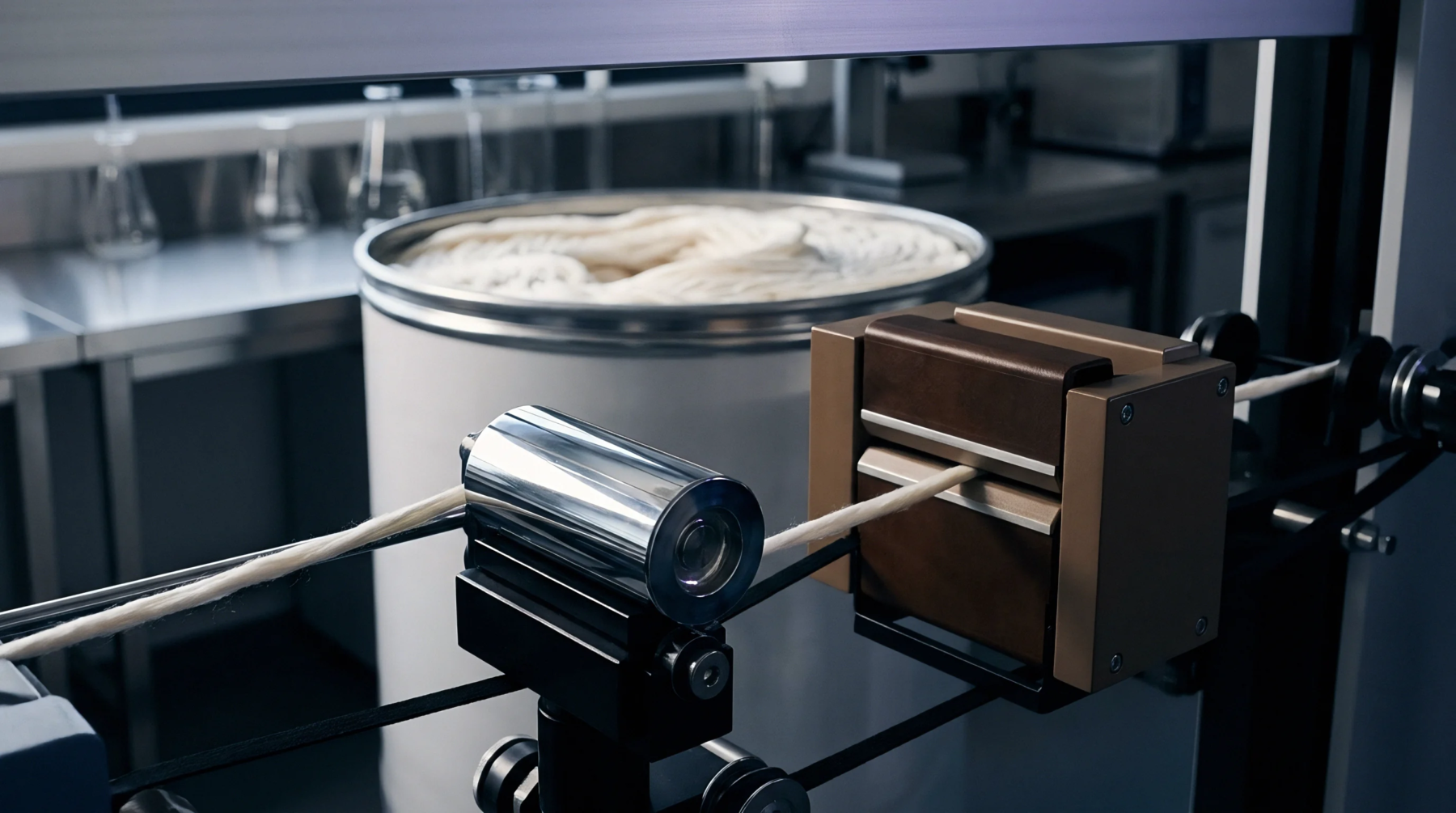
Chromatographic separation on mid-polarity stationary phases prevents false ortho-phthalate positives caused by high-concentration terephthalate matrix co-elution.

Polymer-coated substrate testing requires full matrix solvation to ensure complete extraction and accurate mass spectrometry quantification of isomeric plasticizers.

Quantitative spin finish analysis requires selective solvent extraction or calibrated NMR to isolate surface lubricants from substrate waxes and oligomers.

Solvent extraction testing isolates non-fibrous matter in cotton yarn using Soxhlet reflux to prevent weight padding and ensure uniform dyeing.

Extended InGaAs array sorters resolve sub-percent elastane defects only when spatial belt resolution and thermoelectric sensor cooling hold noise below threshold limits.

Commercial weight of polyester cotton yarn equals oven-dry mass multiplied by one plus the weighted average commercial regain of the constituent dry fibers.
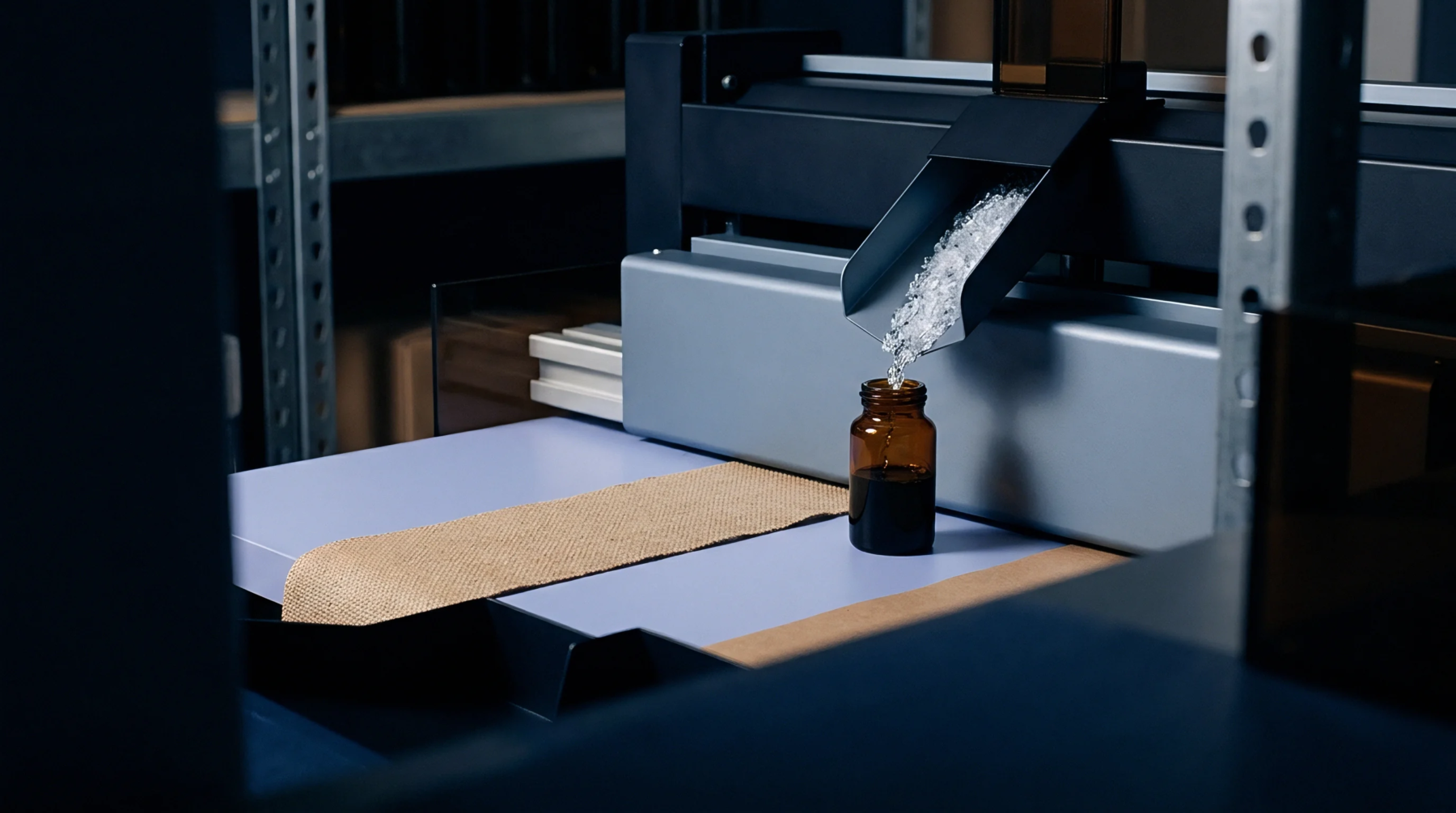
Shortwave infrared line scan arrays identify textile polymer composition at conveyor speeds up to three meters per second for automated sorting lines.

Dynamic dark frame compensation on InGaAs line-scan arrays stabilizes thermal offset drift to preserve spectral ratio accuracy in high-speed web inspection.

Dynamic Mie scattering compensation prevents baseline drift in blowroom optical sorters, preserving spinnable fiber yield and sorting accuracy.

Linear calibration standards skew wastewater fluorosurfactant quantification by up to forty percent against technical branched mixtures in mill effluent audits.

Isomer-specific LC-MS/MS quantitation of branched alkylphenol ethoxylates requires technical mixture standards and fluorinated columns to prevent false compliance passes.

Primary biodegradation shorten ethoxy chains of NPEOs into recalcitrant hydrophobic nonylphenol metabolites that partition into sludge, demanding mass balance testing.

Resolving mass spectrometry matrix interferences in wet auxiliaries requires solid-phase cleanup, phenyl-hexyl chromatography, and isotope dilution LC-MS/MS.

Dynamic boundary layer shear rates in continuous pad dyeing govern reactive dye mass transfer into compact mercerized cotton micro-pores.

Managing boundary layer resistance in dense wovens demands precise nozzle differential pressure and dynamic wetting surfactants to force liquor penetration.

Optical attenuation correction in inline NIR textile sensors eliminates moving web scatter artifacts to deliver reliable real-time fibre composition analysis.

Ethoxylated surfactant LC-MS quantitation demands oligomer distribution matching and adduct stabilization to ensure regulatory compliance across variable matrices.

Mercerization converts cotton to Cellulose II, expanding mesopores to boost dye absorption and requiring controlled salt and alkali dosing to prevent twill core ring dyeing.

Predicting companion polymer hydrolytic degradation rates requires adjusting rate constants for crystalline diffusion barriers and catalyst consumption.

High cover factor cellulosic wovens require controlled alkali dosing and minimum 0.6 bar venturi differential pressure to prevent swelling-induced core un-dyed defects.

Thermal stabilization of amine oxide cellulosic extraction fluids relies on strict metal chelation and radical scavenging to prevent exothermic solvent runaway.

Swollen cotton twill fibers restrict jet dye liquor flow by reducing void volume, requiring calibrated nozzle diameters and lower pump pressures to prevent unlevelness.

Calibrating diffusion rates, temperature gradients, and shear forces prevents non-target cellulose degradation during quantitative binary fiber extraction.

Determining nonylphenol ethoxylate content in chemical formulations requires LC-MS/MS or acid cleavage GC-MS to resolve oligomers below ZDHC limits.

Adjusting solvent temperature and applying microfibre-specific mass correction factors resolves cross-solubility errors in recycled nylon elastane quantitative testing.

Accurate ternary cellulosic synthetic separation requires precise sequential dissolution factors and regain adjustments to prevent major trade classification errors.

Standardizing extraction solvent mixtures and oligomeric calibration response factors eliminates interlaboratory variance in textile surfactant residual testing.
Expertise is a utility, not a secret. sentiention™ publishes its working knowledge as open reference: intelligence layer covering the materials it sources, the markets it enters, and the reference that serves both.