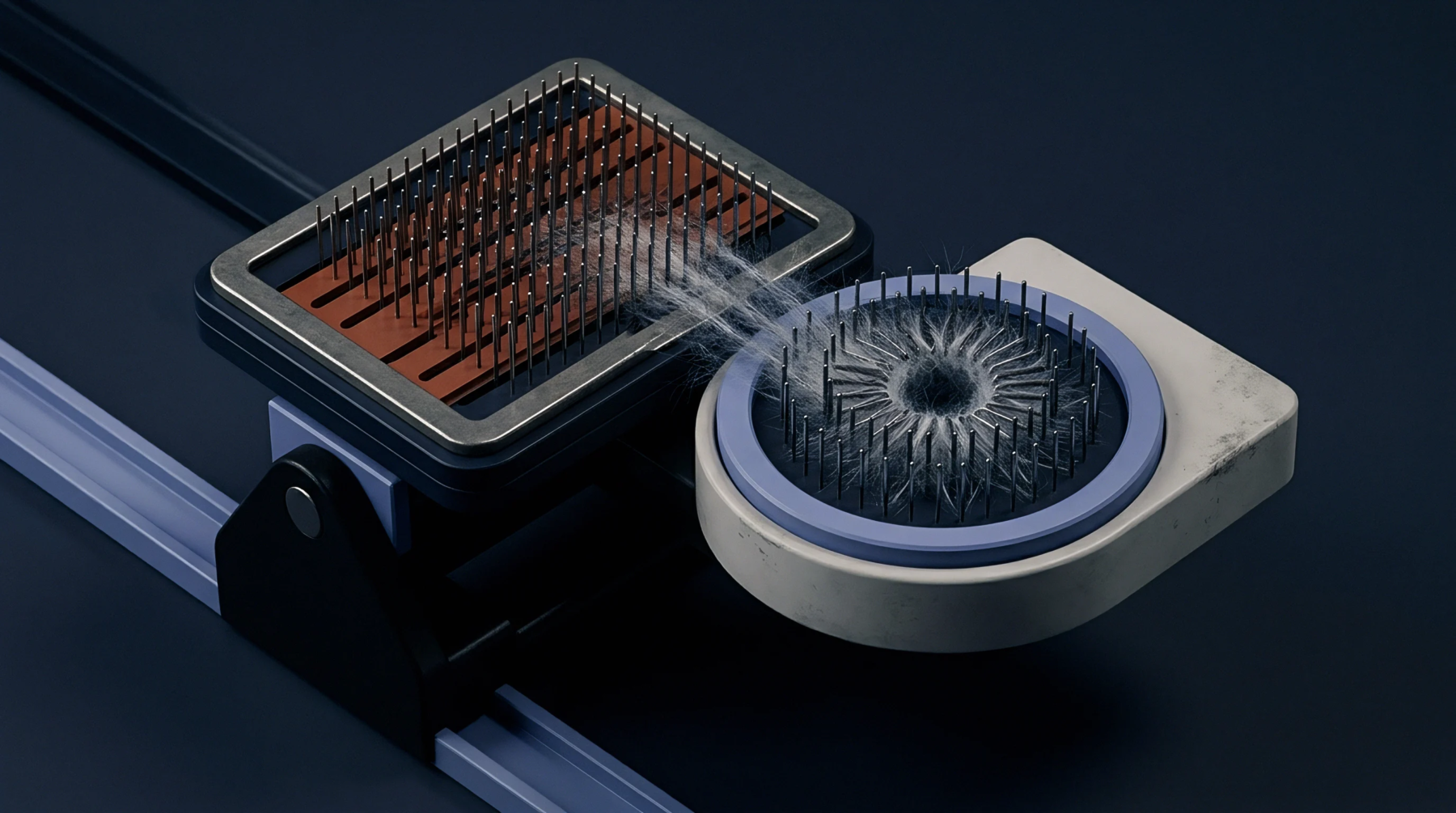
Calculating Mass Losses in Binary Chemical Fibre Dissolution Tests
Binary fibre dissolution tests calculate composition by applying reagent correction factors and moisture regains to oven-dry insoluble residue masses.

Binary fibre dissolution tests calculate composition by applying reagent correction factors and moisture regains to oven-dry insoluble residue masses.

Commercial fiber mass calculations require adjusting laboratory oven-dry percentages with official regain allowances to prevent customs and invoice discrepancies.

Customs classification of intimate viscose polyester mixtures requires ISO 1833 chemical separation corrected for statutory commercial moisture regain values.

ISO 18254-1 methanol extraction paired with LC-MS/MS provides definitive batch quantification of alkylphenol ethoxylates to survive brand audits and borders.

Heavy twill cover factor calculations require weave tightness factor adjustments for float geometry, balancing tear strength against loom beat-up limits.

Chief weight in cellulosic synthetic blends turns on official moisture regains applied to clean oven-dry mass prior to customs entry declaration.
Determining nonylphenol ethoxylates in raw textiles requires methanolic extraction followed by LC-MS/MS oligomer summing to verify the 100 mg/kg limit.
High pressure dual stream metering stability requires controlling wall shear rates below 20000 1/s and active block thermal balancing to eliminate ratio drift.

Reconciling multi-sourced fabric chemical variances requires pre-agreed guarded decision rules, standardized split sampling, and binding referee arbitration.

Active dynamic backpressure regulation prevents high-viscosity polyurethane coat weight drift by stabilizing line hydraulic resistance in real time.

Customs duties and commercial invoice settlements reconcile by multiplying oven dry sample mass by standard statutory regain allowances rather than raw landed weight.

Standard atmosphere conditioning eliminates moisture hysteresis variance, ensuring accurate dry-mass calculation and precise tariff line entry for binary viscose blends.

Transaction certificates prove chain of custody while physical swatch chemical tests govern batch conformity during commercial disputes.

Physical chain of custody depends on tamper-evident edge tagging, sealed split retention, and lot-bound shipping logs tied directly to batch transaction certificates.
Customs calculations adjust dry viscose mass by 13 percent regain to establish legal commercial composition and chief weight tariff classifications.

Non-reversible surface finishes suppress statutory moisture regain, requiring quantitative solvent extraction before dry mass determination for customs tariff classification.

Dynamic micropore collapse during stenter heat setting follows temperature-dependent viscous flow equations, requiring precise overfeed and thermal control.

Inline Coriolis mass dosing coupled to variable slot die hydraulics guarantees uniform dry coat weight and prevents boundary layer failure across high-speed webs.

Customs tariffs tax physical water mass unless commercial mass is explicitly calculated from bone-dry fiber weight plus statutory regain allowances.

Controlled stenter thermal ramps and optical pyrometry prevent microfibrillar fusion, preserving synthetic web porosity and contractual air permeance.
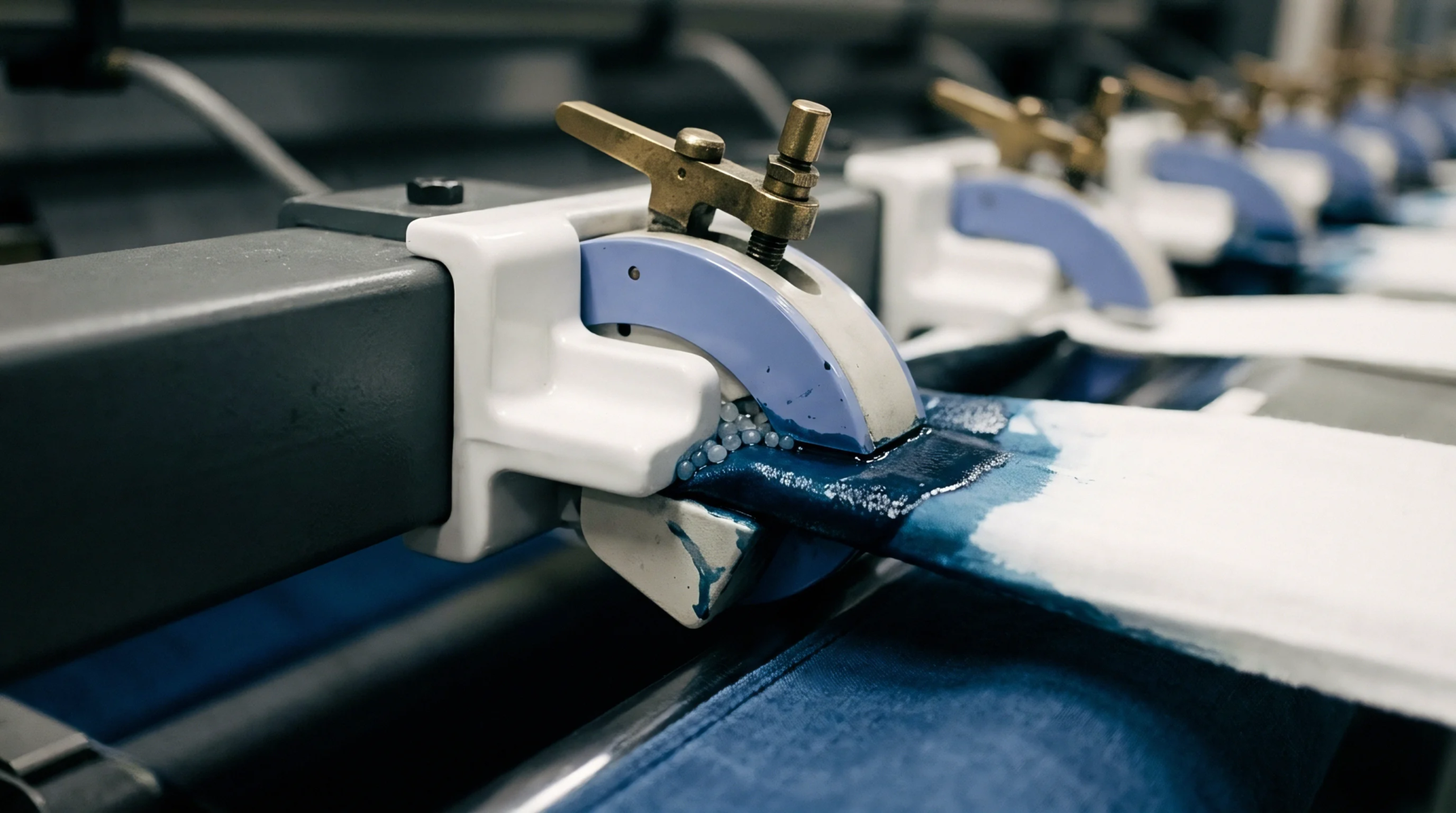
Inline resonant density sensors enable millisecond alkali metering adjustments in continuous dyeing, preventing costly reactive dye hydrolysis and batch shade drift.
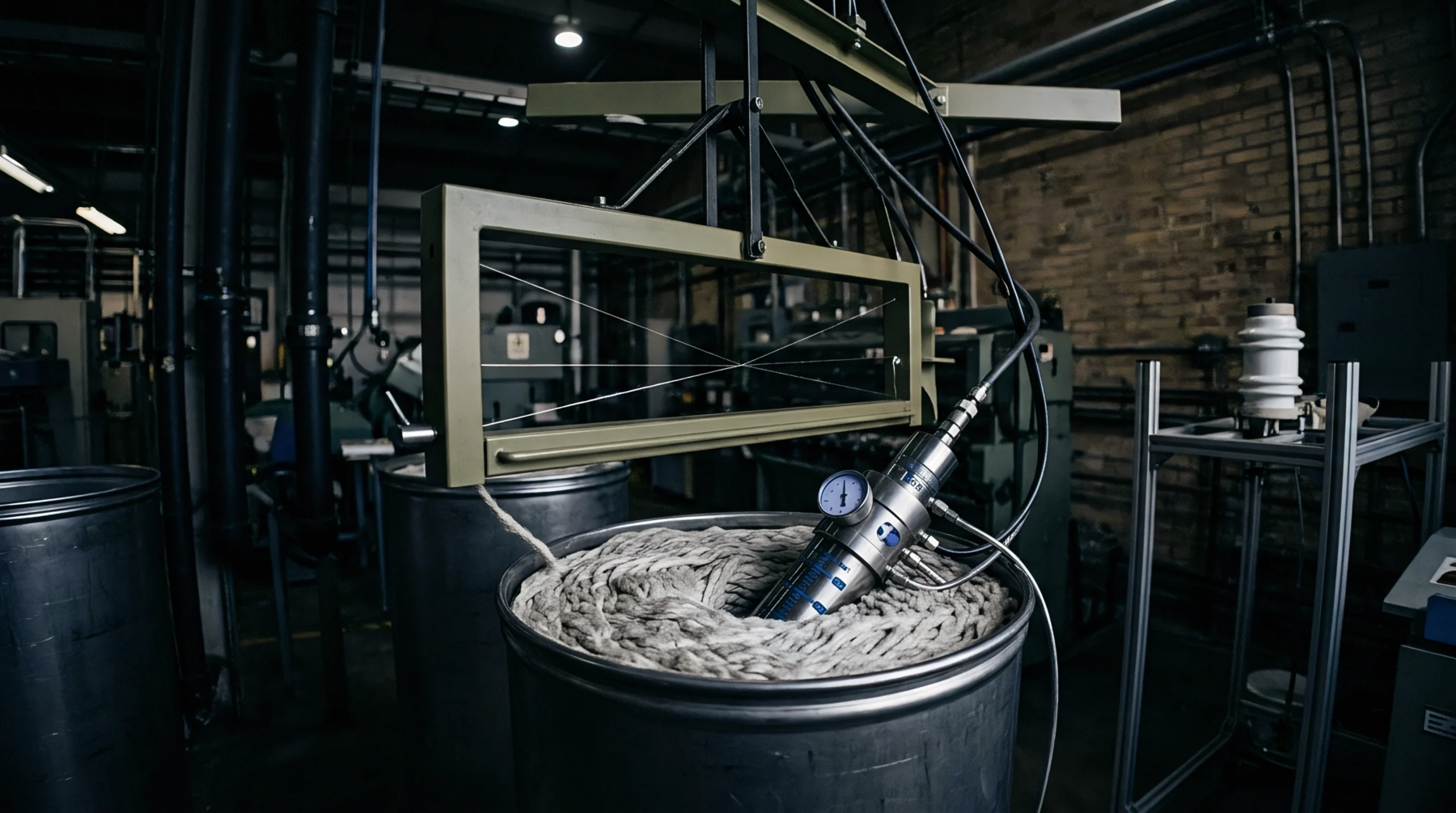
Gravimetric density tracking in cold pad batch dyeing prevents tailing and listing by matching chemical feed mass to fabric capillary absorption limits.

Capillary pressure resistance in woven fabrics depends on controlling maximum inter-yarn pore throat radii rather than reliance on surface contact angles alone.

Commercial mass determination reconciles clean oven-dry mass with standard moisture regain figures to establish binding landed weights and tariff lines.

Critical angle refractometry on reactive dye dosing lines demands near-infrared illumination and component specific calibration slopes to isolate dye solids from salt.

Real-time variational inference coupled with Dirichlet process kinetic models provides continuous batch-level verification of stenter outgassing compliance.

Dynamic steam pressure shifts drive localized condensation surges, expanding alkali boundaries and causing halo defects in dense viscose filament assemblies.

Commercial moisture regain calculations convert raw lot weights to dry mass plus standard allowances, preventing customs overvaluation and duty misclassification.

Nonparametric Dirichlet mixture models isolate unrecorded dyehouse carrier residuals by clustering multi-analyte extraction data into latent machine regimes.

Micro-spectrophotometric cross-sectional profiling isolates core fixation deficits in high-twist cellulose yarns, preventing washing fastness and abrasion failures.
Expertise is a utility, not a secret. sentiention™ publishes its working knowledge as open reference: intelligence layer covering the materials it sources, the markets it enters, and the reference that serves both.