
Corrected Invoiced Commercial Mass Calculations from Desiccated Fibre Regain Data
Invoiced commercial mass equals total oven-dry fibre weight multiplied by one hundred plus standard regain and finish allowance percentages, divided by one hundred.
Invoiced commercial mass equals total oven-dry fibre weight multiplied by one hundred plus standard regain and finish allowance percentages, divided by one hundred.

Yarn count, crimp, and moisture regain fix fabric square-metre mass, controlling garment cutting yields and preventing costly customs tariff misclassifications.

Reconciling customs moisture discrepancies requires converting physical import weights to oven-dry mass and reapplying statutory regulatory regain schedules.

Quantitative fiber dissolution tolerances demand pairing empirical reagent mass-loss factors with statutory moisture regains to defend customs declarations.

Micro-denier cellulosics alter selective dissolution kinetics by increasing capillary entrapment, demanding modified d-factors and strict IV monitoring to fix blend percentages.

Solvent extraction isolates surface lubricants and processing oils from synthetic filament yarns to verify commercial billing weight and prevent dyehouse defects.

Mass balance chain of custody claims require third-party audited inventory ledgers that deduct empirical yield losses and prevent unevidenced credit deficits.

Calibrating dissolution kinetics and empirical d-factors prevents false gravimetric residue readings, avoiding costly customs reclassification and blend disputes.

Corrected invoice weight computes commercial mass from oven-dry clean polymer fractions adjusted by official regains and extractable allowances under IWTO-33 rules.

Commercial moisture testing oven-dries representative core samples to constant weight, converting bone-dry mass into legal invoiced weight via agreed regains.

Resolve interlaboratory regenerated cellulose regain disputes by substituting standard convective heating with 60°C vacuum drying or Karl Fischer titration.
Commercial mass of synthetic filament yarns is determined by adding standard commercial moisture allowances to solvent-extracted oven-dry mass.

Dynamic multi-spectral compensation decouples moisture absorption bands from polymer overtones, preventing sorting misclassifications and financial penalties.

Fiber mass conservation balances certified intake against conditioned output, scrap manifests, and moisture regain to verify supply chain chain of custody.

Establishing gravimetric moisture correction limits requires adjusting commercial regain to 7.4-7.85% to account for hornification in shredded cotton yarns.

Map every transformation tier from farm Scope Certificate to export Transaction Certificate, enforcing strict mass balance limits to clear customs audits.

Commercial yarn invoice mass derives from oven-dry weight adjusted by standardized commercial regain values rather than uncorrected physical scale mass.

Clean dry mass removes finishes and water to yield true polymer weights, which commercial regain adjustments convert into legally defensible blend ratios.

Coupling multi-scale drag and tribological simulations stabilizes binary fiber ratios across chute and drafting zones, eliminating costly customs misdeclarations.

Calibrate differential carding waste extraction through dynamic mass balances to protect staple length distribution and minimize yarn cost per kilogram.

Customs chief-weight classification for multi-fibre textiles depends on whether laboratories calculate percentages on oven-dry mass or statutory regain values.

Commercial mass calculations adjust billed consignment weights to oven-dry mass plus standard moisture regain, preventing buyers from paying yarn prices for water.

Commercial mass calculations convert net delivered fiber weight to dry mass plus official regain, eliminating financial losses from shipping absorbed water.

Dynamic moisture sorption hysteresis shifts blended fabric commercial weights up to three percent depending on preconditioning history and transit humidity.

Standard solubility correction factors adjust insoluble gravimetric yields to prevent miscalculation of commercial mass and tariff misdeclarations.

Commercial moisture regain converts oven-dry yarn weight into invoiced mass using standardized moisture percentages and finish allowances under ISO 6741.

Desorption hysteresis inflates combed cotton arrival weight by over one percent, requiring ISO 6741 commercial mass terms to prevent customs value adjustments.
Invoice corrections reconcile ocean-shipped combed cotton scale mass to official 8.5 percent regain, preventing overpayment for absorbed water.

Commercial mass in ocean freight combed cotton reconciles scale mass to anhydrous dry weight plus official 8.5 percent regain to prevent paying for water.
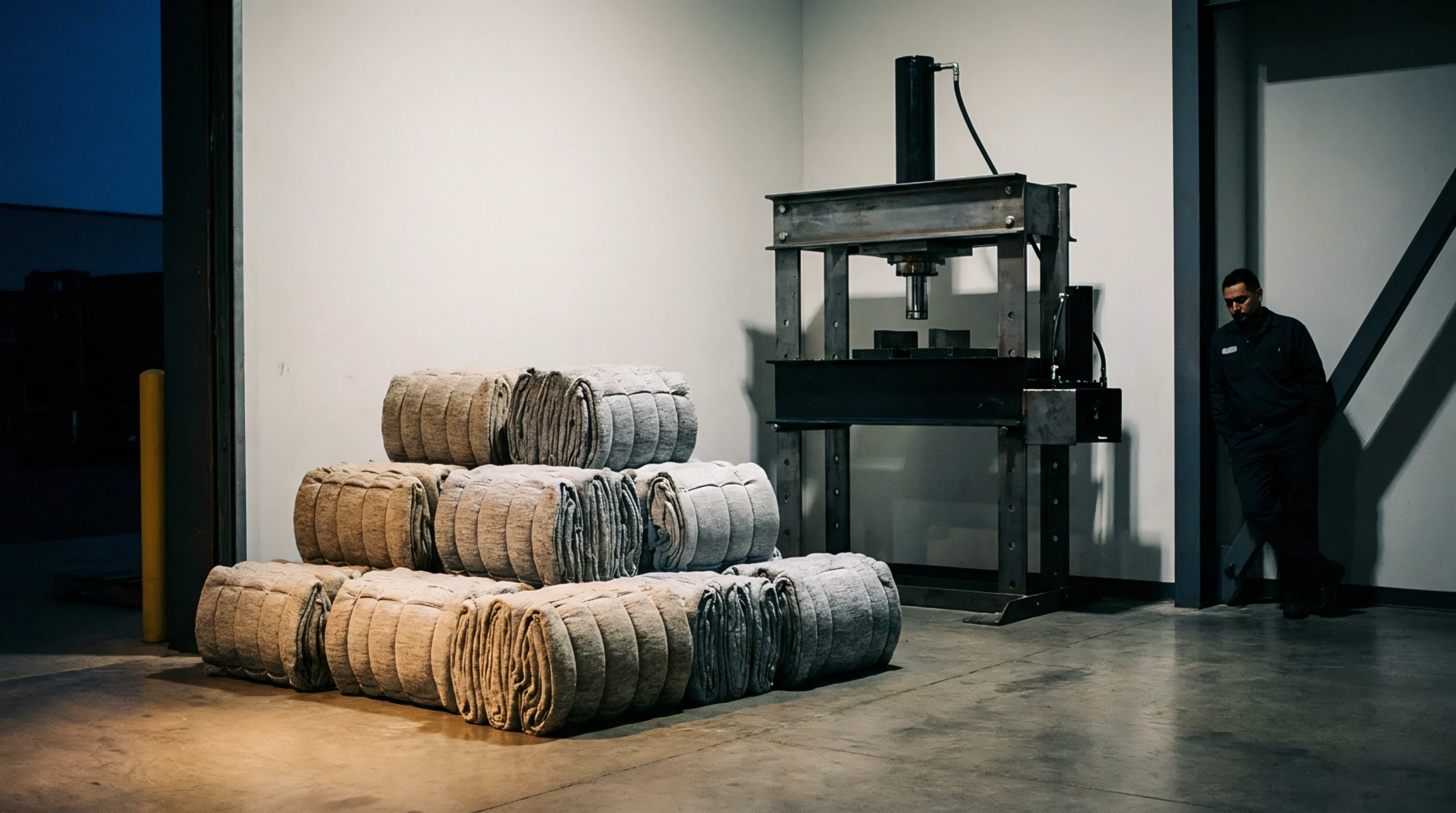
Warehouse relative humidity directly shifts greige yarn moisture regain, altering single-end tensile strength, unwinding tensions, and invoiced commercial weight.
Expertise is a utility, not a secret. sentiention™ publishes its working knowledge as open reference: intelligence layer covering the materials it sources, the markets it enters, and the reference that serves both.