
Predictive Gravimetric Modeling for Differential Component Fiber Waste in Air Jet Blends
Predictive gravimetric modeling pre-adjusts sliver blend ratios to counteract selective aerodynamic fiber waste, ensuring exact finished yarn composition.
Predictive gravimetric modeling pre-adjusts sliver blend ratios to counteract selective aerodynamic fiber waste, ensuring exact finished yarn composition.

Gravimetric conversion of optical fiber distributions distorts blend mass by squaring diameter tails, misreading ellipticity, and ignoring medullary voids.

Optical profiling quantifies cashmere down fineness and coarse hair fractions, establishing binding commercial adjustments and tariff classifications before spinning.

Oxidized wool distorts chemical separation from viscose, requiring calibrated d factors to prevent analytical swings that trigger customs reclassifications.

Net combed sliver cost balances raw lint yield loss against secondary noil revenue and downstream ring spinning efficiency.
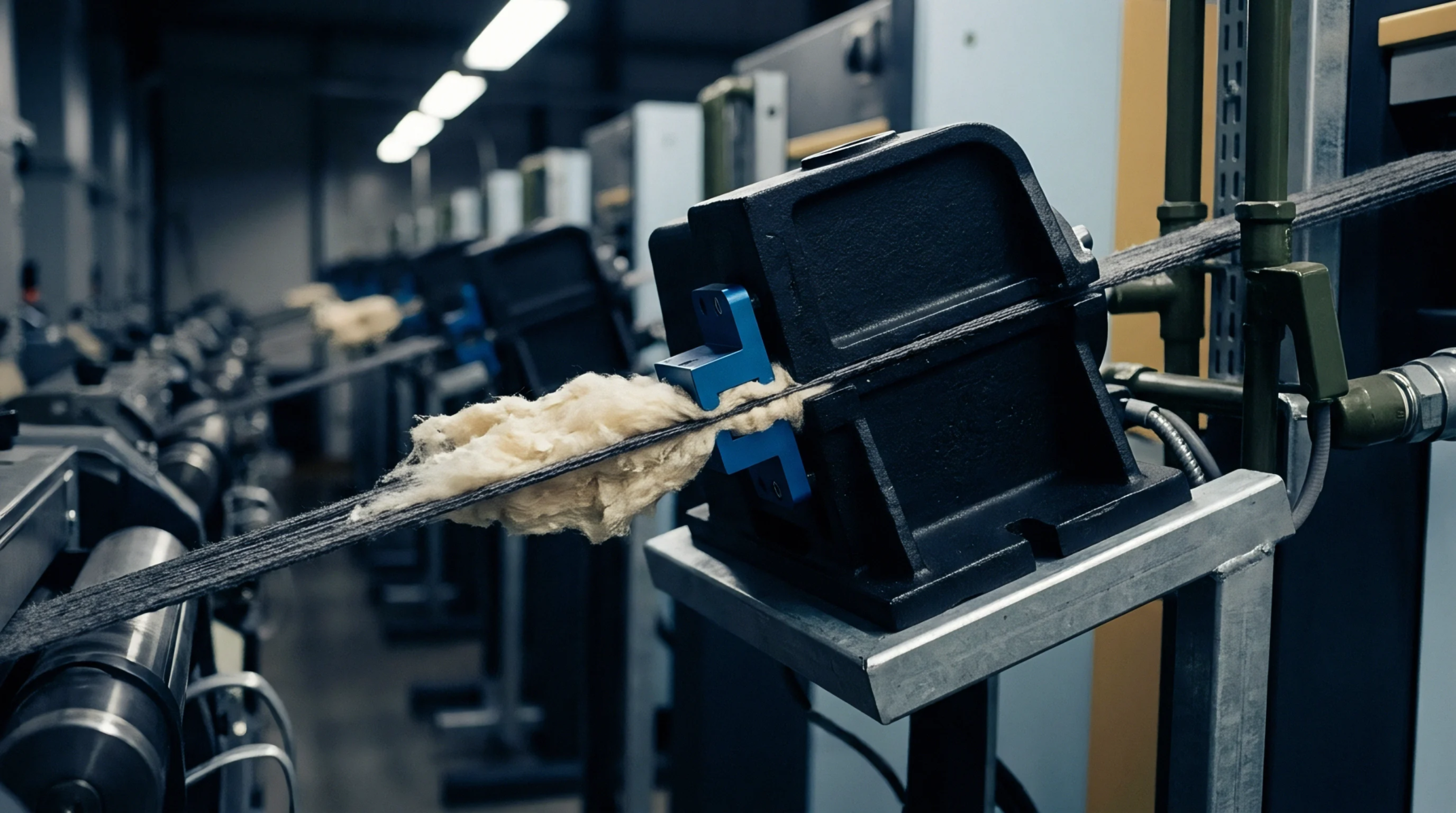
Chemical separation determines blend percentages by gravimetrically weighing insoluble residue after selective dissolution, requiring correction factors and moisture regains to match customs rules.

Commercial moisture regain standards convert oven-dry synthetic fiber mass to statutory customs clearance weights, preventing duty miscalculations.
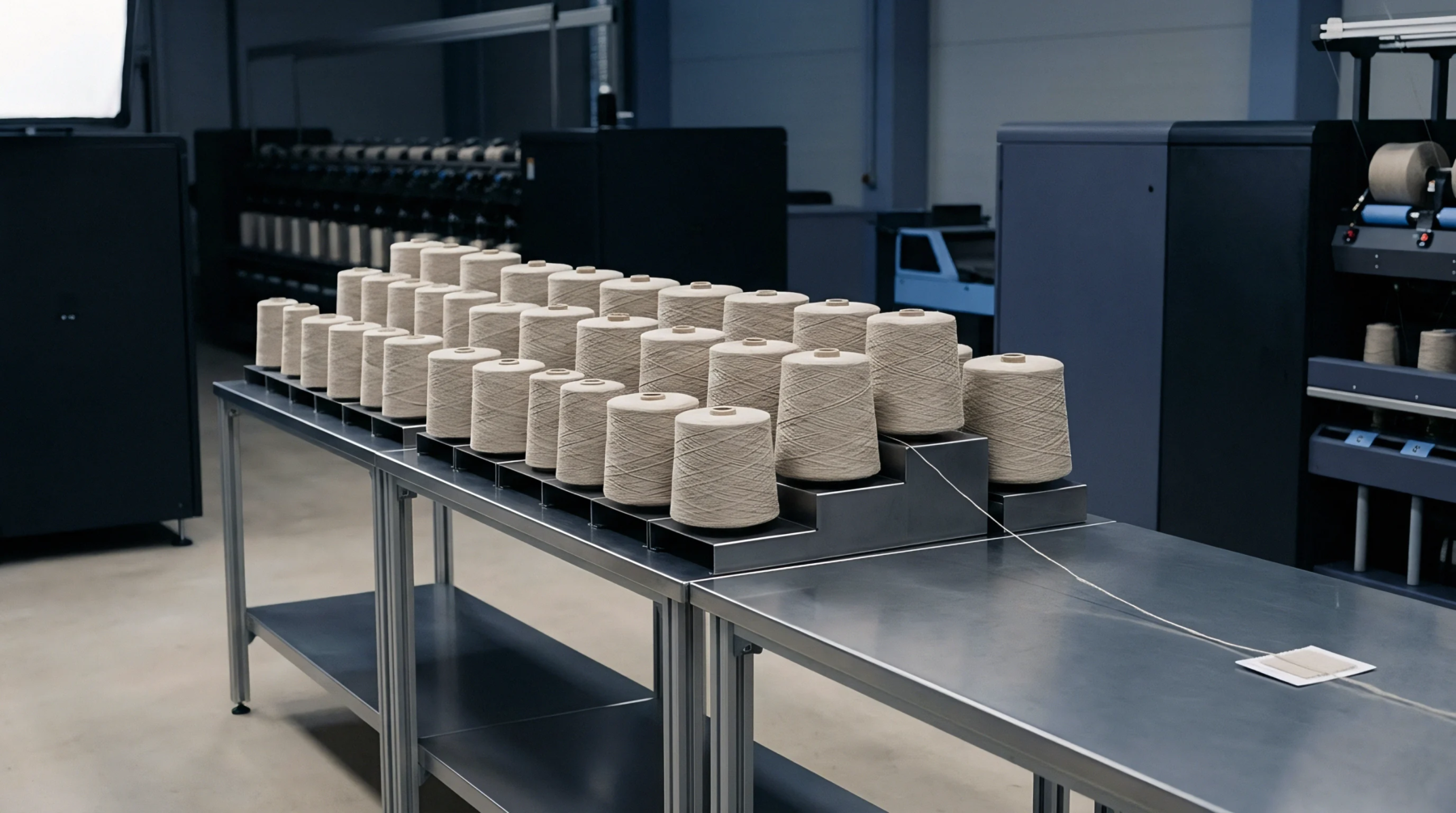
Certified commercial mass derived from oven-dry weight and standard regain percentages protects buyers from paying liquid prices for dry textile shipments.

Laminar deck boundary stabilization stops eddy entrapment, cutting fibre loss below two percent while purging dense shives from classified spinning stock.

Laboratory desiccation above 105°C volatilizes synthetic spin finish esters, requiring solvent extraction baselines to prevent commercial weight penalties.

Commercial mass in intimate fibre mixtures derives from oven-dry component weights adjusted by individual official moisture regain values under ISO 6741.
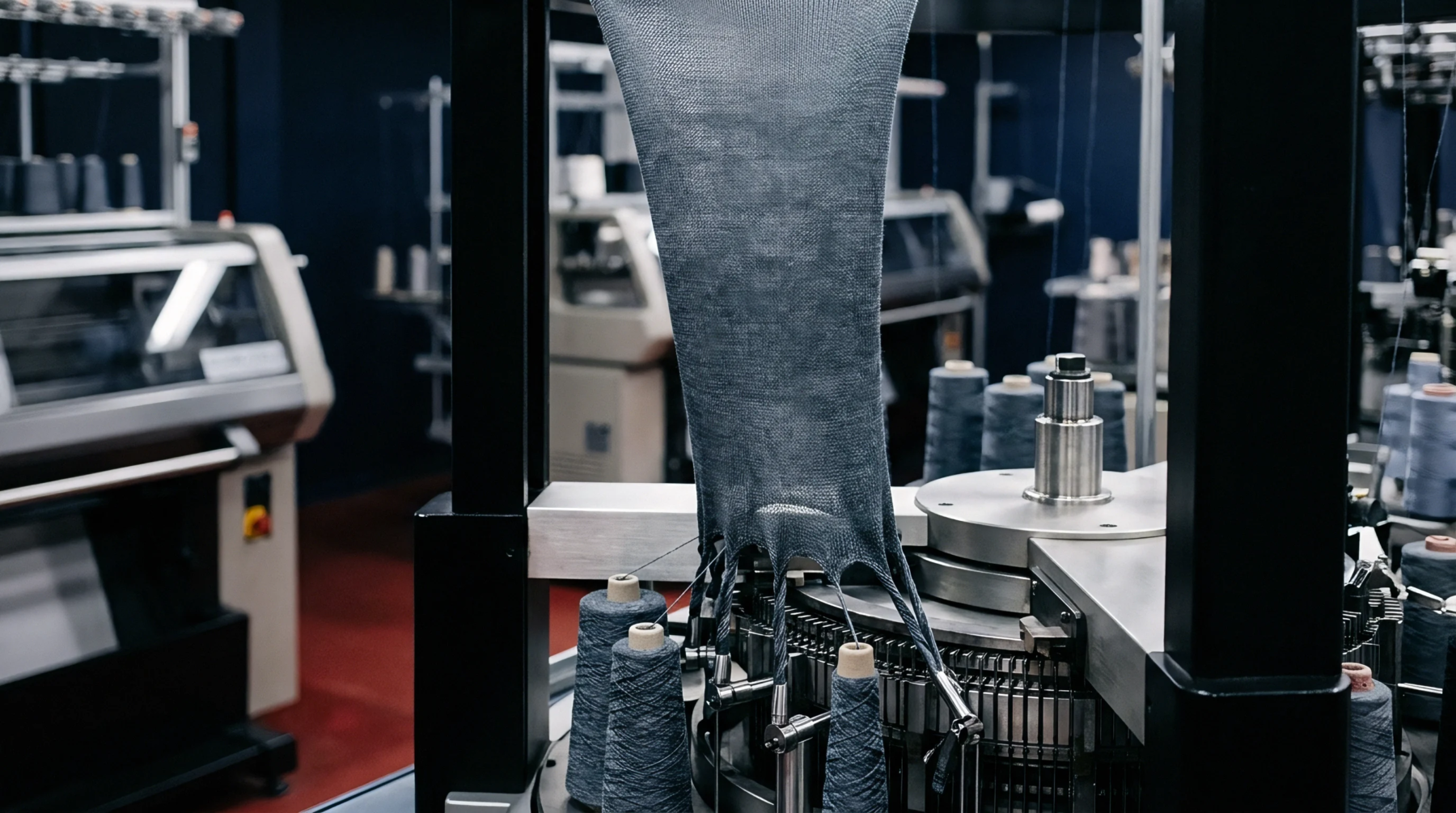
Commercial moisture regain converts variable as-received yarn mass to an oven-dry baseline plus legal allowances, preventing buyers from paying for transit water.
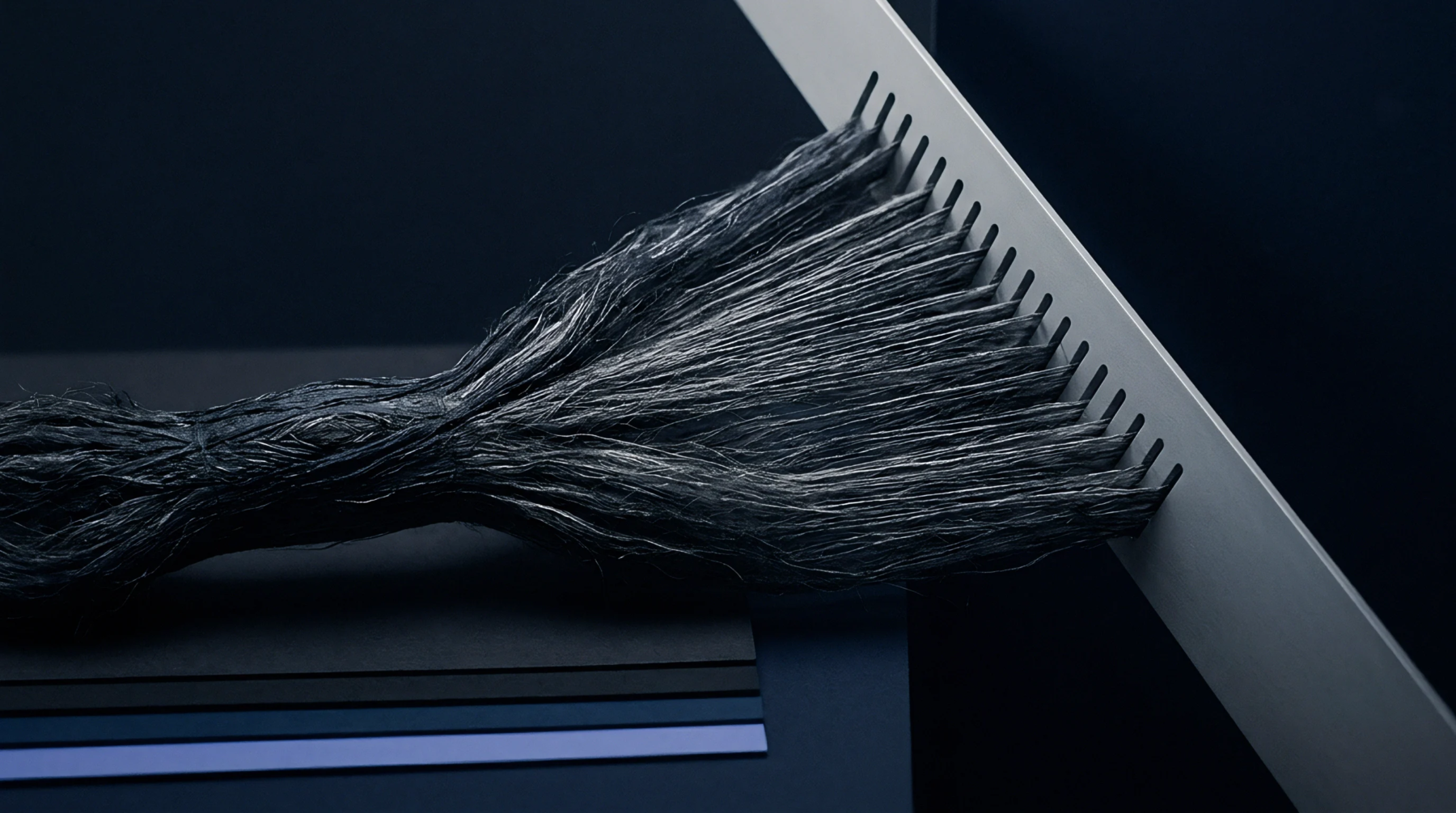
Invoiced commercial mass equals total oven-dry fibre weight multiplied by one hundred plus standard regain and finish allowance percentages, divided by one hundred.

Yarn count, crimp, and moisture regain fix fabric square-metre mass, controlling garment cutting yields and preventing costly customs tariff misclassifications.

Reconciling customs moisture discrepancies requires converting physical import weights to oven-dry mass and reapplying statutory regulatory regain schedules.

Quantitative fiber dissolution tolerances demand pairing empirical reagent mass-loss factors with statutory moisture regains to defend customs declarations.

Micro-denier cellulosics alter selective dissolution kinetics by increasing capillary entrapment, demanding modified d-factors and strict IV monitoring to fix blend percentages.

Sulfuric acid dissolution isolates resistant synthetic fibers by selectively hydrolyzing cellulosics under precise concentration and temperature limits.

Mass balance chain of custody claims require third-party audited inventory ledgers that deduct empirical yield losses and prevent unevidenced credit deficits.

Calibrating dissolution kinetics and empirical d-factors prevents false gravimetric residue readings, avoiding costly customs reclassification and blend disputes.

Standard gravimetric solvent extraction isolates topical finishes from regulated fibres to verify commercial mass and enforce chemical declaration limits.

Accurate quantitative chemical separation of recycled cellulosic yarns demands sodium zincate extraction with calibrated d-factors and complete solvent scouring.

Fiber mass conservation balances certified intake against conditioned output, scrap manifests, and moisture regain to verify supply chain chain of custody.

Establishing gravimetric moisture correction limits requires adjusting commercial regain to 7.4-7.85% to account for hornification in shredded cotton yarns.

Diffuse reflectance spectroscopy provides rapid non-destructive fiber identification in mixed bales when multivariate models correct for moisture and density.

Reconciling customs isotopic disputes requires proving chemical fractionation shifts while matching spinning waste logs to dry-weight mass balance equations.

Clean dry mass removes finishes and water to yield true polymer weights, which commercial regain adjustments convert into legally defensible blend ratios.

Coupling multi-scale drag and tribological simulations stabilizes binary fiber ratios across chute and drafting zones, eliminating costly customs misdeclarations.

Chemical dissolution isolates synthetic residues while statutory moisture regain corrections shift dry gravimetric yields across customs chief-weight lines.

Commercial moisture regain converts oven-dry yarn weight into invoiced mass using standardized moisture percentages and finish allowances under ISO 6741.
Expertise is a utility, not a secret. sentiention™ publishes its working knowledge as open reference: intelligence layer covering the materials it sources, the markets it enters, and the reference that serves both.