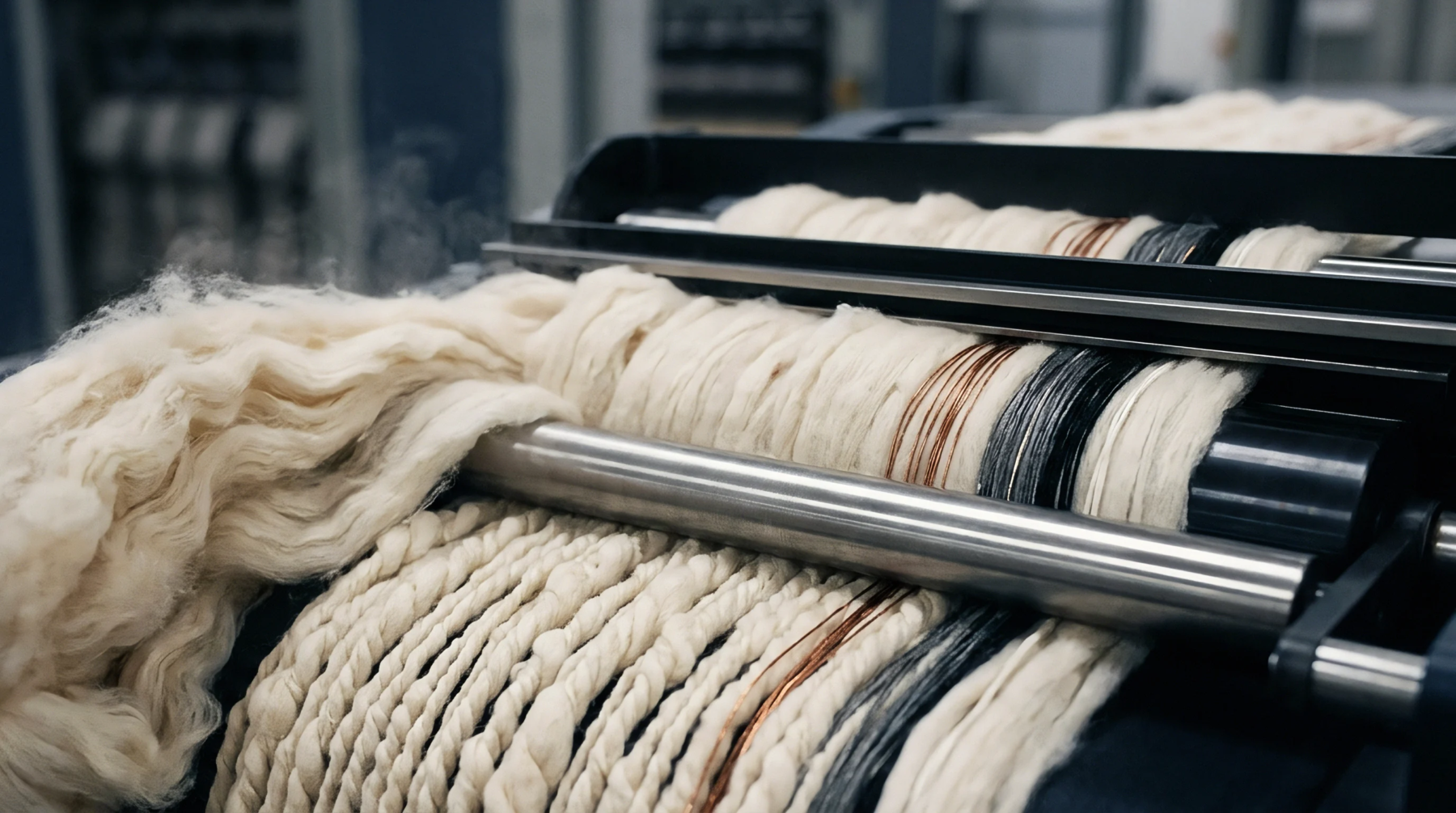
Blend Ratio Drift across a Season from One Blending Room
Blend ratio drift stems from uncompensated raw bale moisture changes and pneumatic sorting; control requires ISO 1833 dry-mass specs and real-time weigh-hopper NIR updates.
Blend ratio drift stems from uncompensated raw bale moisture changes and pneumatic sorting; control requires ISO 1833 dry-mass specs and real-time weigh-hopper NIR updates.

Solvent extraction adjustments correct non-fibrous loss and moisture regain to convert raw dry residual weights into accurate commercial mass for tariff settlement.

Viscose wool composition drift stems from differing standard moisture regain allowances, requiring dry-mass conversion formulas to protect tariff lines and invoices.

Unextracted spinning oils distort oven-dry fiber mass ratios, triggering false chief-weight customs reclassifications between cotton and viscose tariffs.

Resolving yarn density disputes requires standardized Soxhlet solvent extraction, precise 0.5 cN/tex pretensioning, and ISO 5725 statistical critical difference bounds.

Wet finishing contraction alters fabric mass per square metre and relative fiber weight fractions, driving tariff classification drift and landed cost escalation.

Transit moisture absorption alters ocean container cargo mass beyond standard laboratory regain corrections, creating financial and customs discrepancies.

Sulfuric acid extraction isolates polyester residue to verify yarn composition against commercial moisture regain standards and tariff weight thresholds.

Determining dry mass ratios requires desiccation at 105 °C, selective chemical dissolution under ISO 1833, d-factor correction, and commercial regain adjustments.

Quantitative chemical dissolution corrections require applying d-factors and official commercial regain values to establish true dry fiber composition for invoice settlement.
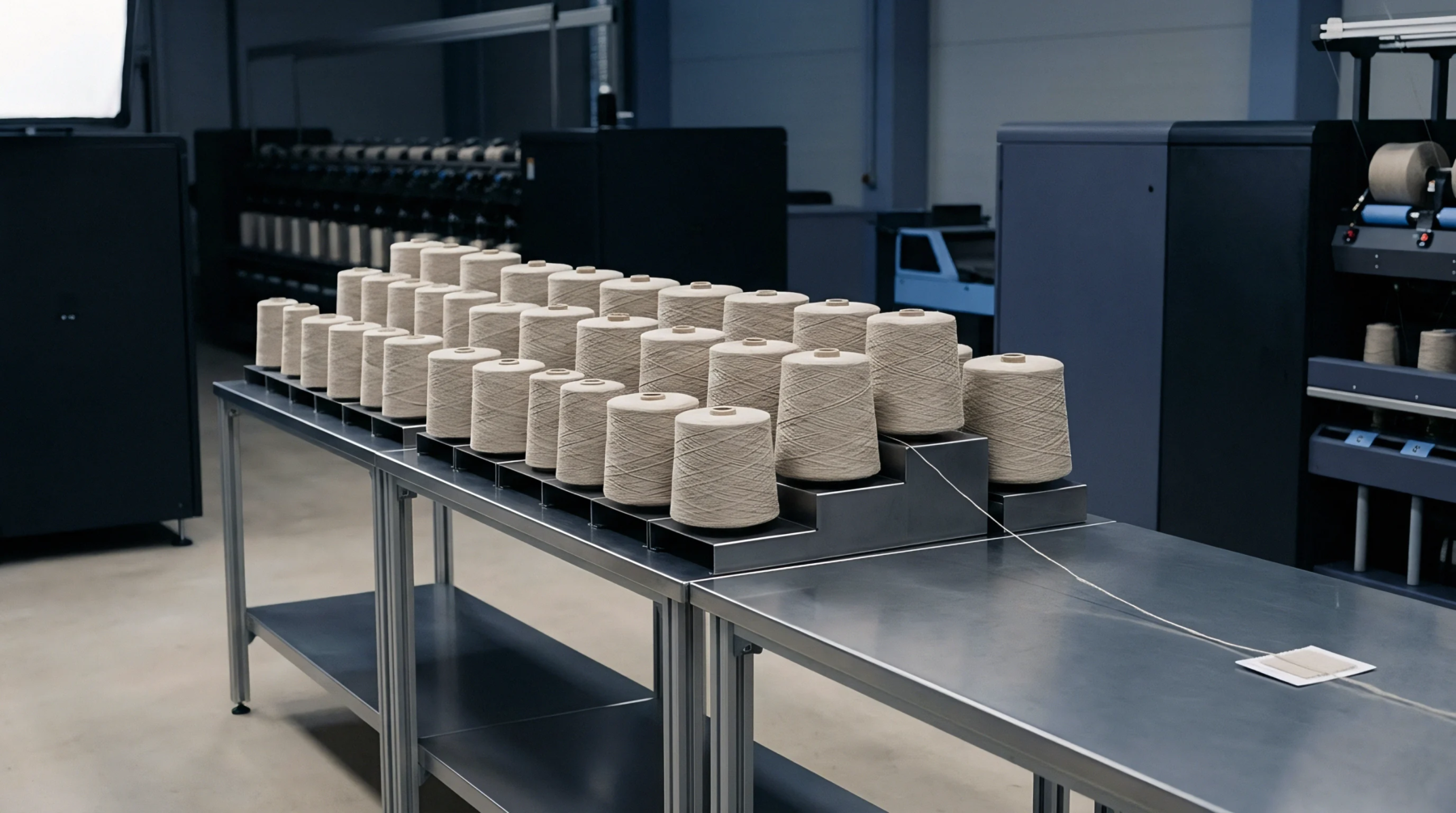
Standardized rapid automated extraction removes non-fibrous finish oils without swelling elastomeric cores, securing accurate composition testing and customs clearance.

Commercial mass determination reconciles clean dry polymer mass with official regain allowances to secure precise customs compliance and financial settlement.
Determining cotton viscose yarn blend composition requires solvent extraction pretreatment, precise reagent temperature control, and empirical d-factor corrections.

Converting laboratory dry chemical reports to standard commercial regain mass prevents tariff misclassification and aligns invoice billing with landed net weight.
Commercial raw cotton mass requires adjusting gross scale weight for official moisture regain and non-lint content under standardized oven-dry test protocols.

Integrating sizing stretch with greige warp crimp prevents yarn over-ordering and aligns creel lengths to loom beam targets without inventory waste.

Customs chief weight classification requires adjusting oven-dry fiber masses with official commercial regain allowances before calculating constituent ratios.

Fabric compaction and selective finish stripping alter finished composition ratios, requiring grey yarn adjustments to maintain imported chief weight compliance.

Wet finishing contracts fibres unevenly, shifting component weight ratios across tariff boundaries and creating customs misdeclaration risk.

Predictive mass balance modeling tracks wet finishing mass gains and losses to declare compliant tariff chief weight classifications before customs entry.

Accurate solvent dissolution pairs Soxhlet pre-treatment with calibrated mass correction factors to settle legal customs declarations on binary fibre mixtures.

Commercial moisture regain corrections adjust oven-dry cellulosic fibre mass using statutory allowances to prevent buyers paying pure water rates on dry matter.

Standard chemical separation of cotton polyester yarns uses 75% sulfuric acid dissolution with gravimetric recovery corrected for commercial moisture regain.

Eliminate border gravimetric variance by specifying ISO 1833-11 dissolution and contractually binding buyers and mills to ASTM D1909 commercial regains.

Commercial textile blend ratios require adjusting clean oven dry masses with statutory moisture regain rates to ensure accurate legal customs declarations.

Automated solvent extraction eliminates knitting oils and silicone finishes from elastomeric organic knits to ensure compliant blend analysis.

Thermodynamic sorption corrections convert ambient multi-fiber invoice weights to legal dry commercial mass, eliminating excess water charges and tariff overpayment.

Commercial mass equals oven dry mass multiplied by one plus the weighted sum of official fiber moisture regain allowances.

ISO 17751 interlaboratory reproducibility hinges on SEM validation over optical microscopy to prevent diameter skews and descaled wool from distorting blend ratios.
Reconciling cashmere DNA barcoding with electron microscopy requires binding contracts that use microscopy for mass ratios and genomics for trace screening.
Expertise is a utility, not a secret. sentiention™ publishes its working knowledge as open reference: intelligence layer covering the materials it sources, the markets it enters, and the reference that serves both.