
Recycled Content Claims and the Evidence a Regulator Now Expects
Regulators demand lot-specific transaction certificates matched to bills of lading, backed by chemical verification and strict mass balance auditing.
Regulators demand lot-specific transaction certificates matched to bills of lading, backed by chemical verification and strict mass balance auditing.

Reconciling chemical recycled filament supply chains requires deducting batch process yield losses from transaction certificates and verifying monomer purity via analytical testing.

Reconciling yarn extrusion transaction certificates requires adjusting gross output weight for spin finish oils and moisture against real extruder purge loss.

Microstructural chain scission in recycled polyester increases chemical solubility and moisture regain, causing significant errors in laboratory blend verification.

Customs compliance requires physical composition testing while brand claims rely on audited mass balance ledgers, forcing buyers to manage separate verification streams.
Commission dyeing defect liability requires contractual tripartite agreements, pre-process greige verification gates, and analytical fault isolation.

Mass balance credit allocation requires physical analytical marker verification to survive regulatory scrutiny under emerging green claim enforcement rules.

High heater temperatures mobilize PET cyclic trimers, driving surface crystallization that glazes texturing discs and requires strict HPLC wash thresholds.

Hydrothermal recycling breaks cashmere keratin disulfide bonds, raising cysteic acid and lanthionine levels, lowering yarn tenacity and spinning yield.

Standardizing thermal history via annealing before acid dissolution eliminates rPET crystallinity variance, securing exact chemical separation accuracy.

Core elastane degradation stems from hydrodynamic drag overextending thermal-softened polyurethanes, mitigated by synchronizing reel overfeed and soft nozzles.

Verify transaction certificates against bulk broadcloth shipments by checking live digital registries, mass loss ratios, container seals, and roll tags.

Matching radiative spectrum to polyelectrolyte thermal activation prevents premature surface gelation and ensures deep binder penetration in heavy cottons.
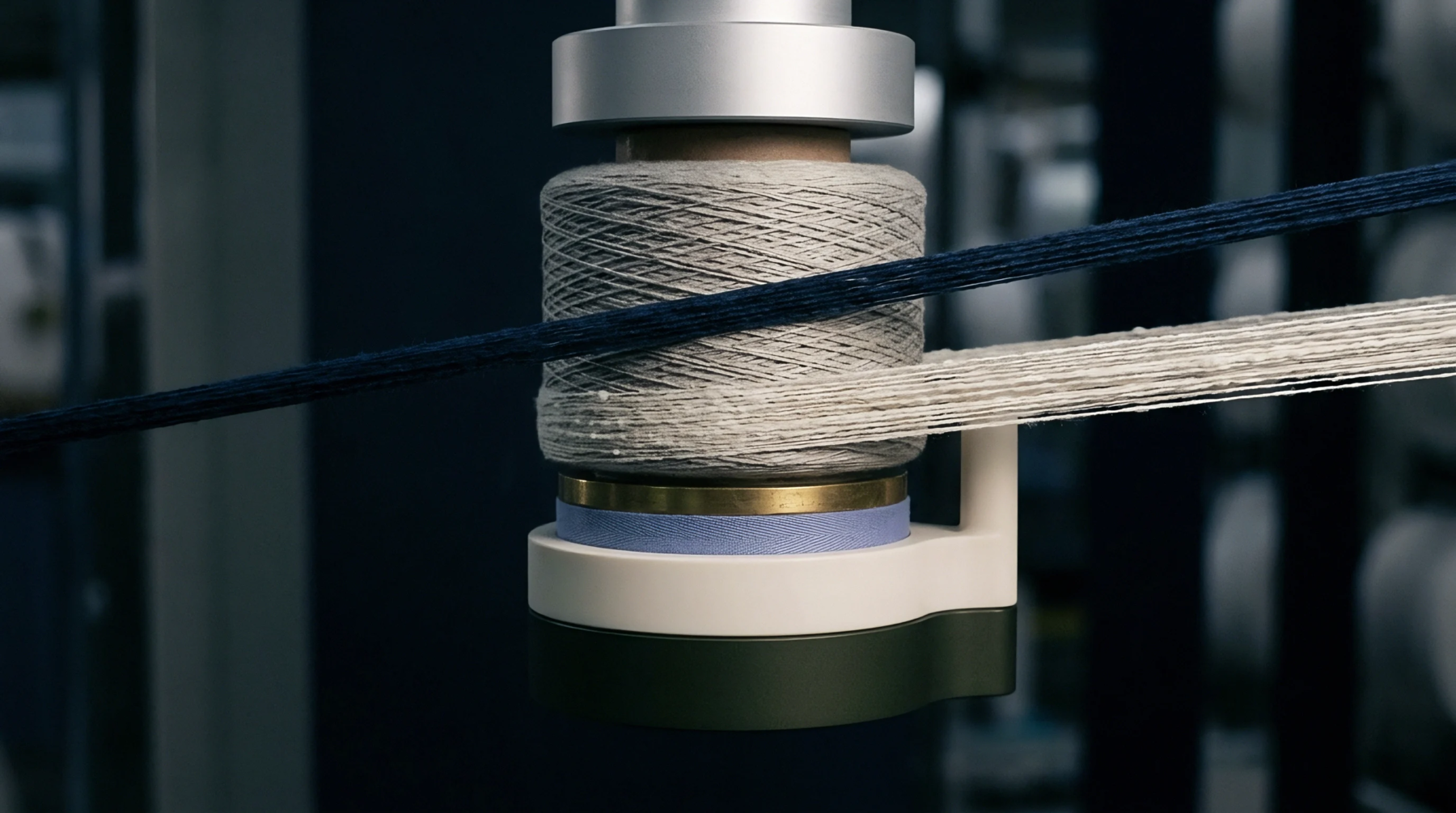
Physical verification of mechanically recycled polyester filament relies on quantifying isophthalic acid, diethylene glycol, and sub-micron polyolefin debris.

Dynamic multi-spectral compensation decouples moisture absorption bands from polymer overtones, preventing sorting misclassifications and financial penalties.

Identify polyolefin film in combed cotton using FTIR spectroscopy and DSC melting peaks to enforce ISO 10306 claims before dyeing.
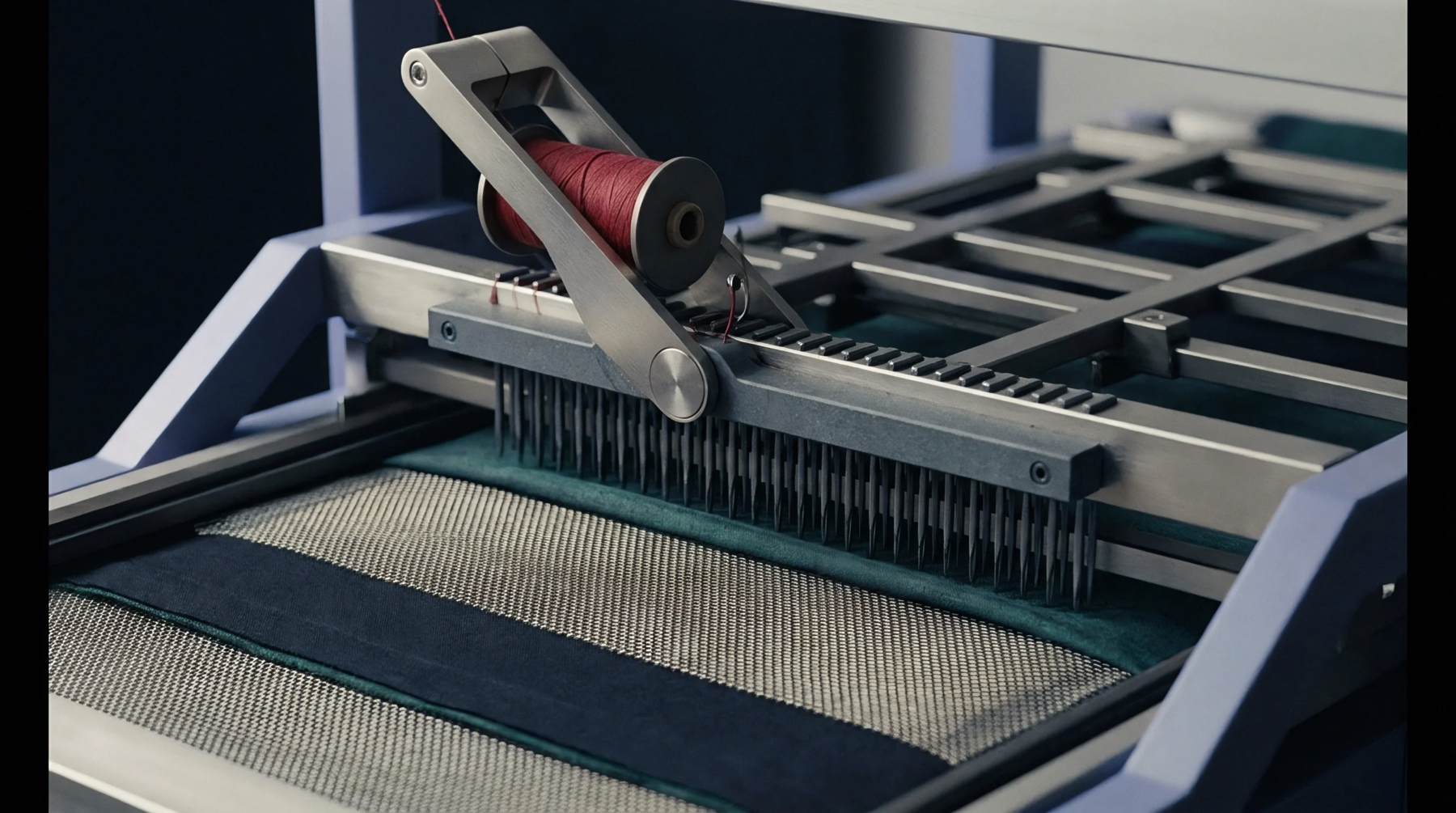
Correct systematic dissolution bias by establishing recycled-specific d-factors and dual-solvent extraction to secure true customs fiber weight classifications.

Flake aerodynamic flutter causes line-scan pixel misregistration, generating high false eject rates and polymer cross-contamination in textile flake lots.

Verify extrusion scope certificates by matching PR0027 codes, checking mass loss allowances, and confirming bottle-grade comonomers via analytical lab tests.

Resolving continuous stenter crystallization variations requires balancing nozzle impingement pressures within 0.5 m/s and limiting widthwise heat drift to 1 C.

Reconciling GB and ASTM textile thermograms requires matching dynamic tangent baseline anchors, emissivity settings, and plateau drift limits across standards.

Thermal stabilization of amine oxide cellulosic extraction fluids relies on strict metal chelation and radical scavenging to prevent exothermic solvent runaway.

Verifying chemically recycled polyester monomer purity profiles requires multi-instrumental HPLC, GC-MS, and ICP-MS batch testing against rigid regulatory limits.

Polarized and short-wave infrared yarn clearers detect white polypropylene splinters down to 0.02 mg in combed cotton yarn, preventing un-dyeable fabric specks.

Chemical recycling yields virgin-identical synthetics, requiring buyers to verify chain of custody ledgers and contaminant profiles rather than molecular origin.

Polypropylene seed cotton contamination ranges from under 0.5 mg/kg in machine modules to over 65 mg/kg in hand-picked bales, requiring thermal DSC verification.

Assaying recycled dimethyl terephthalate requires combined gas chromatography and spectroscopic determination of ester purity, aldehyde isomers, and metal residues.

Chemical softeners lower elastomeric core recovery force; standardizing static creep thresholds requires limiting softener bath concentration to fifteen grams per litre.
Differential scanning calorimetry verifies recovered caprolactam purity by measuring melting enthalpy shifts against the virgin benchmark of 185.8 J/g.

Reversed-phase chromatography resolves polyester cyclic trimer from higher rings, isolating the extractable fraction that causes spinning deposits and yarn dye defects.
Expertise is a utility, not a secret. sentiention™ publishes its working knowledge as open reference: intelligence layer covering the materials it sources, the markets it enters, and the reference that serves both.