
Natural and Synthetic Fibres and What Each Does in a Fabric
Fibre composition dictates physical durability, moisture regain, dye chemistry, and customs classification before spinning machinery turns.
Fibre composition dictates physical durability, moisture regain, dye chemistry, and customs classification before spinning machinery turns.

Declared composition tolerances bridge laboratory test method noise and commercial target blend ratios through standardized moisture regain corrections.

Solvent extraction adjustments correct non-fibrous loss and moisture regain to convert raw dry residual weights into accurate commercial mass for tariff settlement.

Unextracted spinning oils distort oven-dry fiber mass ratios, triggering false chief-weight customs reclassifications between cotton and viscose tariffs.

Commercial moisture regain allowances alter declared fiber percentages, triggering customs tariff reclassification across critical weight thresholds.

Reconciling quantitative chemical dissolution variances requires adjusting raw dry laboratory residues using standardized solvent d-factors and statutory commercial regain allowances under ISO 6741.

Statutory customs petroleum ether pretreatments fail to extract polar ethoxylated spin finishes, distorting dry fiber mass and shifting tariff lines.

Quantitative solvent extraction defines yarn blend ratios by dry mass, determining tariff headings where a 1 percent shift alters landed duty costs.

Wet finishing contraction alters fabric mass per square metre and relative fiber weight fractions, driving tariff classification drift and landed cost escalation.

Preferential duty under yarn-forward rules demands unbroken regional origin from spinning and weaving to garment assembly backed by verified mill traveler cards.

Verifying declared synthetic fiber ratios requires standardized chemical dissolution, precise moisture regain adjustments, and statistical sampling to avoid customs reclassification.

Scatter correction algorithms combined with nitrogen-purged Infragold cavity arrays eliminate high-speed refractive index artifacts for precise inline fiber blend verification.

Verify binary cotton polyester ratios using 75.0% sulfuric acid at 50 °C with calibrated d-factor corrections and official regain conversion to secure customs tariff compliance.
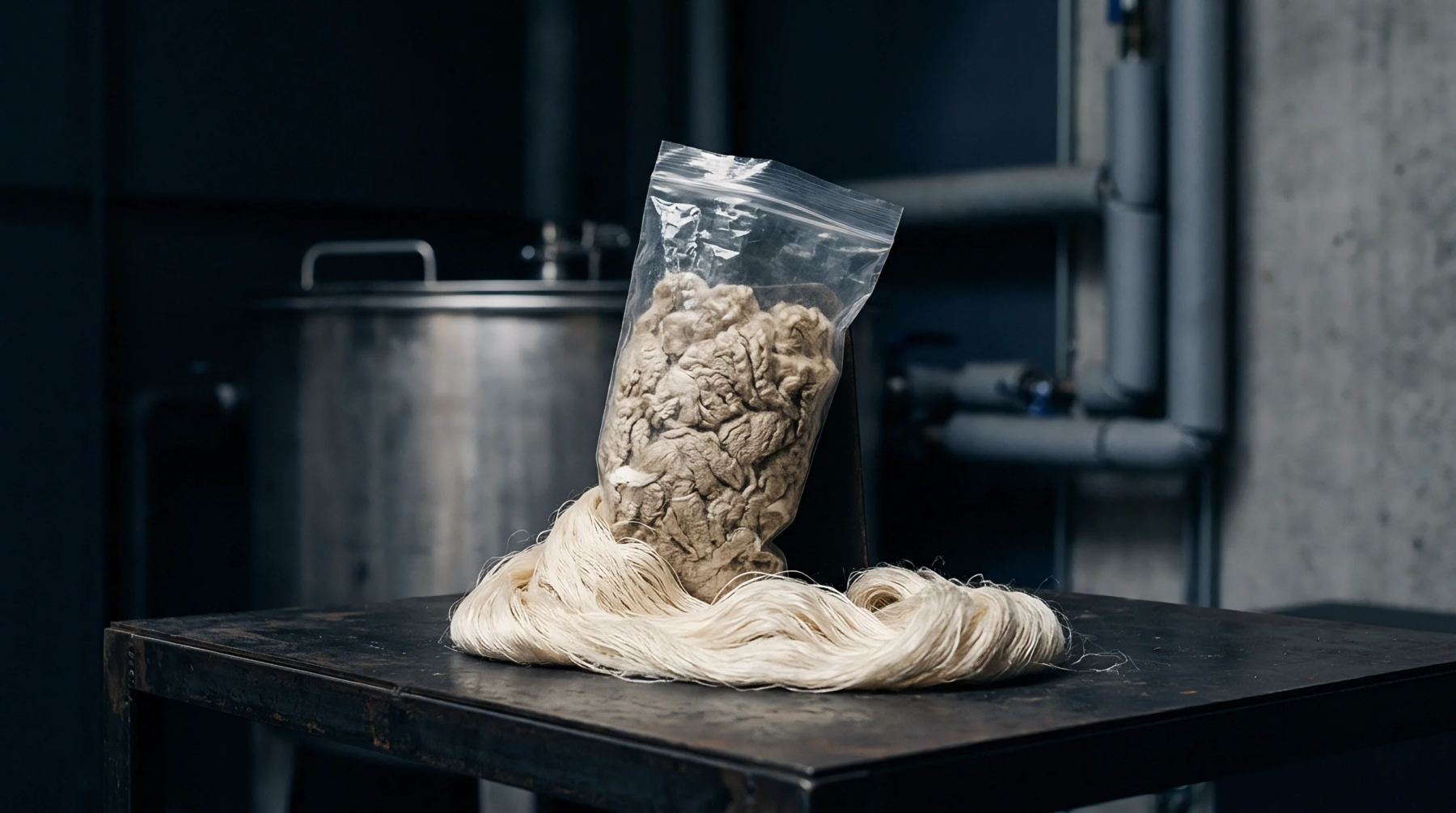
Quantitative fibre blend analysis uses selective chemical dissolution, gravimetric desiccation, and microscopic counting to verify trade declarations.

Seasonal raw cotton purity shifts alter chemical extraction mass ratios, triggering customs tariff reclassifications across chief weight thresholds.

Converting laboratory dry chemical reports to standard commercial regain mass prevents tariff misclassification and aligns invoice billing with landed net weight.

Adjust landed textile valuation disputes by converting gross scale weights to ISO 6741 dry mass plus commercial regain using dockside moisture sample reports.

Non-linear fiber loss in dual nozzle spinning causes composition drift that alters yarn mass, pilling resistance, and customs classification thresholds.

Customs chief weight classification requires adjusting oven-dry fiber masses with official commercial regain allowances before calculating constituent ratios.
Chemical dissolution tolerances require applying fibre-specific correction factors d to dry residue masses while holding temperature and exposure limits precise.

Solvent extraction isolates spin finishes and waxes from spun yarns, preventing excess processing aids from inflating commercial mass and landed duty costs.

Solvent extraction removes non-fibrous sizing and oils before applying statutory moisture regains to clean dry fibre masses for tariff classification.

Fabric compaction and selective finish stripping alter finished composition ratios, requiring grey yarn adjustments to maintain imported chief weight compliance.
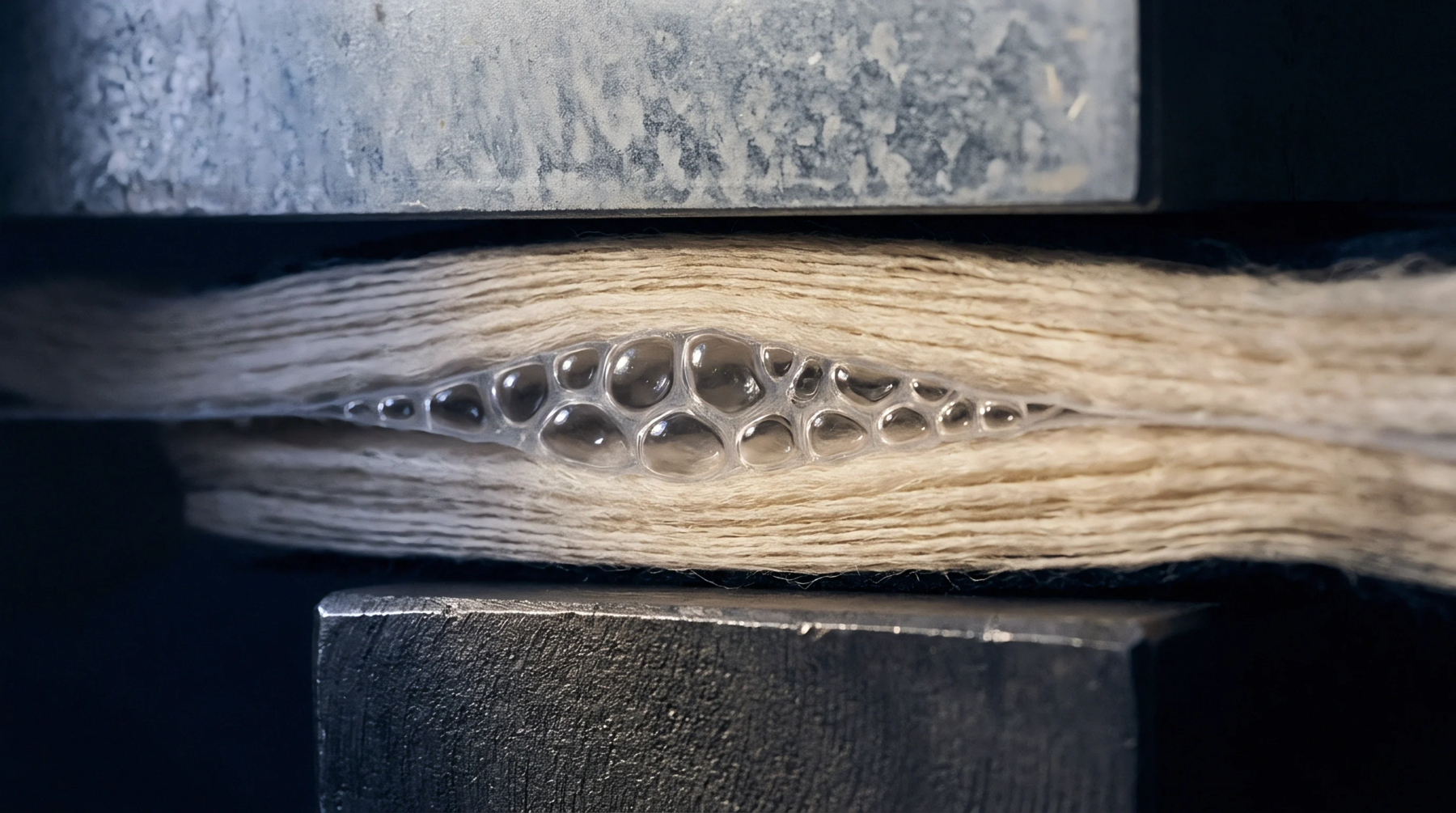
Predictive mass balance modeling tracks wet finishing mass gains and losses to declare compliant tariff chief weight classifications before customs entry.

Accurate solvent dissolution pairs Soxhlet pre-treatment with calibrated mass correction factors to settle legal customs declarations on binary fibre mixtures.

Calibrating empirical acid extraction factors for mercerized fiber prevents under-reporting cotton content and avoids costly customs reclassification disputes.

Accurate cellulosic blend analysis requires pairing strict solvent reflux kinetics and d-factor scission corrections with standard commercial regain adjustments.

Chlorinated solvent reflux extracts structural polymer oligomers alongside spin finishes, distorting quantitative gravimetric composition analysis unless corrected.

Standard chemical separation of cotton polyester yarns uses 75% sulfuric acid dissolution with gravimetric recovery corrected for commercial moisture regain.

Eliminate border gravimetric variance by specifying ISO 1833-11 dissolution and contractually binding buyers and mills to ASTM D1909 commercial regains.
Expertise is a utility, not a secret. sentiention™ publishes its working knowledge as open reference: intelligence layer covering the materials it sources, the markets it enters, and the reference that serves both.