
Scope Certificate Validity Verification and Transaction Certificate Date Mechanics
Scope Certificates establish annual facility capability while Transaction Certificates verify batch authenticity through strict chronological and mass balance checks.

Scope Certificates establish annual facility capability while Transaction Certificates verify batch authenticity through strict chronological and mass balance checks.

Coupled yarn balance during thermal exposure shifts crimp from tensioned warp to slack weft, dictating finished width and mechanical stability.

Tandem mass spectrometry targets species-specific tryptic keratin peptide biomarkers to quantify wool adulteration in cashmere below one percent by weight.

Compacted synthetic textiles retain non-equilibrium free volume states that release dimensional shrinkage under hygrothermal transit conditions.

Standardize thermal extraction at 55 degrees Celsius to arrest keratin deamidation and secure precise proteotypic peptide ionization yields in fiber testing.

LC-MS biomarkers quantify animal fiber ratios by measuring species-specific keratin tryptic peptides against isotope-labeled standards to defeat visual fraud.

Modeling Deborah number transitions prevents premature film vitrification, eliminating trapped solvent cores that trigger regulatory detention and chargebacks.

Exceeding yarn critical compressive buckling load during stenter overfeed causes irreversible out-of-plane cockling and catastrophic selvedge scrap.

Gel permeation chromatography isolates dissolved carboxyl oligomers from intact insoluble fibrils, proving chemical hydrolysis rather than mechanical shedding.

Reconciling dual-fibre customs declarations requires applying destination statutory moisture regains to clean oven-dry mass to preserve chief-weight tariffs.
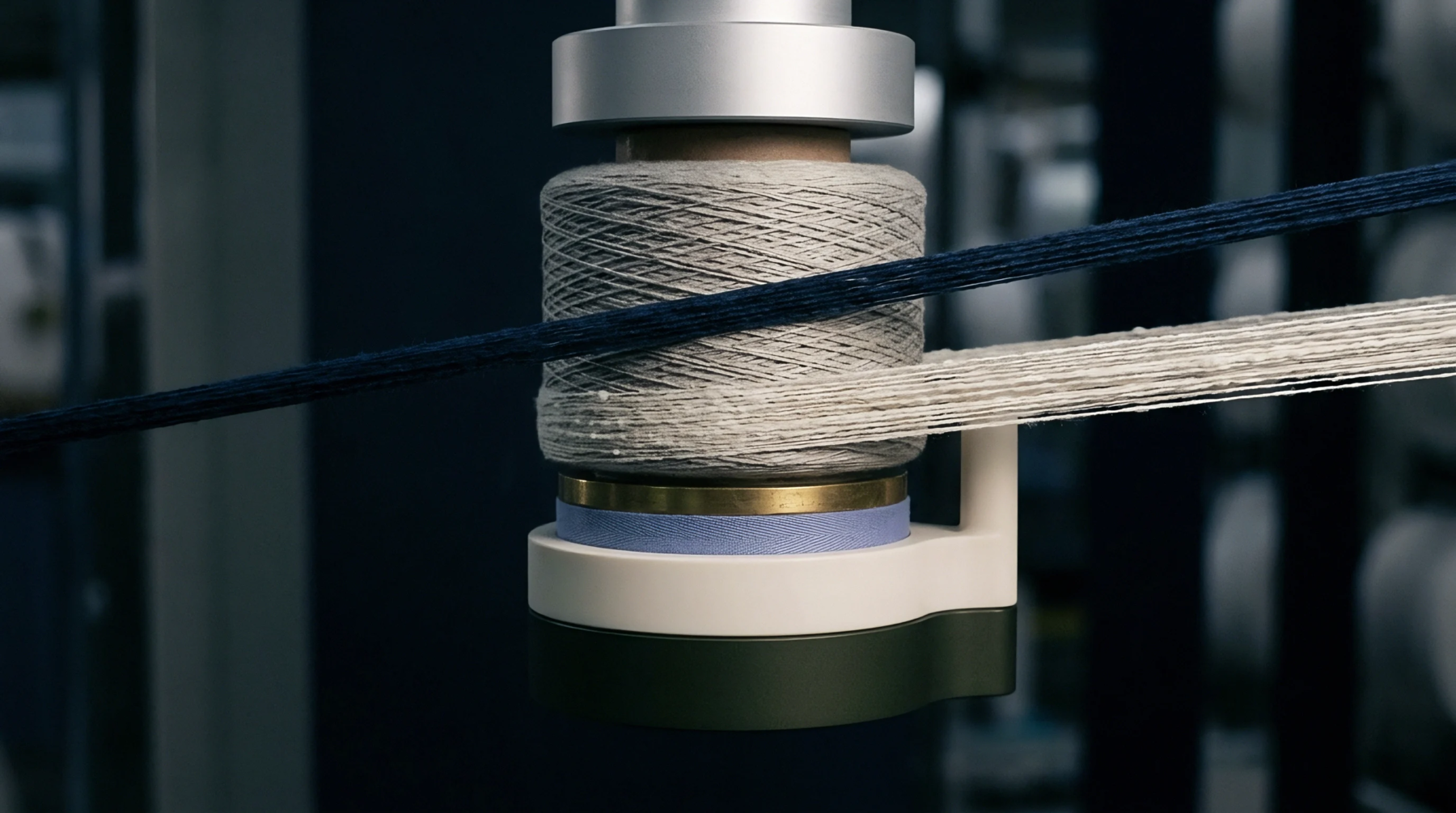
Calibrating gravimetric d-factors against raw lot intrinsic viscosity eliminates analytical variance in recycled polyester and regenerated cellulosic yarns.

Chemical digestion in 75% sulfuric acid combined with ISO 6741 moisture regain adjustments provides precise quantitative ratios for recycled polyester and cotton yarns.

Depth-resolved profiling proves that asymmetric membrane skins concentrate residual solvents far above regulatory limits masked by standard bulk extraction tests.
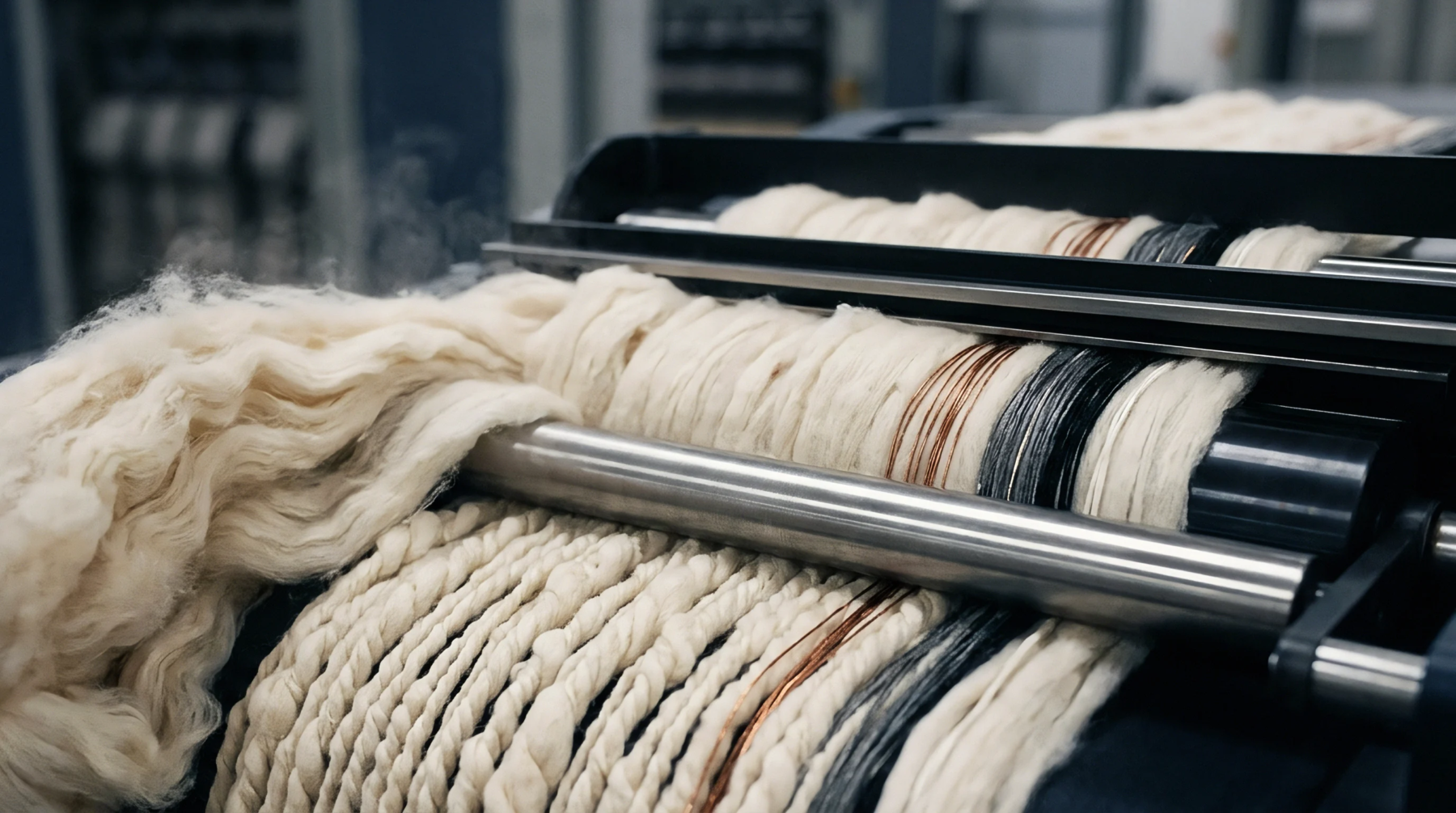
Exhaustive liquid extraction under DIN EN 17111 governs border compliance, requiring staged stenter thermal profiles to prevent skinning and trap limits below 500 ppm.

Gravimetric blend analysis determines yarn fiber percentages by selective solvent dissolution and applies d-value correction factors for mass loss.

Polyurethane residual solvent retention stems from low Flory-Huggins chi parameters and strong hydrogen bonding, demanding total matrix extraction for testing.

Stenter mechanical overfeed balances peripheral infeed roll speed against pin chain velocity to compact yarns lengthwise and suppress post wash shrinkage.

Controlled positive stenter overfeed above three percent neutralizes high-speed loom decrimping to lock finished pick density and prevent wash shrinkage.

Chemical dissolution of cotton-polyester yarns uses 75% sulphuric acid to dissolve cellulose, requiring d-factor and moisture regain corrections for tariff accuracy.

Static headspace extraction quantifies residual dimethylformamide in synthetic coatings through controlled heating and matrix-matched GC-MS.

Adjusting backrest height and shed crossover timing controls crimp interchange dynamics, securing stable fabric width and balanced directional tensile strength.

Dense cotton tufts optically shield encapsulated clear synthetics, demanding thin monolayer presentation and multi-spectral infrared arrays to stop faults.

Subsurface foreign matter detection in raw cotton requires maintaining pneumatic plume density below 0.30 kg/m³ for optimal optical penetration.

Woven fabric crimp mechanics dictate decrimping strain, mass per unit area, and tear mobility based on thread spacing, interlace curvature, and loom tension.

Thermal desorption undercounts bound solvents in coated membranes compared to solvent digestion, creating audit failures when border surveillance applies total matrix solvation.

Verify restricted solvents in coated textiles using GC-MS in SIM mode following EN 17131 ultrasonic extraction to enforce batch-level regulatory compliance.

NIR radiation penetration limits in dense raw cotton restrict optical sampling to surface fiber layers, underestimating core moisture in compressed bales.

Resolving real time thermochromic drift requires decoupling web heat from liquor mass using non-contact pyrometry and dynamic matrix spectral algorithms.

Transfer matrices map dynamic non-contact fabric radiance to conditioned benchtop reflectance, resolving thermal and mechanical shifts at production line speeds.

Dynamic aerodynamic tuft models couple internal porous media flow with wake turbulence to eliminate pneumatic sorting errors and customs blend misclassification.
Expertise is a utility, not a secret. sentiention™ publishes its working knowledge as open reference: intelligence layer covering the materials it sources, the markets it enters, and the reference that serves both.