
Calculating Spin Finish Residue Corrections for Chlorinated Solvent Scoured PET
Correcting PET spin finish extraction figures demands subtracting dissolved cyclic trimers to prevent overstating lubricant content in commercial mass calculations.

Correcting PET spin finish extraction figures demands subtracting dissolved cyclic trimers to prevent overstating lubricant content in commercial mass calculations.

Solvent extraction isolates spin finishes and waxes from spun yarns, preventing excess processing aids from inflating commercial mass and landed duty costs.

Industrial SWIR photodiode selection demands matching spectral cutoff against thermoelectric cooling budgets and pixel operability at target line rates.

High dust textile radiometric calibration requires active laminar air purges, anti-static targets, and dark-current subtraction to prevent blend errors.

Maintaining solvent moisture at 13.0 percent and temperatures below 108°C prevents non-target synthetic polymer breakdown during cellulosic extraction.

Reconciling liquor ratios across mixed-capacity jets demands adjusting total liquid for static piping dead volume to maintain absolute chemical concentrations.

Chemical dissolution tolerances require applying fibre-specific correction factors d to dry residue masses while holding temperature and exposure limits precise.

Hierarchical Dirichlet Process mixture models isolate latent dyehouse solvent spikes from baseline emissions, preventing customs detentions caused by hidden tail-risk off-gassing.

Customs chief weight classification requires adjusting oven-dry fiber masses with official commercial regain allowances before calculating constituent ratios.
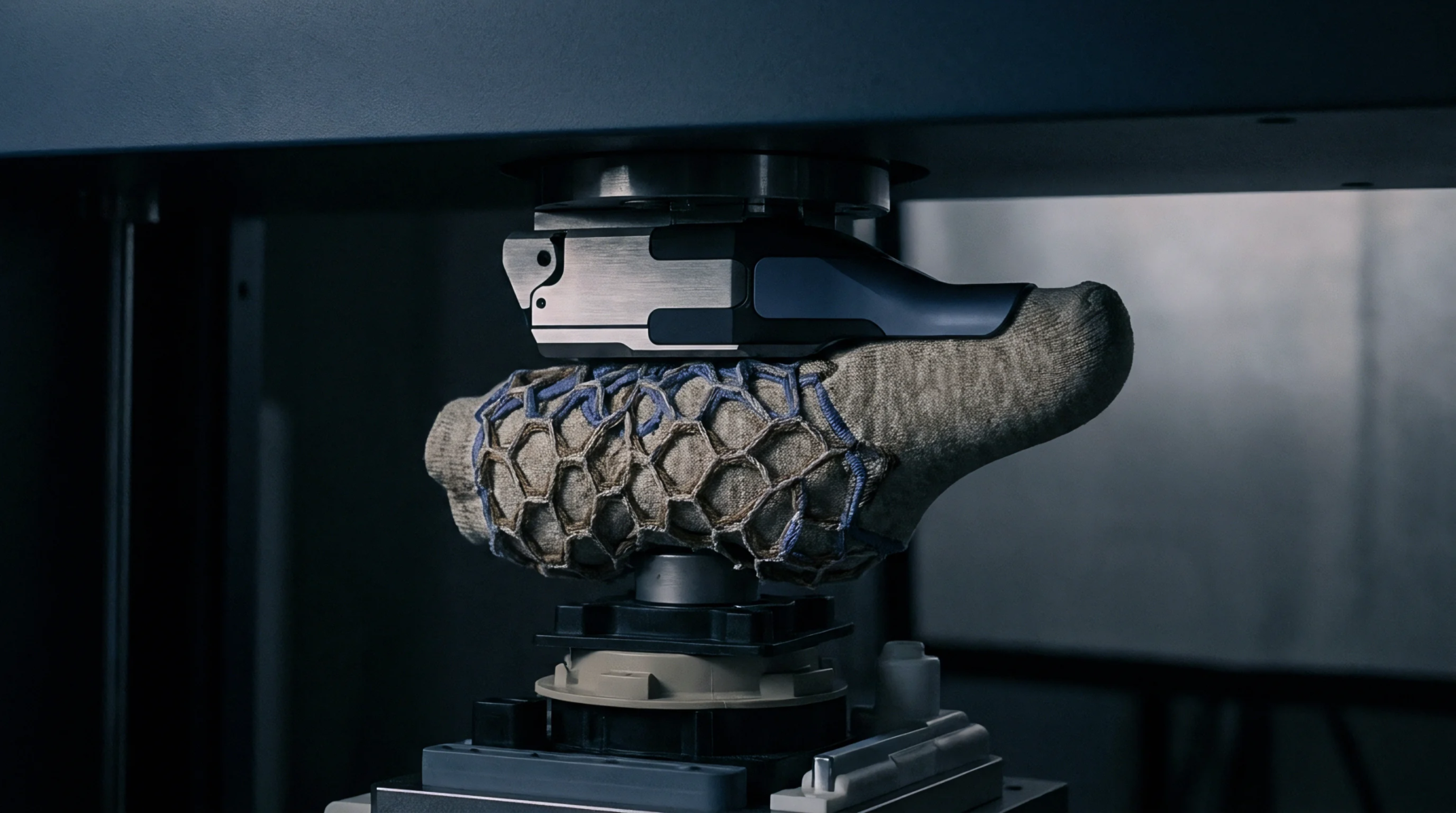
Calculate vessel payload capacity by adjusting greige roll weights for sizing loss, finish pick-up, moisture regain, and core tare volume constraints.

Viscose moisture regain shifts during transit alter declared component mass ratios, triggering customs reassessments when unconditioned testing crosses tariff weight thresholds.

Official moisture regain calculations convert anhydrous dry mass into legal commercial mass to determine chief weight tariff lines for binary fibre imports.

Adjust clean oven-dry mass using official commercial regain percentages to ensure accurate tariff classification and prevent commercial mass invoicing errors.

Spin finish deposits inside vortex chambers shift fluid boundary layer friction, increasing yarn hairiness and degrading tenacity during high-speed runs.

Verify textile chemical volatility limits through lot-specific micro-chamber GC-MS testing and sealed foil sampling to prevent border detention losses.

Non-linear fiber loss in dual nozzle spinning causes composition drift that alters yarn mass, pilling resistance, and customs classification thresholds.
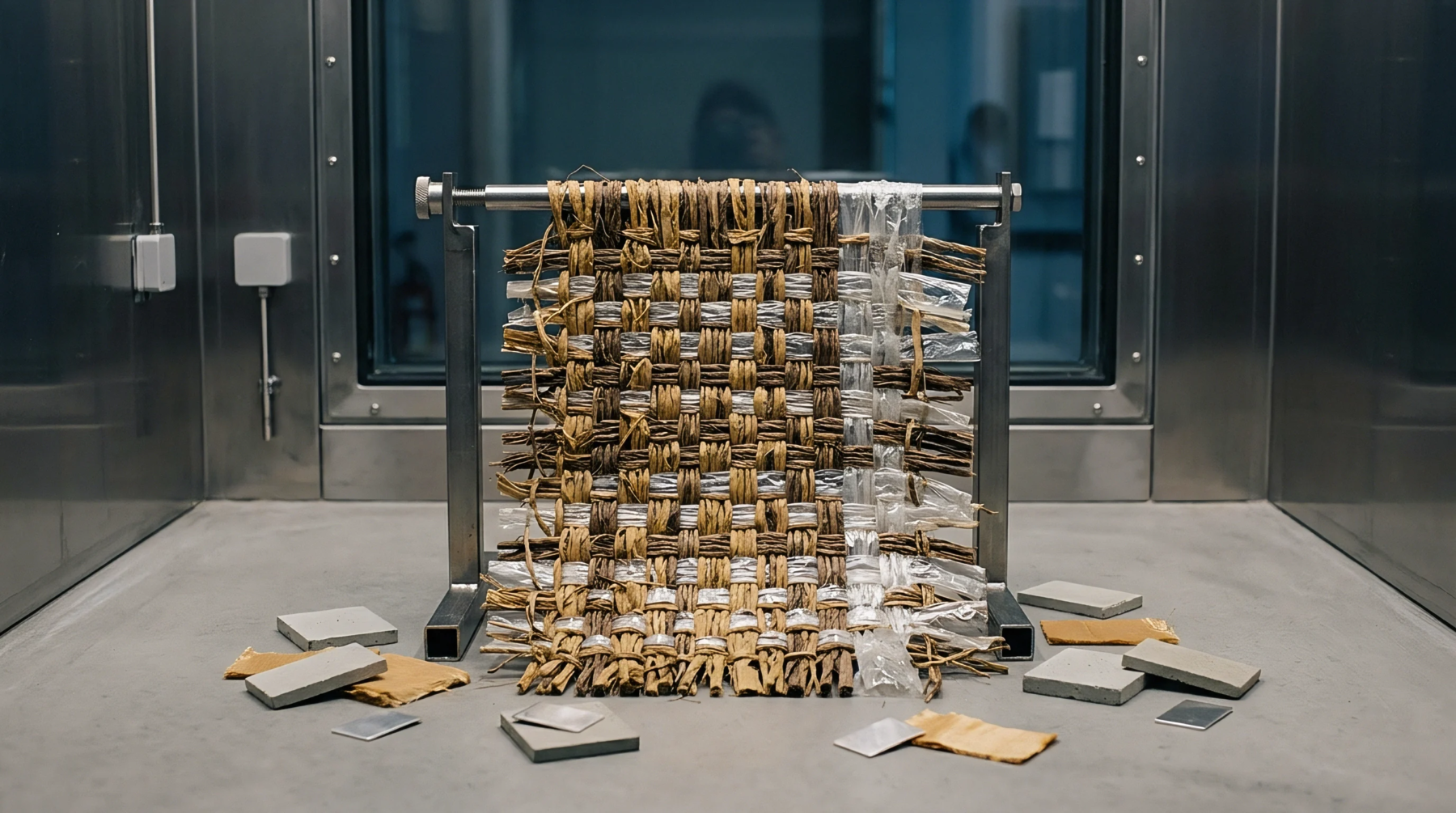
Recycled PET extrusion requires balancing temperature and vacuum extraction to control hydrolytic scission kinetics and prevent volatile oligomer accumulation.

High warp cover factors restrict weft straightening, forcing non-linear widthwise contraction during wet relaxation, demanding engineered stenter overfeed.
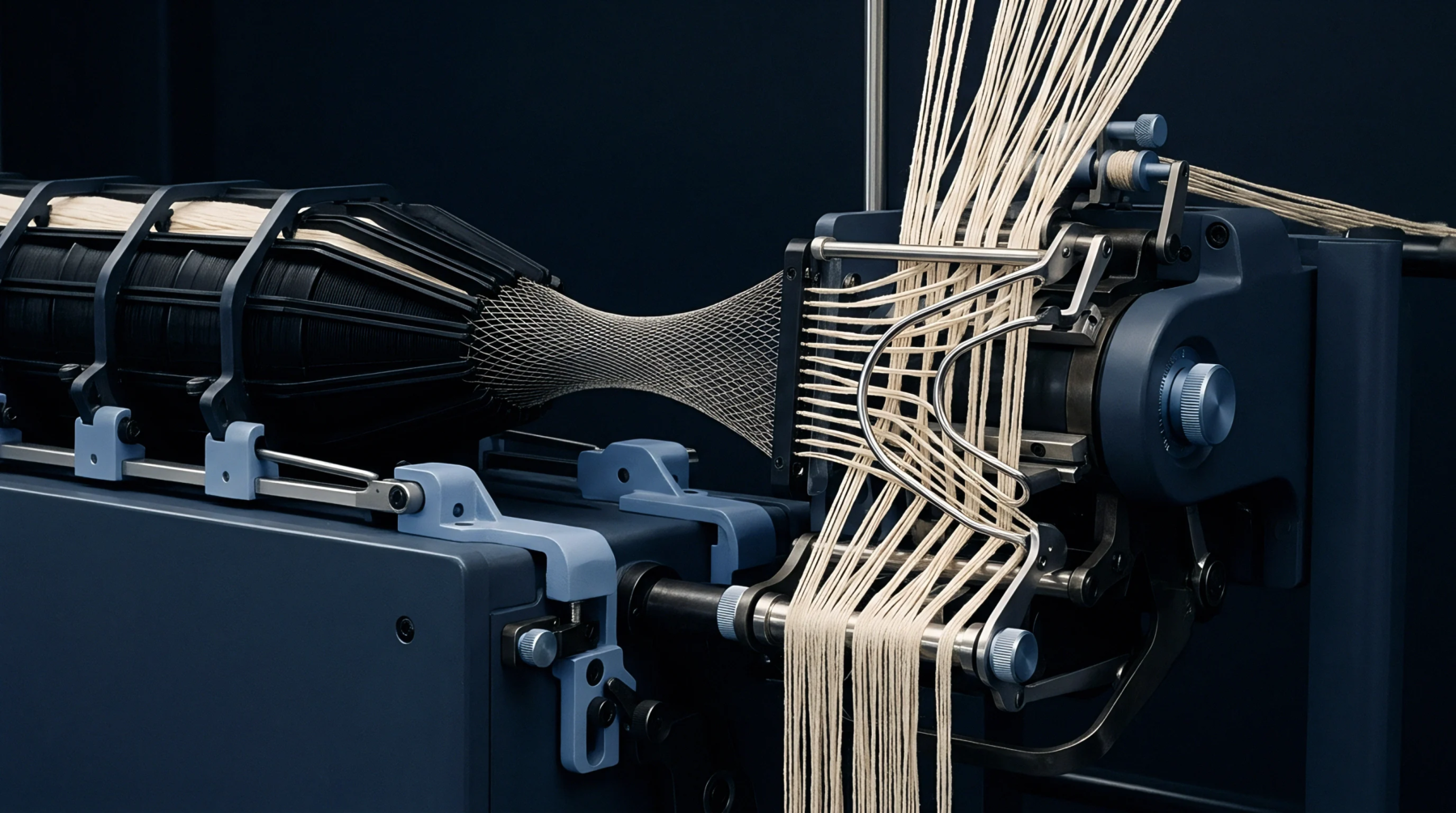
Integrating sizing stretch with greige warp crimp prevents yarn over-ordering and aligns creel lengths to loom beam targets without inventory waste.

Reconciling multi-site mass balance ledgers under ISCC PLUS requires strict conversion factor accounting, national boundary enforcement, and 12-month expiry controls.

Air jet spinning waste ranges from three to nine percent, driven by short fiber index and nozzle pressure, directly shifting yarn yield and blend ratios.

True dry fiber mass requires quantitative solvent extraction of non-fibrous processing aids prior to forced-draft oven drying to constant weight.

Real-time SWIR line-scan ratio classification isolates translucent polyolefin in unopened cotton tufts at high velocity with low good-fiber ejection loss.

Optical edge detection overestimates seam opening force by 8% to 23% due to yarn fuzzing, requiring physical feeler gauge verification for accurate batch compliance.

Harmonizing ASTM and GB curve subtraction parameters requires unifying baseline anchor coordinates, invariant scalar peak ratios, and grid registration.
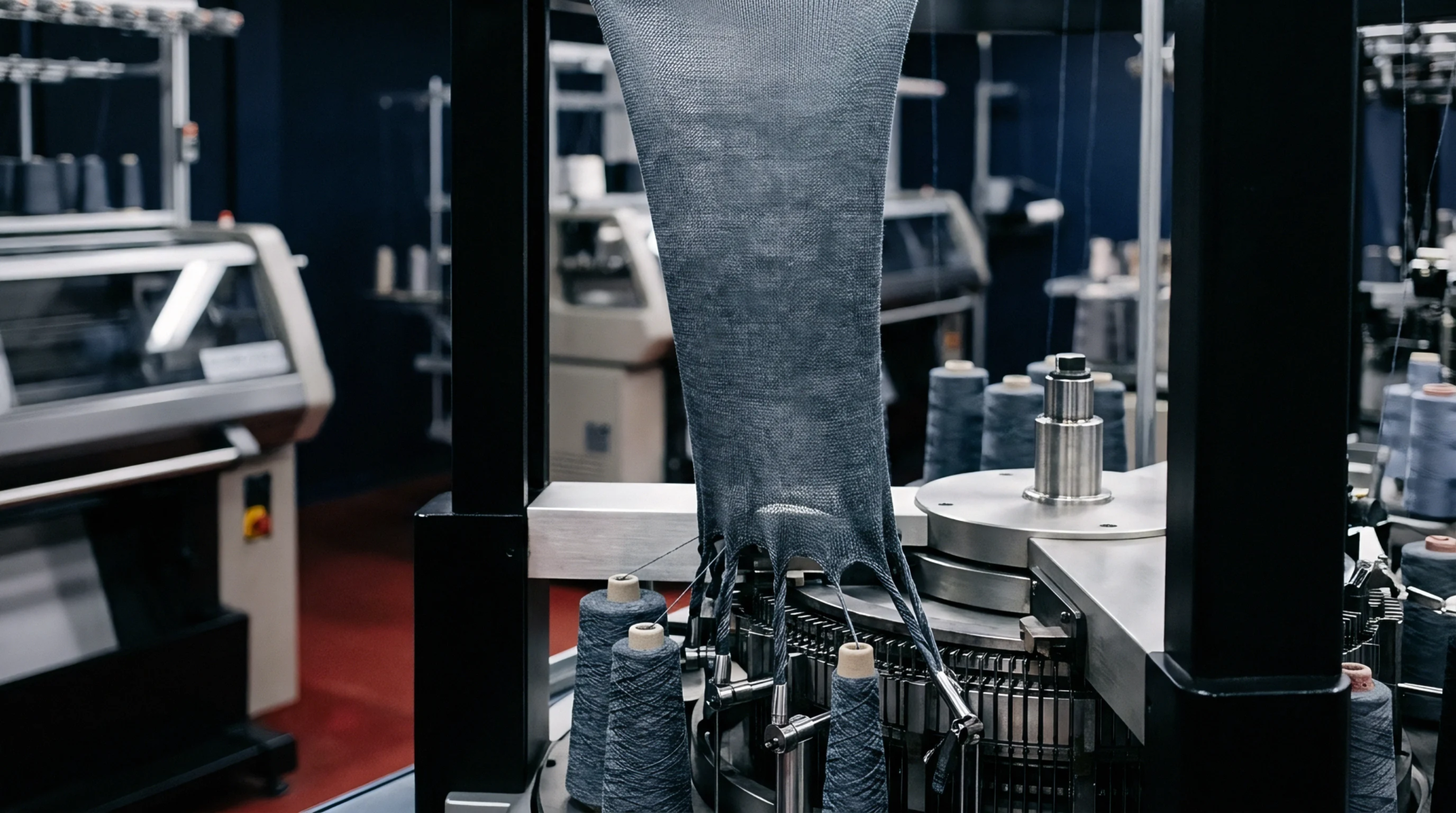
Matching knitting machine gauge to yarn linear density fixes loop tightness factor, setting the upper limit for aqueous dimensional contraction during wet finishing.

Reconciling woven fabric invoices requires deducting size solids and applying standard moisture regain to oven-dry mass before validating linear yield.

ASTM D4034 calibration requires verifying ASTM E4 load cells, 305 mm/min crosshead speeds, pneumatic jaw parallelity, 7 spi sewing, and 6.35 mm curve offset.
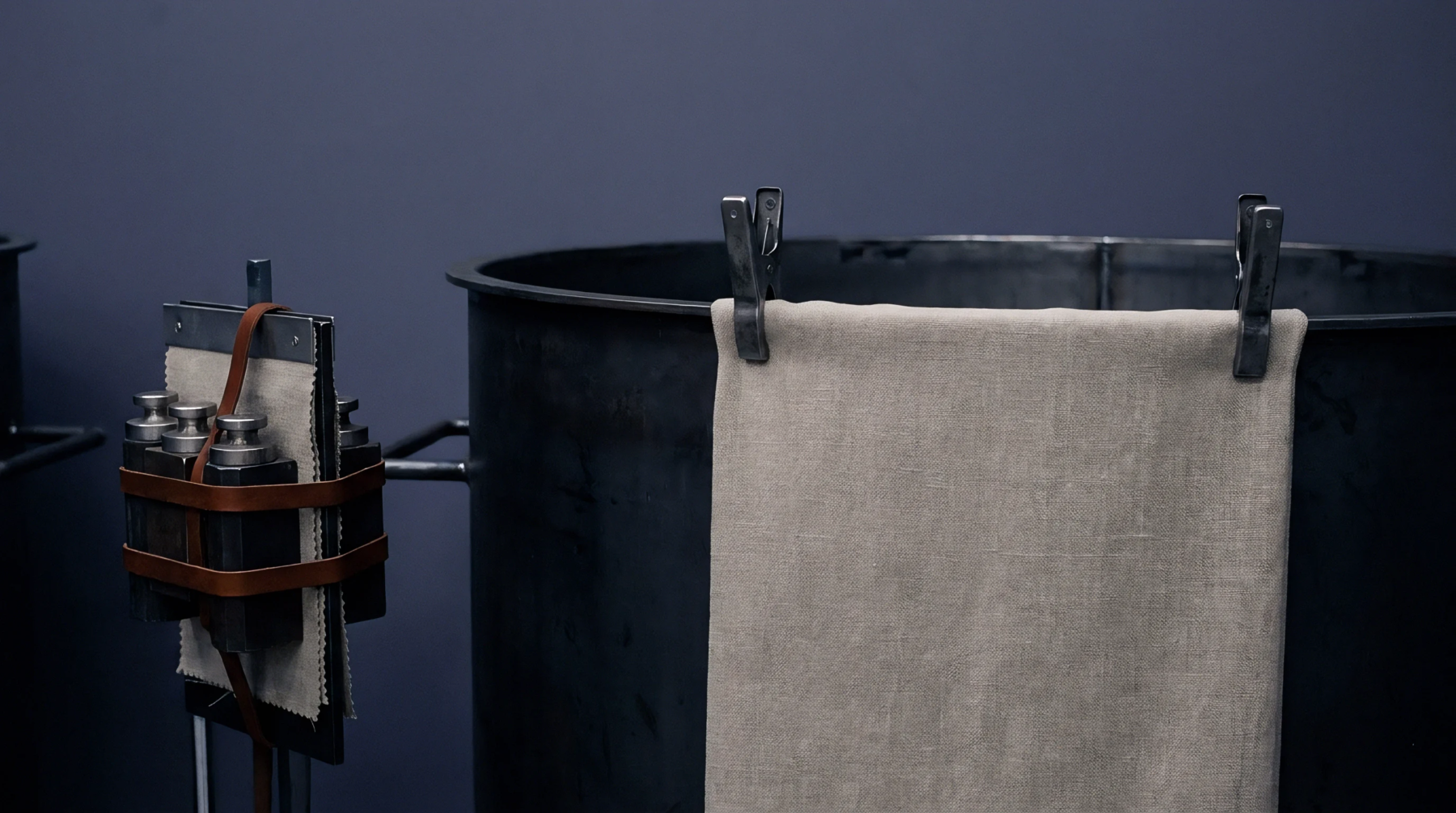
Optimizing wet pickup in woven twills demands balancing roll durometer and pad nip pressure against capillary pore architecture to cut energy and ensure level shade.
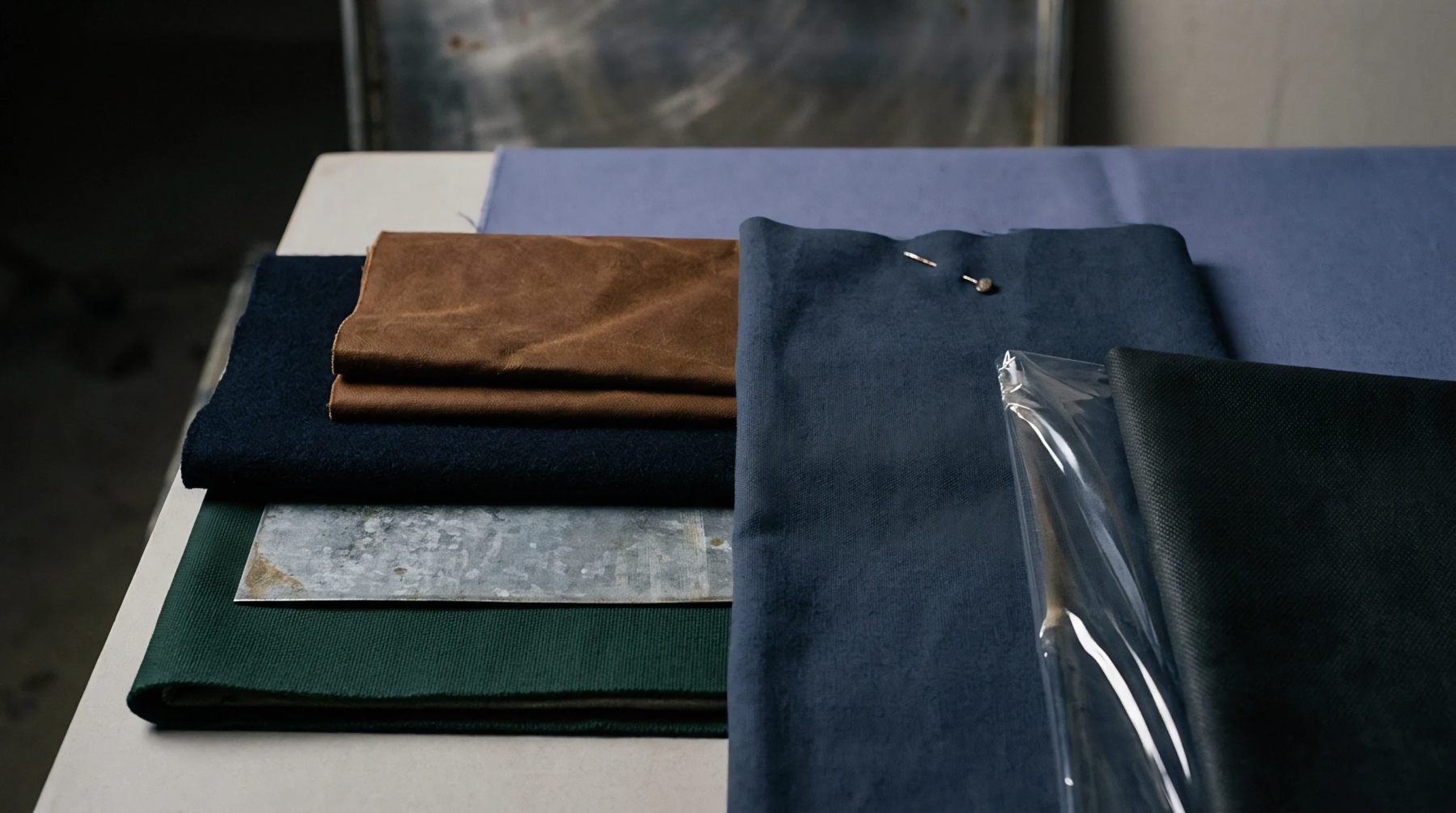
Targeting 1450 nm and 2200 nm shortwave infrared bands differentiates polypropylene and organic contaminants from cotton lint with high optical contrast.
Expertise is a utility, not a secret. sentiention™ publishes its working knowledge as open reference: intelligence layer covering the materials it sources, the markets it enters, and the reference that serves both.