
Transaction Certificate Mass Balance Auditing for Certified Organic Cotton
Audit transaction certificates against physical processing yields, mass loss ceilings, and central registry records to ensure organic cotton compliance.

Audit transaction certificates against physical processing yields, mass loss ceilings, and central registry records to ensure organic cotton compliance.

Correct systematic dissolution bias by establishing recycled-specific d-factors and dual-solvent extraction to secure true customs fiber weight classifications.

Reconciling customs moisture discrepancies requires converting physical import weights to oven-dry mass and reapplying statutory regulatory regain schedules.

Standardizing digital reflectance matrices demands locking aperture diameters, port glass usage, sample orientation, and UV profiles across all participating mills.

Validating scope certificates requires cross-referencing facility annexes and product categories against central certifier databases and raw batch weights.

Quantitative fiber dissolution tolerances demand pairing empirical reagent mass-loss factors with statutory moisture regains to defend customs declarations.

Managing yarn twist equilibrium requires steam autoclaving lively packages or alternating S/Z feeds to eliminate loop skew and cutting waste in single jersey fabric.

Dynamic kinetic compensation models correct oxidation-induced tryptic digestion rate skews, preventing false customs rejections in treated cashmere lots.

Substrate texture and chemical finishes alter boundary layer reflectance, causing severe multi-illuminant color distortions that mimic true dye metamerism.
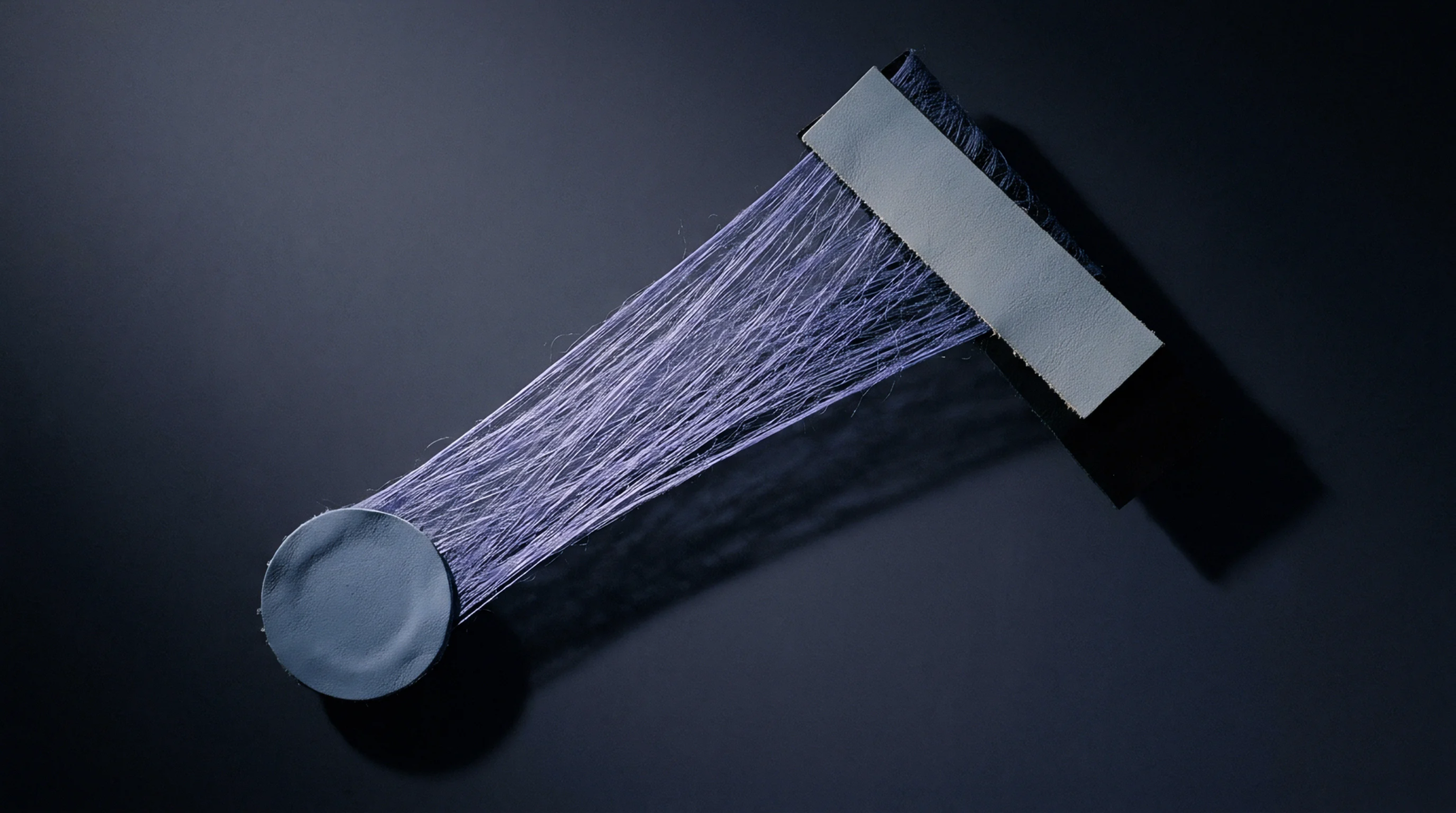
Secondary metamerism under store fluorescents is controlled by constraining dye reflectance crossover spikes to keep the index below 0.5 Delta E.

Thermal degradation creates steric cleavage barriers and mass shifts in keratin biomarkers, requiring modified transition lists to restore accurate LC-MS fiber quantification.

Alkali solubility above twenty-two percent and cysteic acid ratios over zero point four indicate severe keratin proteolysis in mechanically recycled animal lots.

Map destination restricted substance limits directly into purchase orders by defining specific test methods, quantification thresholds, and batch indemnity terms.
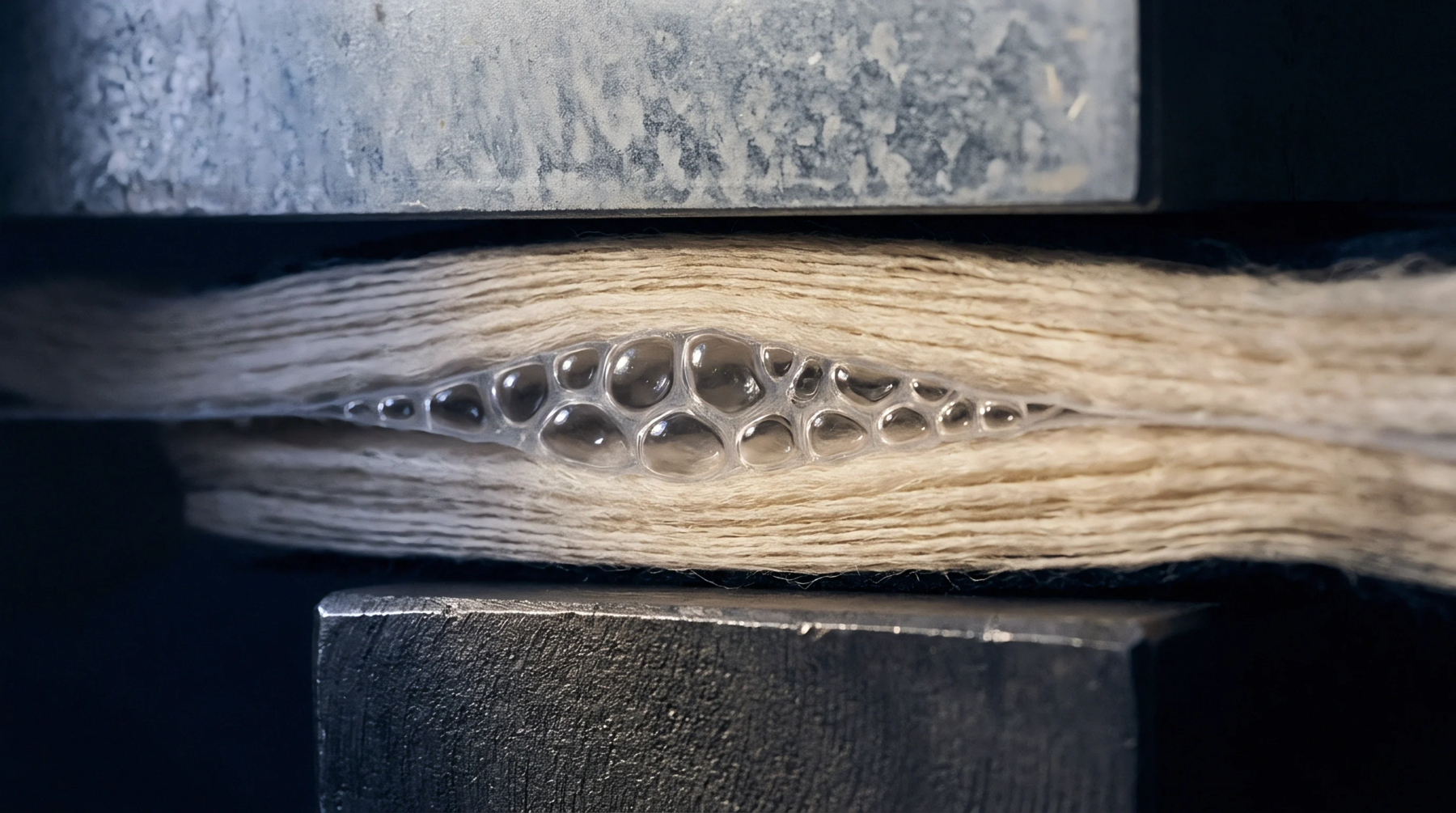
Dynamic contact angle shifts above 90 degrees halt spontaneous wetting during high-speed padding, demanding controlled capillary pressure jumps to prevent void formation.

Micro-denier cellulosics alter selective dissolution kinetics by increasing capillary entrapment, demanding modified d-factors and strict IV monitoring to fix blend percentages.

Enforce batch-level combustion ion chromatography screening paired with targeted mass spectrometry to isolate PFAS and azo amine risks across woven supply chains.

Spectrophotometric tolerancing under primary illuminant D65 requires strict UV calibration, diffuse geometry, and CIEDE2000 metrics to ensure batch acceptability.

Positive overfeed jams yarn crossover nodes, collapsing transverse permeability and halting fluid exchange, which causes unpenetrated cores and rub failures.

A two percent d-factor error shifts borderline dual-fibre yarns across chief-weight tariff boundaries, converting compliance into thousands in unpaid duties.
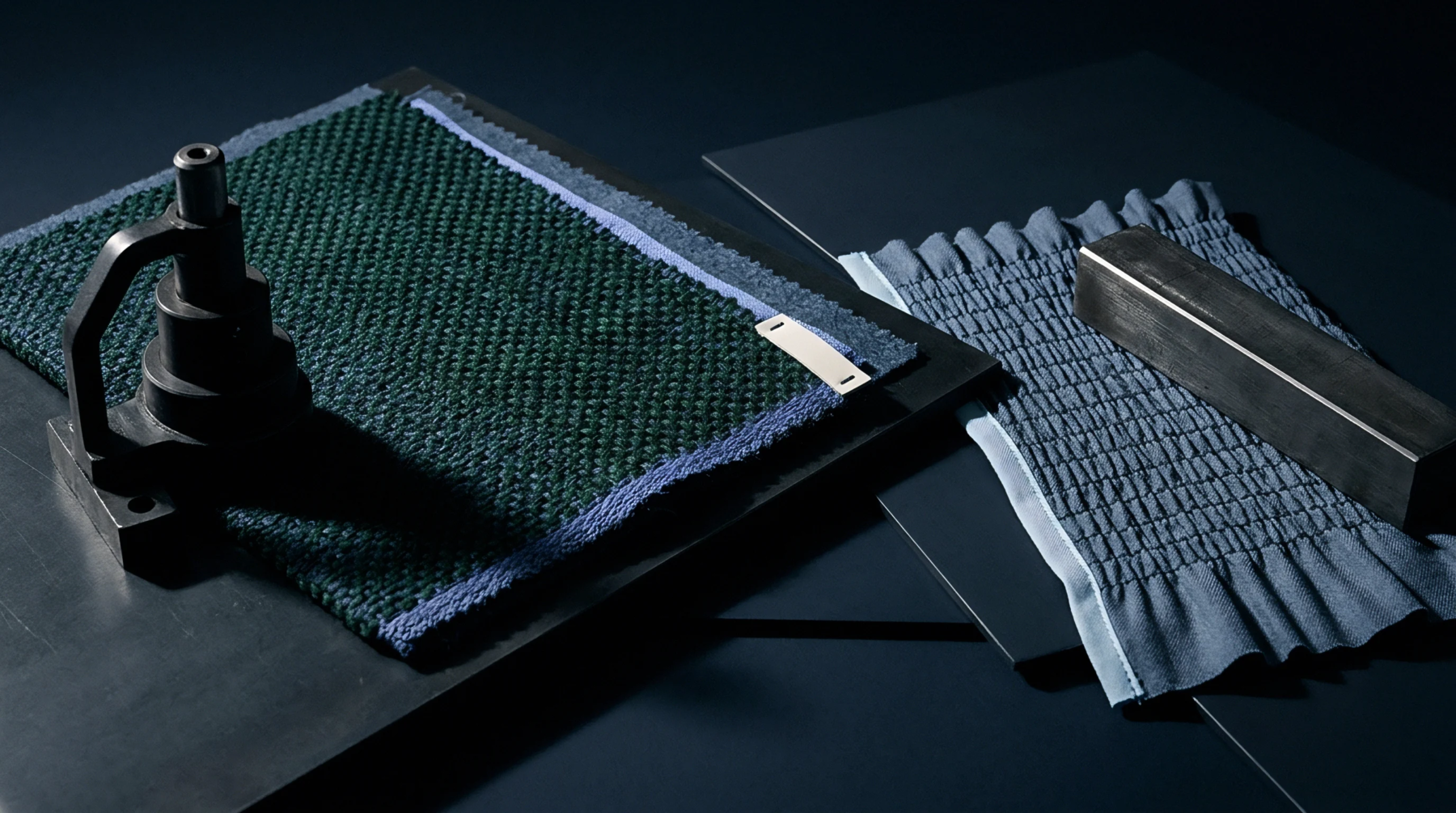
Statutory chemical compliance for woven fabrics requires matching laboratory test methods and scope certificates to specific roll batches before border clearance.

Warp tension straightens load-bearing ends, deepens weft crimp, and flattens yarn cross-sections, compressing pore apertures and slashing air permeability.

Predict multiaxial fabric contraction by combining off-loom crimp relaxation, caustic swelling, and stenter stretch to optimize air-jet profile reed width.

Stored finished textiles absorb volatile fluorocarbons across air gaps, pushing total fluorine above regulatory limits without direct physical lot contact.

Sulfuric acid dissolution isolates resistant synthetic fibers by selectively hydrolyzing cellulosics under precise concentration and temperature limits.

Calculate loom reed width by dividing target finished width by wet contraction loss, then multiplying by the weft crimp factor.

Specifying solid-state polymerized PET chip with cyclic trimer content below 0.60 weight percent eliminates spinneret deposition in microdenier spinning.

Dynamic sley twist on wide air jet looms attenuates center beat-up force, causing pick spacing variations that require dual let-off and rigid sley shafts.

Verify chemical compliance per functional sister construction; variations in weight, weave, and finish alter chemical absorption and invalidate shared certificates.

Surface cyclic trimer yields above 0.05% of polyester yarn weight generate yarn friction spikes, requiring solvent extraction and high-temperature reduction scour.

Solvent extraction isolates surface lubricants and processing oils from synthetic filament yarns to verify commercial billing weight and prevent dyehouse defects.
Expertise is a utility, not a secret. sentiention™ publishes its working knowledge as open reference: intelligence layer covering the materials it sources, the markets it enters, and the reference that serves both.